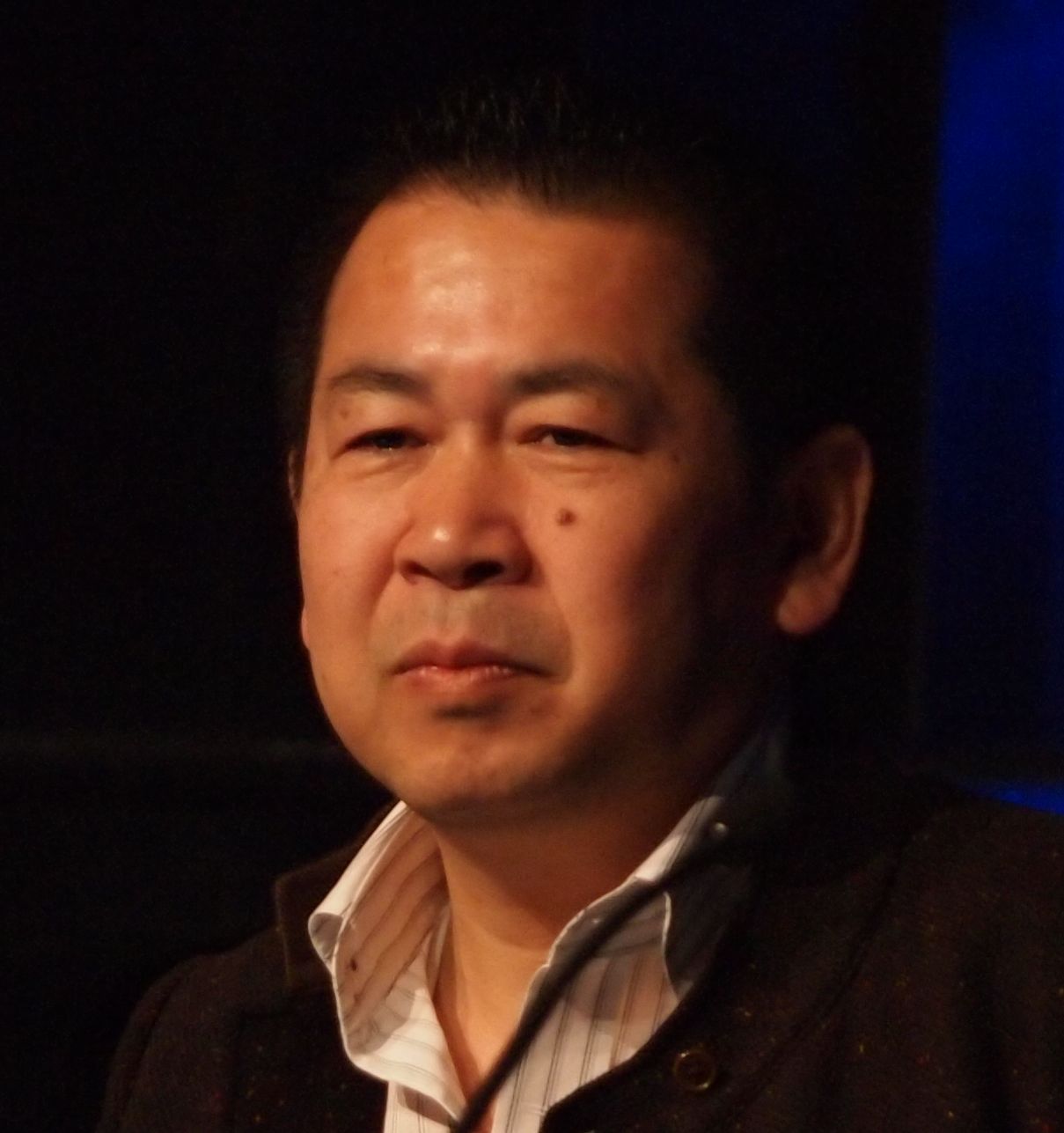
Yu Suzuki
Yu Suzuki (born June 10, 1958, in Kamaishi, Iwate Prefecture, Japan) is a Japanese game designer and one of the defining figures of the arcade era. He joined Sega in 1983 as a programmer and rose unusually fast, becoming a project leader by his second year, a position that normally took seven or eight years to reach. As the creative force behind Sega's AM2 research and development division for nearly two decades, he led a run of landmark arcade games built on the company's "Super Scaler" sprite-scaling hardware.
Suzuki directed and lead-programmed a lineage of pioneering titles: Hang-On (1985), Space Harrier (1985), Out Run (1986), After Burner (1987), and Power Drift (1988). Hang-On's deluxe ride-on cabinet, which the player leaned to steer, was among the first full-body "taikan" arcade machines and helped start the deluxe motion-cabinet trend. For Out Run he chose leisurely cross-country driving over competitive racing, modeling the scenery on a European study tour and putting the player behind the wheel of a Ferrari Testarossa convertible.
He then moved Sega into polygonal 3D with Virtua Racing (1992) and Virtua Fighter (1993), the latter widely credited as the first 3D fighting game and the start of a long-running series. With no animator role yet established in the industry, he had his staff study martial arts to ground the characters' movement.
In 1999 Suzuki created and directed Shenmue for the Dreamcast, an early open-world game and one of the most expensive productions of its era, which he later put at around 47 million US dollars including marketing. He founded his own studio, YS NET, in 2008, stepped down from his Sega management role in 2011 to focus on it while staying on as an advisor, and returned to his signature series with Shenmue III in 2019.