Myst (1993)
The Box That Came With the Computer That Changed Everything
The Box That Came With the Computer That Changed Everything
In 1995, my parents bought the family a Packard Bell Legend 130CD Supreme. It was a big deal. Not a hand-me-down, not a machine inherited from someone’s office. A real, current, multimedia PC with a CD-ROM drive built in, which at the time was still worth putting in the product name. My stepdad Wayne had always made sure we had technology in the house. He was that kind of person. But the machines we’d had before were Radio Shack Tandys, Color PCs, the kind of hardware that ran what it ran and nothing else. I gamed on my NES because that’s where the games were. The Tandy had Pitfall 2. That was about the ceiling.
The Packard Bell came with a stack of software. Games, utilities, the works. One of them was Myst.
I was somewhere between ten and twelve years old. I had no framework for what I was looking at.
The Object
Before you ever put the disc in, the box told you something was different.
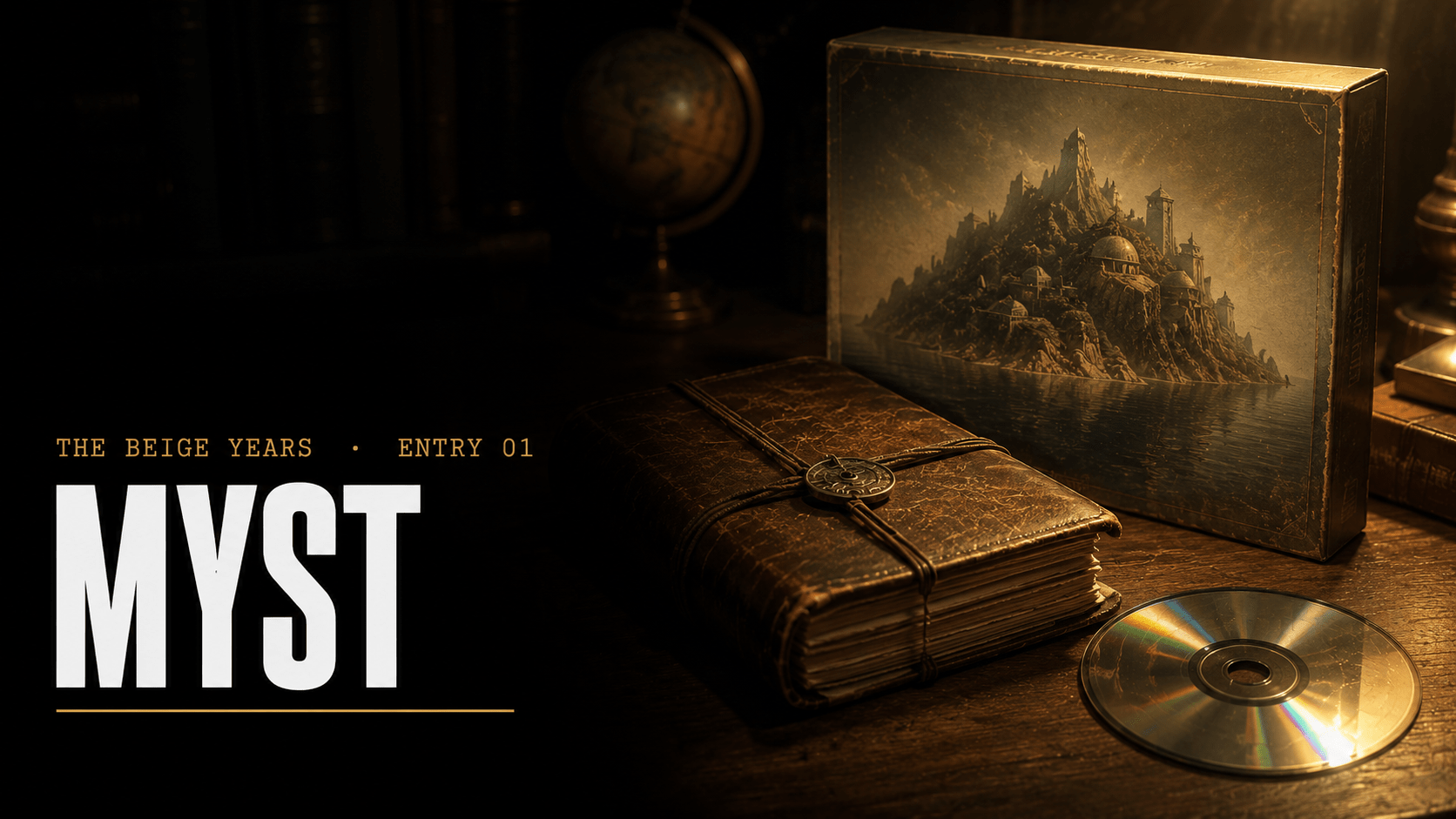
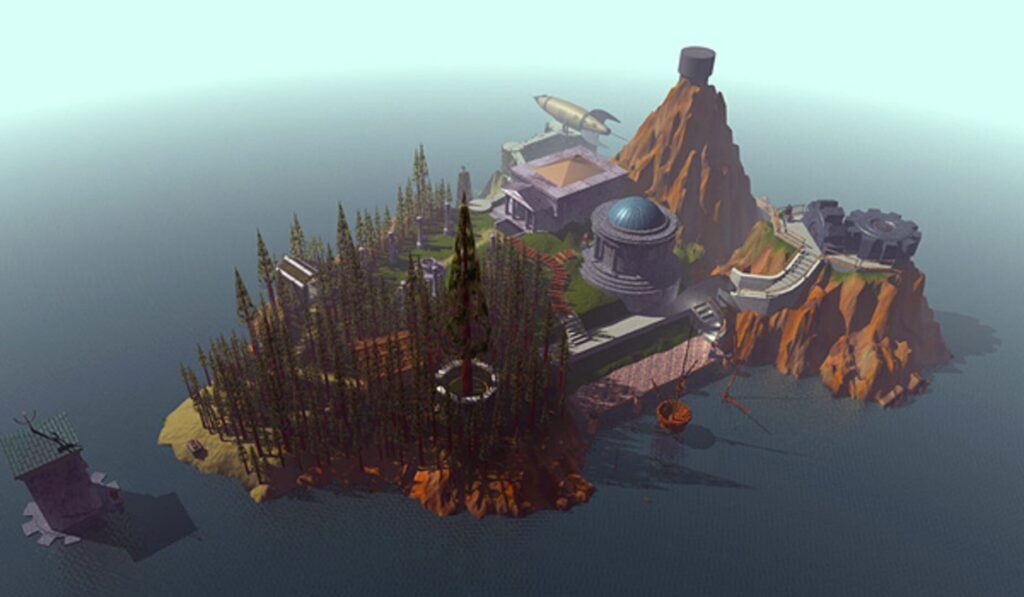
Broderbund published Myst in 1993, and the packaging reflected an era when publishers still believed the box was part of the product. This wasn’t a jewel case with a folded insert. It was a full chipboard box, substantial in your hands, with that iconic cover image: a figure seated on rocky ground, an island of impossible architecture rising behind him, dramatic clouds overhead. The tagline on the front read “The Surrealistic Adventure That Will Become Your World.” At the time that read like marketing. In retrospect it was accurate.
Open the box and the contents treat you like an adult. There’s the CD, obviously, but there’s also a Windows 3.1 troubleshooting guide, a separate Windows 95 and Power Macintosh troubleshooting guide, a Broderbund software registration card, a free technical support card for registered owners, and a promotional insert for the Myst Official Game Secrets hint book, printed on teal cardstock and written in a tone that assumed you were already stuck.
And then there’s the Journal of Myst.
It’s a small grey booklet, bound like a real book, printed to look aged. It’s an in-universe artifact, written as if it belongs to the world of the game rather than the box it came in. Cyan put a physical prop in a retail software package and Broderbund shipped it to every store that carried the title. In 1993. That kind of thing didn’t happen often then and it essentially doesn’t happen at all now.
My copy is the original. The one that came with the Packard Bell in 1995. Wayne picked it out, or picked out the bundle, or just made sure it was in the stack when the machine arrived. I’m not entirely sure of the specifics anymore. What I know is that it’s been with me ever since.
The Game
Myst was built by Rand and Robyn Miller, two brothers working out of Spokane, Washington, originally on HyperCard on a Mac. The concept was a first-person exploration game with no inventory, no enemies, no death, and no hand-holding. You arrived on an island with no explanation and were expected to figure out everything through observation. The puzzles were embedded in the environment. The story emerged through documents and journals scattered across the world. Nothing was labeled. Nothing was obvious.
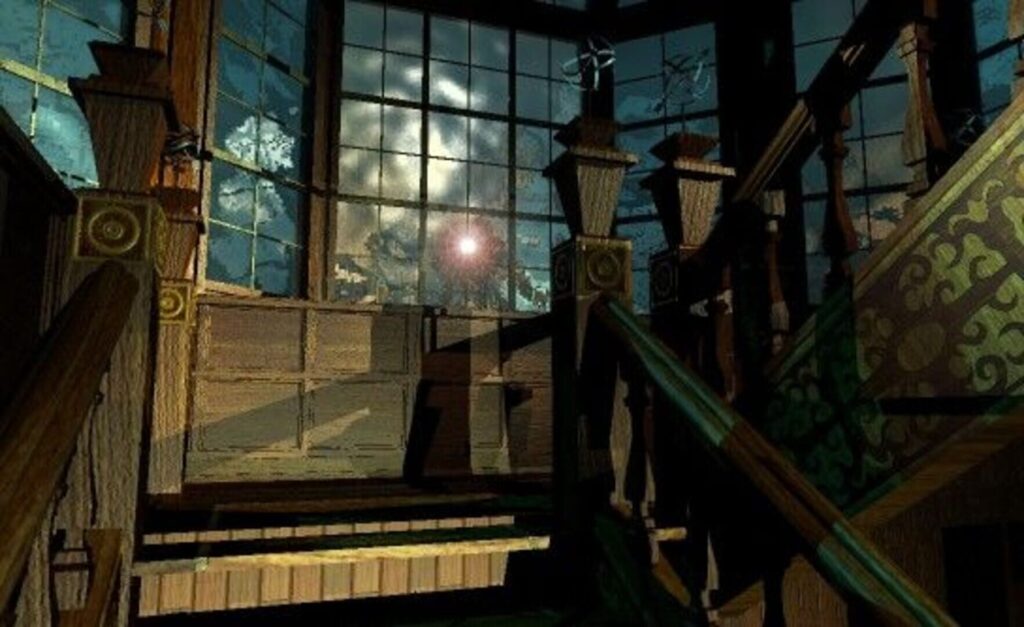
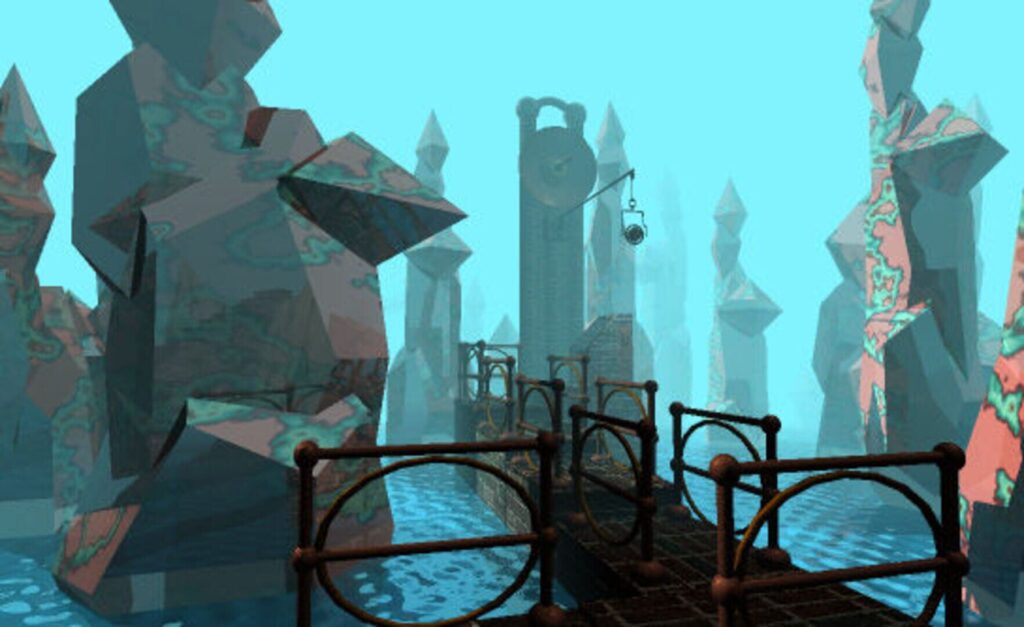
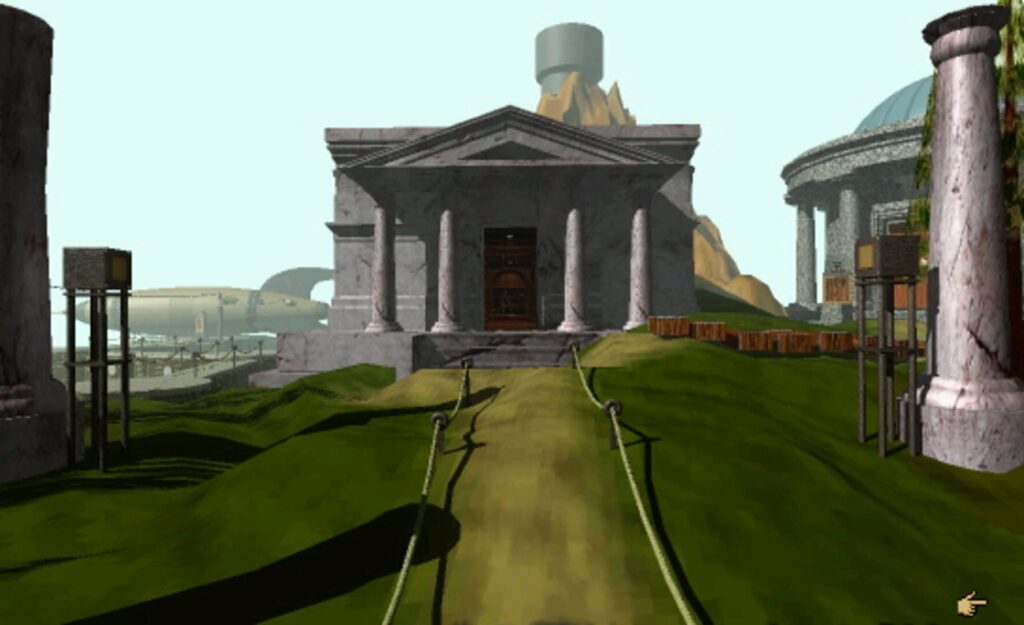
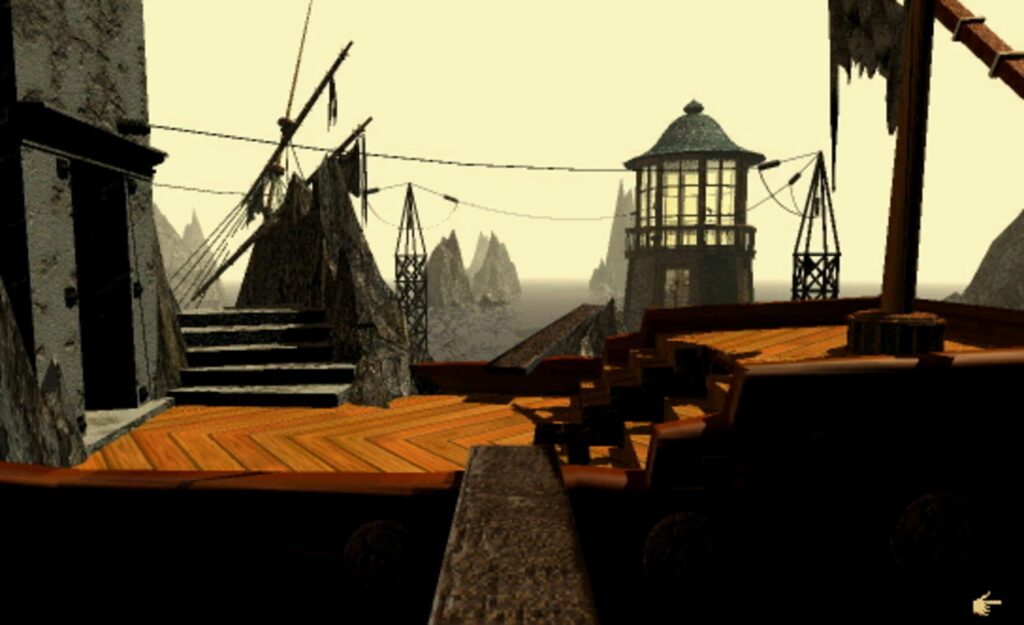
It shipped in September 1993 and eventually became the best-selling PC game of its era, holding that record until The Sims took it in 2002. That success was not universally predicted. A significant portion of the games press at the time didn’t know what to make of it. There were no enemies to shoot. There was no score. There was no action in any conventional sense. What there was, was atmosphere, and a level of visual fidelity that CD-ROM made possible in a way floppy distribution never could have.
For a kid raised on Nintendo, it was genuinely disorienting. Nothing on the NES compared to it in terms of visual presentation, and nothing had prepared me for a game that offered no guidance and expected you to simply think. Wayne tried to help. He struggled too. Neither of us had encountered anything quite like it, and looking back that’s exactly the point. Myst wasn’t a harder version of something familiar. It was a different category of thing entirely.
I wouldn’t say it fully connected with me the way other games did. I was young, I was used to action, and Myst rewards patience and careful observation in ways that a twelve-year-old running on Nintendo reflexes doesn’t naturally bring to a game. But something about it stuck. The atmosphere was unlike anything else. The island felt real in a way that was hard to articulate. Even when I was stuck, and I was stuck often, the experience of being in that world had weight to it.



Why This Box Is Still on the Shelf
I’ve moved a lot of things in and out of my collection over the years. Games I loved, games I didn’t, hardware I thought I’d keep and eventually didn’t. The Myst box has never been a question.
Wayne passed away a few years ago. The Packard Bell is long gone. But this box, with the Journal and the troubleshooting guides and the registration card nobody ever mailed in, is exactly what it was the day it came out of that stack of software in 1995. It’s one of a small number of physical objects I own that connects directly to a specific person and a specific moment, and that’s worth more than whether the game and I ever fully clicked.
That’s what The Beige Years is about, in part. Not pure nostalgia, not a sanitized memory of an era that was actually complicated to navigate if you were the one configuring it. But the honest version of what these objects meant and still mean. The Journal of Myst is sitting in that box because Cyan and Broderbund believed the experience was worth that level of care. Someone bought this box because they believed their kid deserved the best version of what PC gaming had become.
Both of those things are worth documenting.
Contents of This Box (for the record):
- Myst CD-ROM (single disc, Windows 3.1/95 and Power Macintosh)
- The Journal of Myst (bound in-universe booklet)
- Windows 3.1 Troubleshooting Guide
- Windows 95, Power Macintosh and Macintosh Troubleshooting Guide
- Broderbund Software Registration Card
- Free Technical Support Card (registered owners)
- Myst Official Game Secrets hint book promotional insert
- “Warning! Three Myst…” insert