Sins of a Solar Empire: Rebellion
Ironclad Games’ and Stardock Entertainment’s Sins of a Solar Empire series is known for its ability to immerse the gamer in an unparalleled RTS experience of solar domination. Sins of a Solar Empire: Rebellion brings everything you know from the original series’ three expansions and combines it with a revamped graphics engine, brand new research trees, an additional variant of each race, and massive new Titan-class vessels to form the most complex and engaging installment of the series to date. Whether you are new to the series or have conquered hundreds of galaxies already, Rebellion is a worthy new tool in any RTS guru’s arsenal for dominating the universe.
Identical to its predecessors, Rebellion was conceived in the burning fire of raw combat, not over some alien tea in a space bar. Gamers looking for the thrill of completing a forty-plus-hour storyline only to be rewarded by a similarly lengthy credits list will be disappointed by the lack of a single or multiplayer campaign. But do not toss the captain out with the space junk. What Rebellion lacks in storyline it quickly makes up for in both single-player and nail-biting multiplayer skirmish replayability. Those who remember the Age of Empires series will recall the somewhat lost art of randomly generated maps, which Sins of a Solar Empire brings into the space age. However, gamers with a fondness for the predictability of pre-made maps, which encapsulate skirmish mode in games such as Starcraft and Dawn of War, will find comfort in the fact that they can explore a vast collection of pre-made maps and return to the same one until they know every dust particle. For the more creative, or sinister, gamer, Rebellion also comes with both a simple Map Designer (enter the number of planets, stars, and so on) and a complex Galaxy Forge (more along the lines of traditional, intricate map designers). Maps are available for, and can be designed to accommodate, any combination of ten players: 1v1, 2v2, 9v1, and anything in between.
The AI in Rebellion is definitely worth noting, as Ironclad hasn’t just supplied some half-witted space cadets to play with. The AI varies in intelligence from Easy, Medium, Hard, Unfair, Cruel, or Vicious (for which I recommend the 9v1 layout) and also has various strategic biases that can be set: Aggressor, Fortifier, Economist, Researcher, or Random. I say “intelligence” rather than cheating because I have on numerous occasions seen the AI use a distraction fleet to get my primary fleet’s attention while moving a larger fleet to take a planet a couple of jumps away. However, on higher difficulty the AI tends to over-utilize super weapons, which generally turns what could be an elegant arrangement of ships, lasers, and explosions into a solar version of nuclear ping-pong that leaves you running around to recapture your own planets over and over.
Once the map and enemies have been selected, you will need to decide which race you will lead to galactic domination. “Rebellion”, as you would expect, is the operative word in the title and truly describes the majority of the new features. The first and only cinematic in the game appears as an intro before the main menu. It is beautiful in its own right, but its sole purpose is to shed some light on the black hole between the new features of Rebellion and the old series. Races have been expanded from the former three, Tec, Advent, and Vasari, to six: each race’s loyalists and the race’s rebels. Technology trees vary dramatically between the races, but the difference between the same race’s loyalist and rebel factions is a bit more subtle, yet even those subtle differences can change your entire play style. Unlike many other RTSs, Rebellion makes it near impossible to research everything in the tech trees during a game. Some technologies will be imperative for every game, but Ironclad leaves it to the player to choose their own strategy. Building off the series’ three expansions, turtles, politicians, and aggressors alike will find unique strategic technology chains to fit their play style, varying by race as well as faction. The crown jewel of every faction is its personalized Titan-class vessel, a cataclysmic force that can, for instance, devour entire fleets (the Vasari Loyalist Titan). However, you won’t find one-ship Titan “fleets”. They are not indestructible, and you will find out very quickly that if your Titan is used unwisely the massive investment might simply buy you an explosion of similar magnitude.
The interface for selecting a race is atypically more difficult to navigate than the remainder of the game. Veterans of the series will notice negligible change in the simplistic and visually appealing commander UI, while new gamers will have little difficulty finding everything they need. Diplomacy, research, trade, and construction are all just a click away in the various, strategically placed menus and buttons. For on-the-fly knowledge, the tool-tips are extremely informative, not only about the menu options but even about ship, fleet, and planet status. You will also not find yourself scrolling through a ten-page tech tree to find “lasers”; all technologies are spread out across intelligently separated, single-page trees that logically lead from one to another.
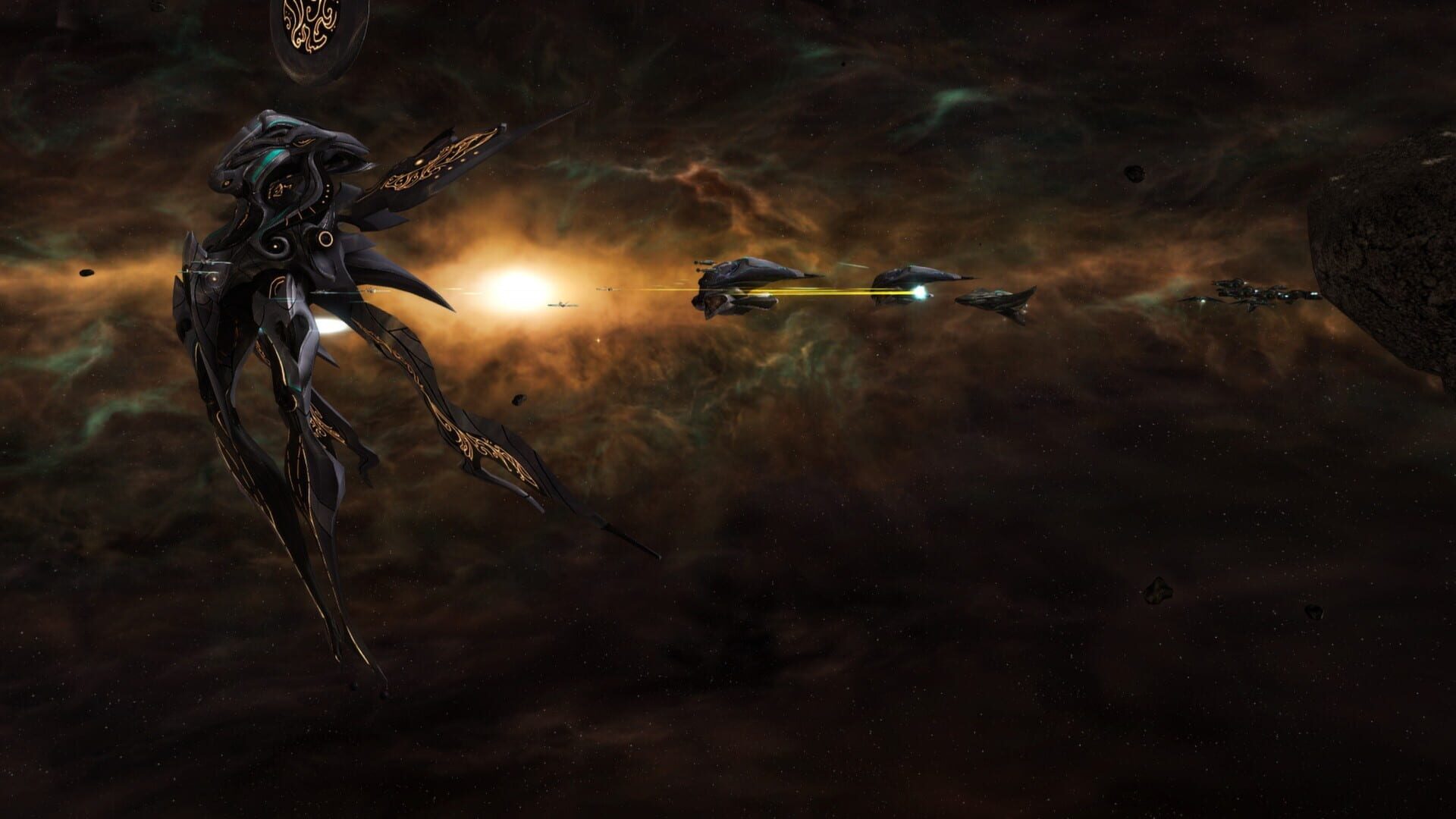
Unlike some other true-3D space RTSs, you won’t find the camera to be your greatest enemy. One of the truly remarkable features of the series is the seamless scalable view. Zoomed all the way in to your planets, it is easy to see and place various structures in orbit as well as micromanage fleet location. To get a view of the entire galaxy, zoom out with the mouse wheel to seamlessly transition from the micromanaging view to various levels of the overall galaxy map. From here you can see all planets, stars, and other celestial objects, as well as a clever quick reference for all units and structures, friendly or enemy, within orbit and in transit. The default camera view is perfect for overseeing your empire, but if you want to fly in and get the cinematic effects of true space combat, the right mouse button is your co-pilot. The UI also includes a cinematic mode that removes the pesky labels and lets you watch your ships in glorious combat.
Developers have come a long way from the star-sprinkled black background of space graphics pioneered by games like Escape Velocity (1996), giving rise to some of the most beautiful space games ever created (arguably EVE Online) filled with nebulae, stars, black holes, and other theoretical and sometimes imaginary celestials. Armed with a revamped graphics engine, Rebellion takes on the challenge of delivering the much-desired beauty of space, but it still hews more closely to the more accurate yet less impressive, heavily salted black background with the spare nebula. Eye-candy addicts will still find beauty in the detailed celestials, which consist of three distinct planet types (ice, lava, terran), asteroids, stars, wormholes, and nebulae, along with distinctly different types of weaponry, explosions, and special abilities, and highly detailed, textured ships. It is still one beautiful RTS, but for all the hype about the new graphics engine, it left me wanting more. It does, however, maintain its kindness toward those who have less than a super gaming machine by allowing complete control over every level of detail. If you want mind-blowing visuals, you might be relegated to sating your desire with my favorite skill, the Vasari tier-8 empire skill “Stripped to the Core”, which brings back fond memories of the planetary destruction scene in The Hitchhiker’s Guide to the Galaxy and concludes with a fitting and dramatic alien voiceover: “A colony has been losssssst”.
Too many RTSs have been created with all the eye candy you can take in and endless hours of replayability, yet seem to have gone out to the street for their voice-overs and obtained stock digital music from the late 80s. While Rebellion doesn’t have the Hollywood cast of Command and Conquer or the orchestra of Dawn of War (composer Jeremy Soule), it has a library of sincere and convincing voice-overs for just about every action you can take, and a mesmerizing, albeit somewhat repetitive, dynamic soundtrack that fits the game like a glove. After conquering numerous galaxies to the same background music, you might turn it down for some personalized epic music of your own, but you may soon find yourself repeating catchy lines such as “None shall survive!” in a very alien dialect.
Rebellion, in spite of being about war and destruction, has managed to stay relatively clean in content. It is rated T by the ESRB for fantasy violence and mild language, but there is little to be undesired. Apart from the fact that the theme is destroying fictitious planets and spaceships, Rebellion should be considered a relatively safe and highly entertaining game in the midst of so many other bloody and violent RTSs recently published.
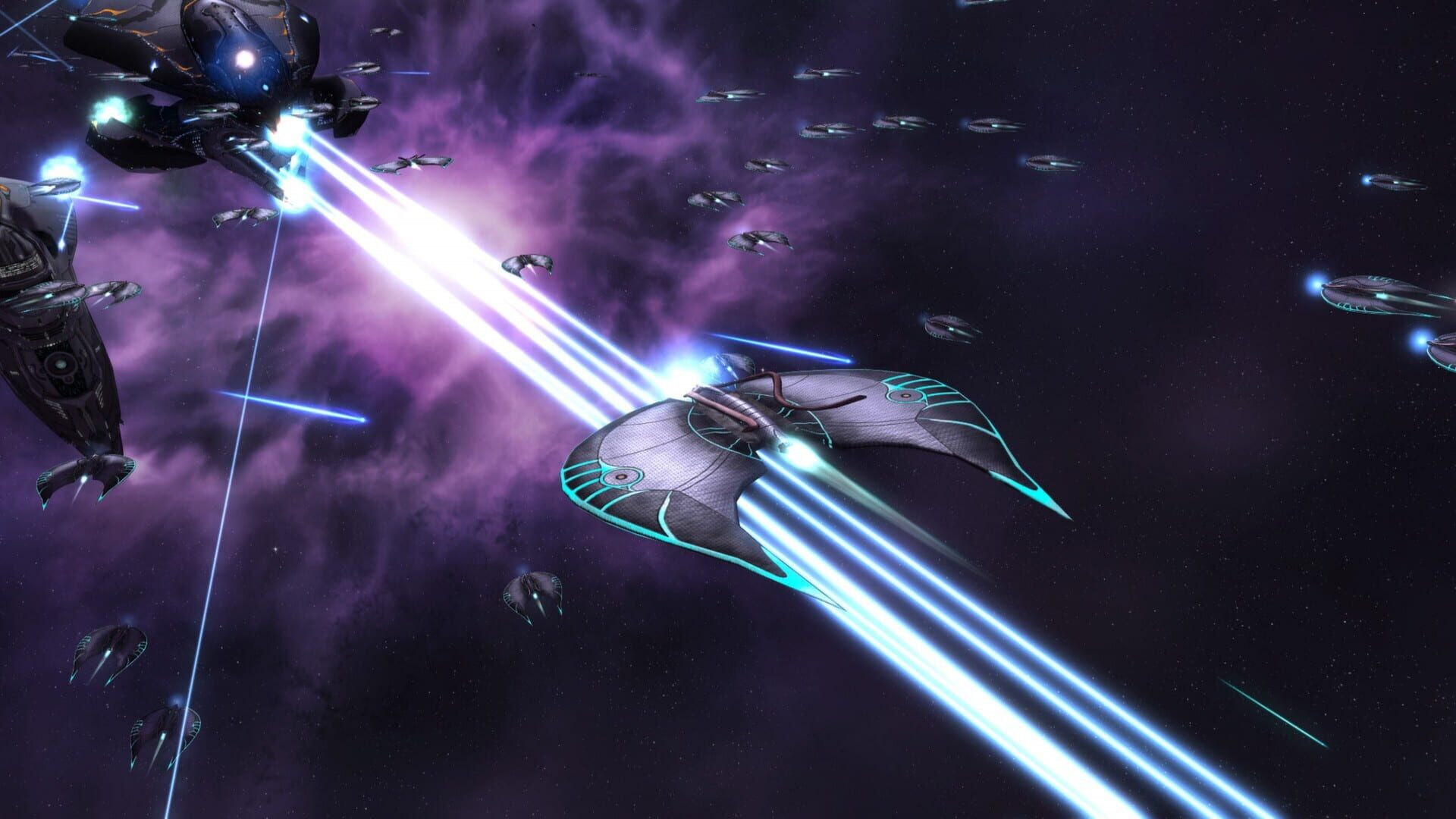
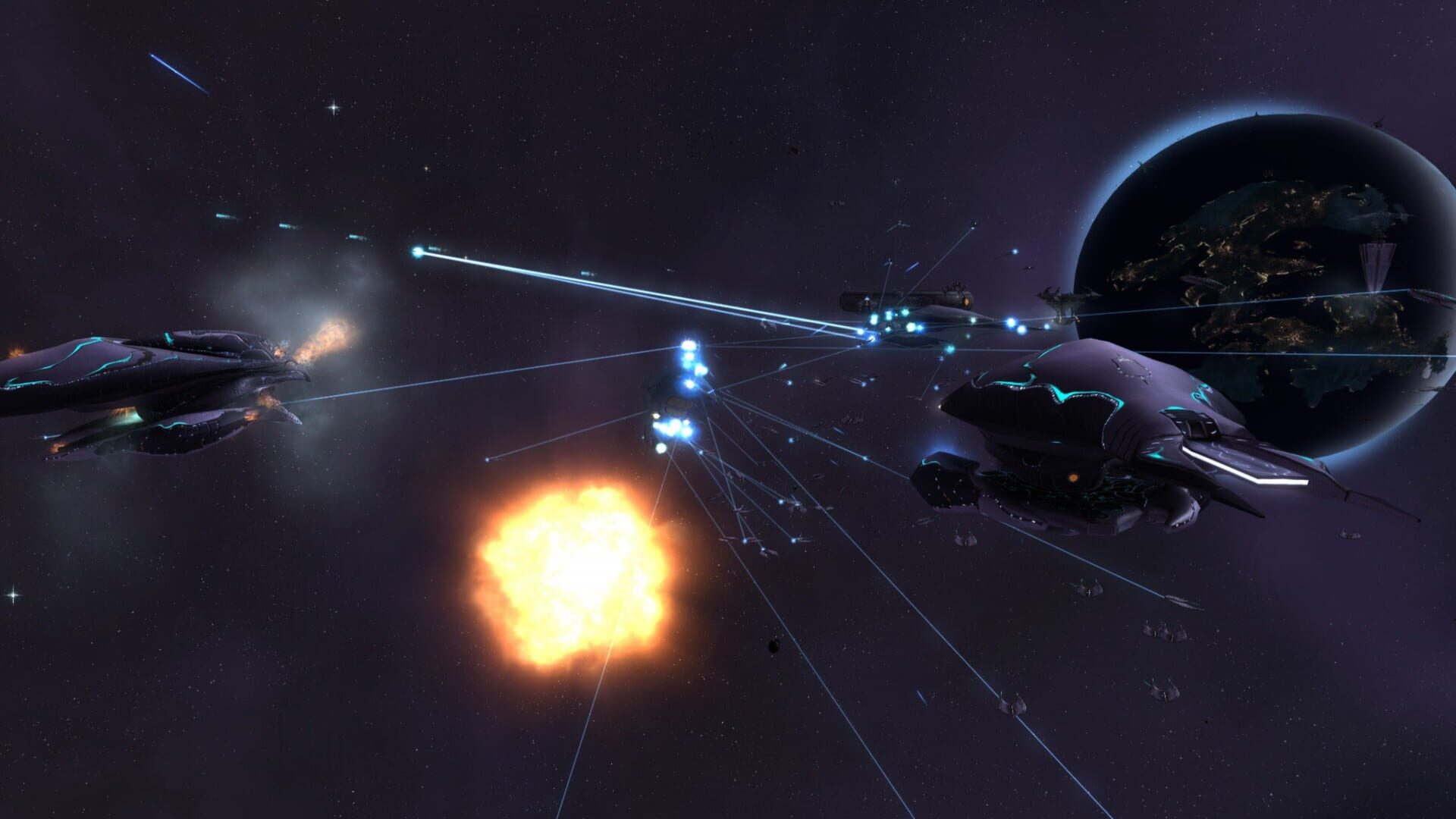
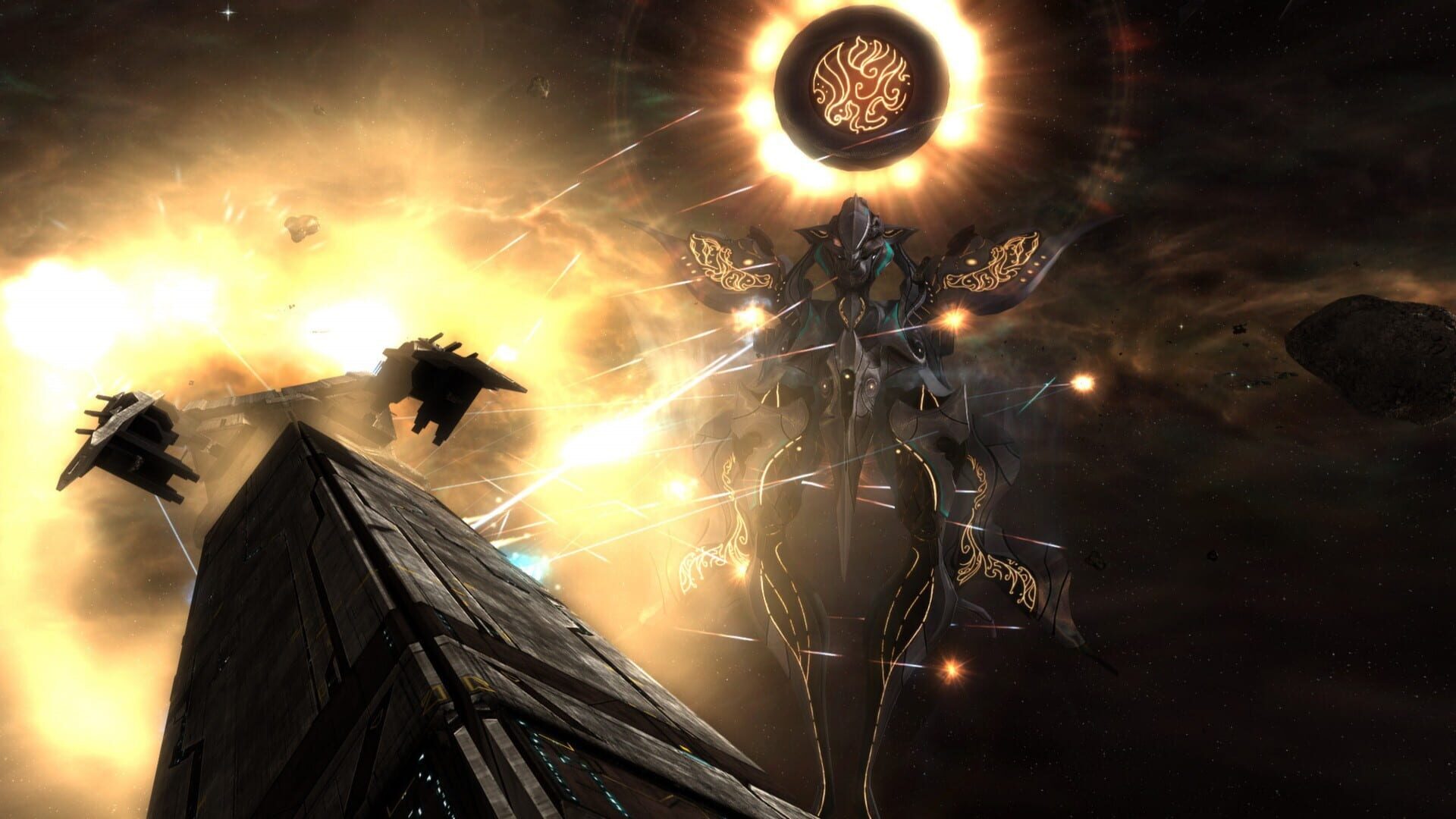
A deep, highly entertaining 4X/RTS hybrid with rich faction tech trees, faction-defining Titans and a brilliant seamless zoom. The over-hyped new graphics engine is its only real letdown.
A Windows PC; scalable detail keeps it friendly to modest machines. Sold on Steam and GOG, later expanded with the Outlaw Sectors and Minor Factions DLC.
| Platform | PC (Windows) |
| Released | 2012 |
| Developer | Ironclad Games |
| Publisher | Stardock |
| Genre | Strategy |
| Reviewed | January 27, 2013 |