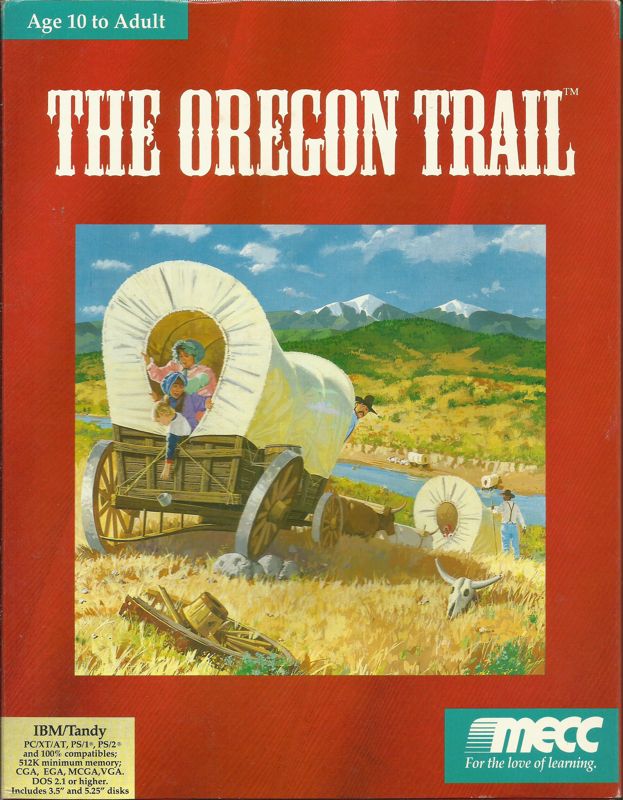
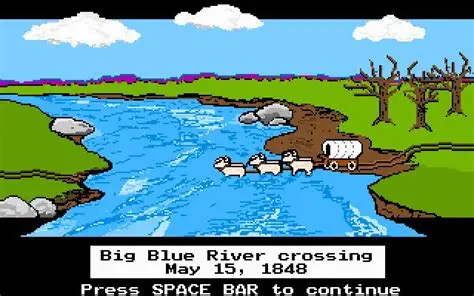
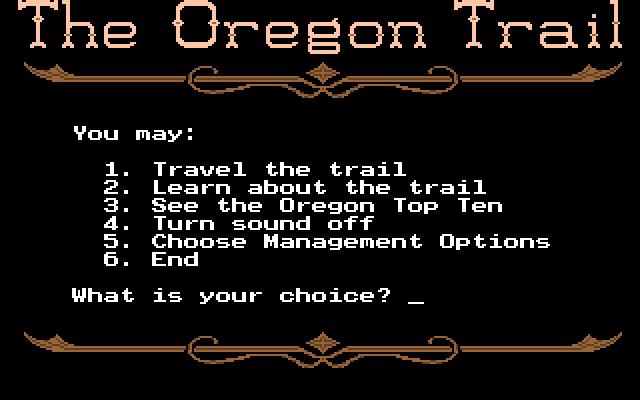
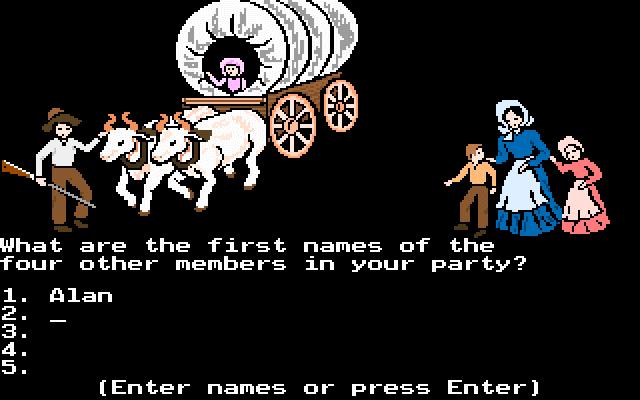
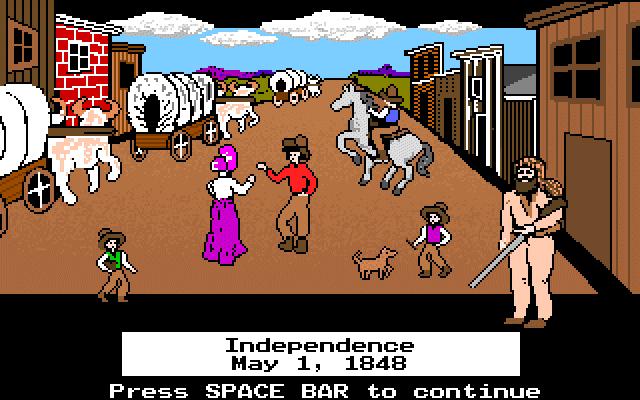
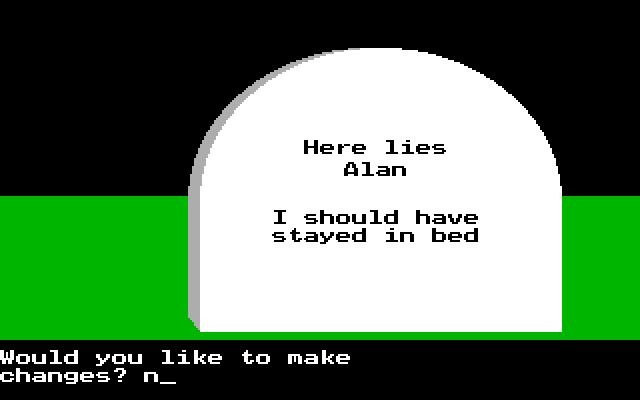
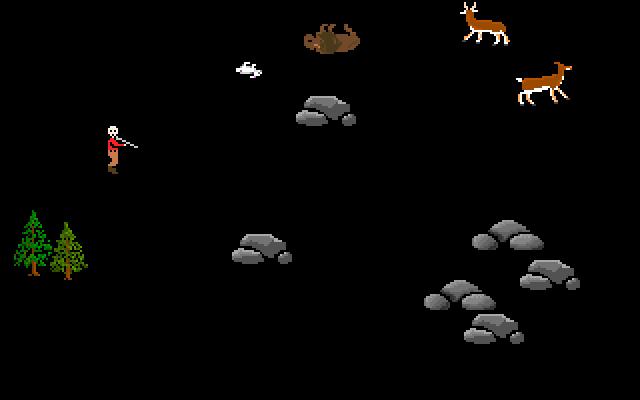
The Oregon Trail is an educational simulation developed by the Minnesota Educational Computing Consortium (MECC). It was first written in 1971 by student teachers Don Rawitsch, Bill Heinemann, and Paul Dillenberger, and reached its most widely remembered form with the graphical Apple II release in 1985. The player leads a party of settlers on a wagon journey from Independence, Missouri, to the Willamette Valley in Oregon during the mid-nineteenth century, a route of roughly two thousand miles. Success depends on resource management: the player outfits the wagon with oxen, food, ammunition, spare parts, and clothing, then makes a steady run of decisions about pace, rations, river crossings, hunting, and trade at forts along the way. Hazards include broken axles, bad weather, theft, drowning at fords, and above all disease, with the game's grimly famous dysentery death screen becoming a piece of American cultural shorthand. Designed to teach schoolchildren about the realities of nineteenth-century pioneer life, it became a fixture of American computer labs for decades and one of the best-selling educational titles ever made. Numerous later versions and remakes followed across platforms. Unlike most entries in its company, it was made in America, about America, to teach Americans their own frontier mythology, which is precisely what makes it such a pointed inclusion in any conversation about national identity in games.
Screenshots
In Features
The Most American Games Ever Made
A Fourth of July Top Loader: the most gloriously, ridiculously American games ever made, ranked by the vibe, and a look at how many of them were dreamed up somewhere else entirely.