Anbernic’s RG SP is out and shipping, and the chip inside is three years old
Anbernic's slimmed GBA SP tribute is on sale at $57.99 and shipping immediately. New shell, new screen, same Allwinner H700 it has used since 2023.
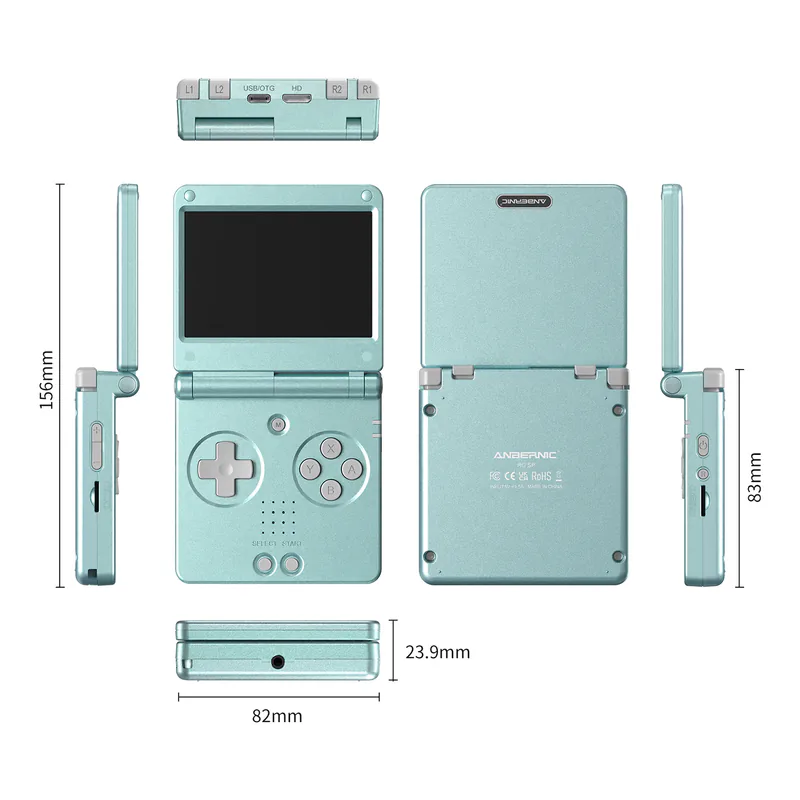
Anbernic put the RG SP on sale this week and it ships now, which is worth saying first because most handheld announcements these days are a pre-order page and a promise. The launch price is $57.99 against a $64.99 list, and that gets you the console and a 16GB card. Bundles with a 64GB card run $72.99 and a 128GB card $87.99. Four colours: graphite, platinum, pearl blue, pearl pink. The US warehouse is carrying the two lower tiers, so the 128GB bundle is a longer wait from China.
The spec sheet will look familiar to anyone who has bought an Anbernic clamshell in the last three years. Allwinner H700, four Cortex-A53 cores at 1.5GHz, a dual-core Mali G31, 1GB of RAM, 64-bit Linux. That is the same silicon behind the RG35XX line going back to 2023. There is no internal game storage at all, just two microSD slots, which is the arrangement I actually prefer: one card for the system, one for the library, and a dead console never takes your collection with it.
What is new is everything you touch. The screen is a 3.4 inch IPS at 720×480 with full lamination, which is the panel from the RG34XXSP rather than the smaller one in the RG35XXSP, and the top bezel around it has come down. Anbernic says the body is about 90 percent new tooling and roughly 10 percent slimmer than the outgoing SP. The sticks are gone in favour of tactile buttons, in the company’s words to “relive the pure joy of the 2D golden era”, which is marketing but is also an accurate description of what this hardware is for. There is HDMI out, dual-band Wi-Fi, Bluetooth 4.2, a 3300mAh battery quoted at six hours, and the whole thing weighs 168 grams.
The easy take is that a three-year-old chip in a new shell is not a story. I think that misreads what this category is. In 2003 Nintendo took the Game Boy Advance, changed nothing about the internals, folded it in half, put a front-lit screen and a rechargeable battery in it, and sold it by the truckload to people who already owned a GBA. The SP was a shell product. It is the device the RG SP is imitating, and imitating the right thing. The H700 has run the 8-bit and 16-bit libraries, the Game Boy line and PS1 comfortably since the day it arrived, and it still does. Above that it thins out fast, and no amount of new tooling changes that.
So the question is not whether it is faster. It is whether the hinge feels good, whether the buttons are better than the mush some of these clamshells have shipped with, and whether the lamination kills the parallax gap that makes cheap screens look cheap. Those are review questions, and POCG will answer them when one is on the bench.
One last thing worth flagging. Retroid raised the price of the Pocket Nova by ten dollars this week because chip and memory costs are climbing, and Qualcomm’s own increase has not even landed yet. The RG SP is $57.99 because it is built from parts nobody else is bidding on. That is the entire economic basis of the cheap retro handheld, and it is the part of this hobby I would watch most closely over the next year.