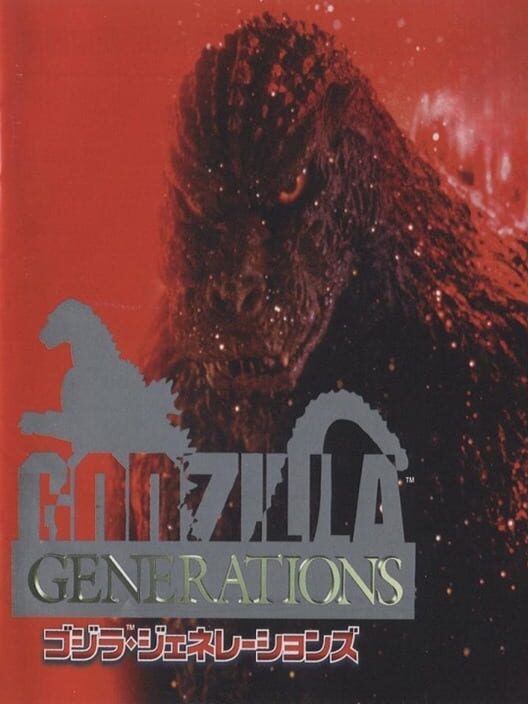
Godzilla Generations
Have you ever played a game you heard was horrible, only to find out, when you actually play it, that it isn’t all that bad? Godzilla Generations is that type of game. I had my games before I received my Dreamcast, so I was eager to start playing as soon as the postman handed over the package. I opened it up, hooked up the Dreamcast and popped in Godzilla Generations. As I hinted, I’d been told this game was really bad by someone I know at a video game magazine, who described it as Rampage with better visuals, so I was expecting something running against Fantastic Four on PlayStation and Quest 64 on the Nintendo 64 for the Worst Game of All Time title. You can imagine my surprise when I found out it wasn’t as bad as I was told. In fact, I found it quite fun. It’s not without its faults, which I’ll come to later, but first, the good.
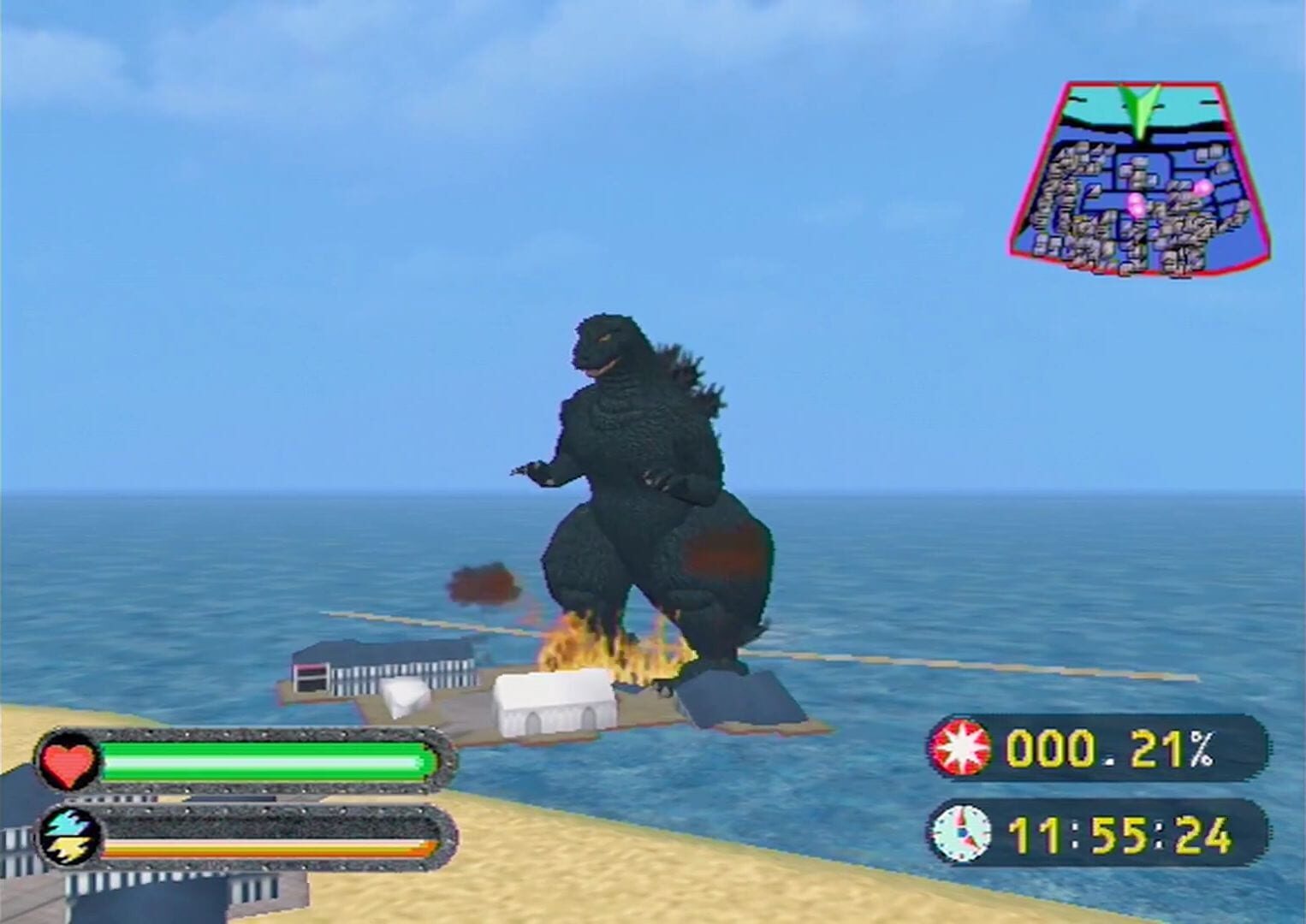
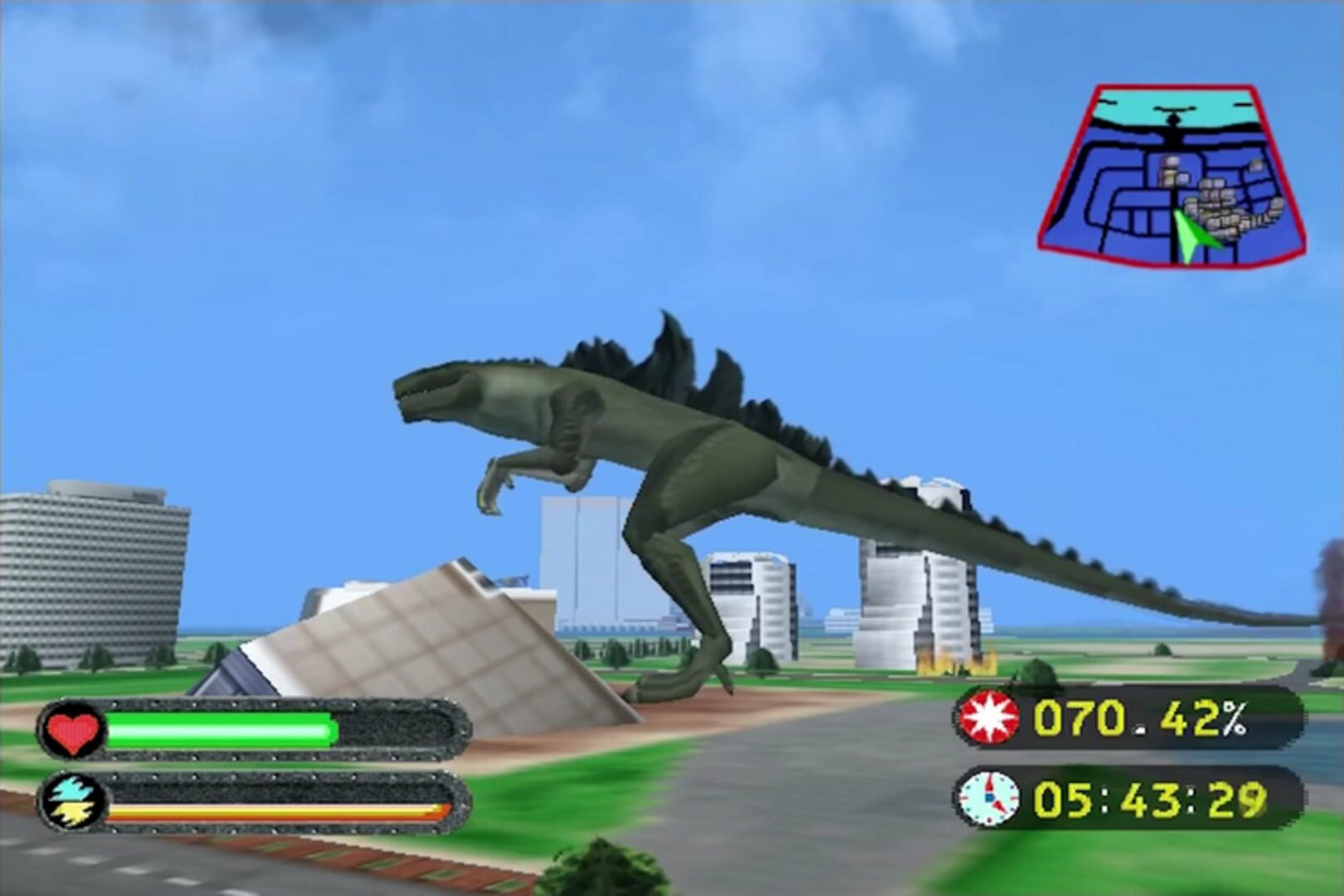
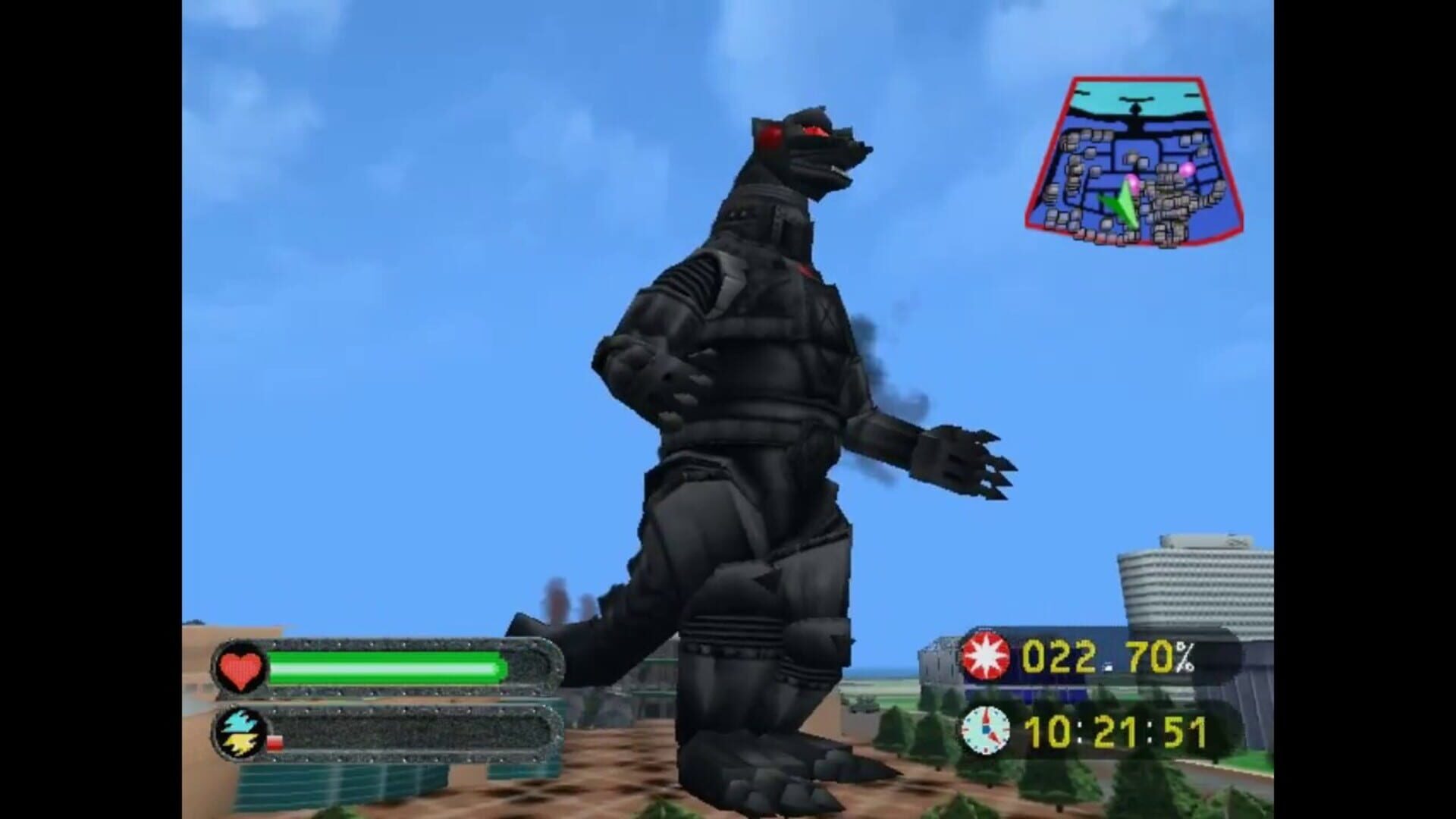
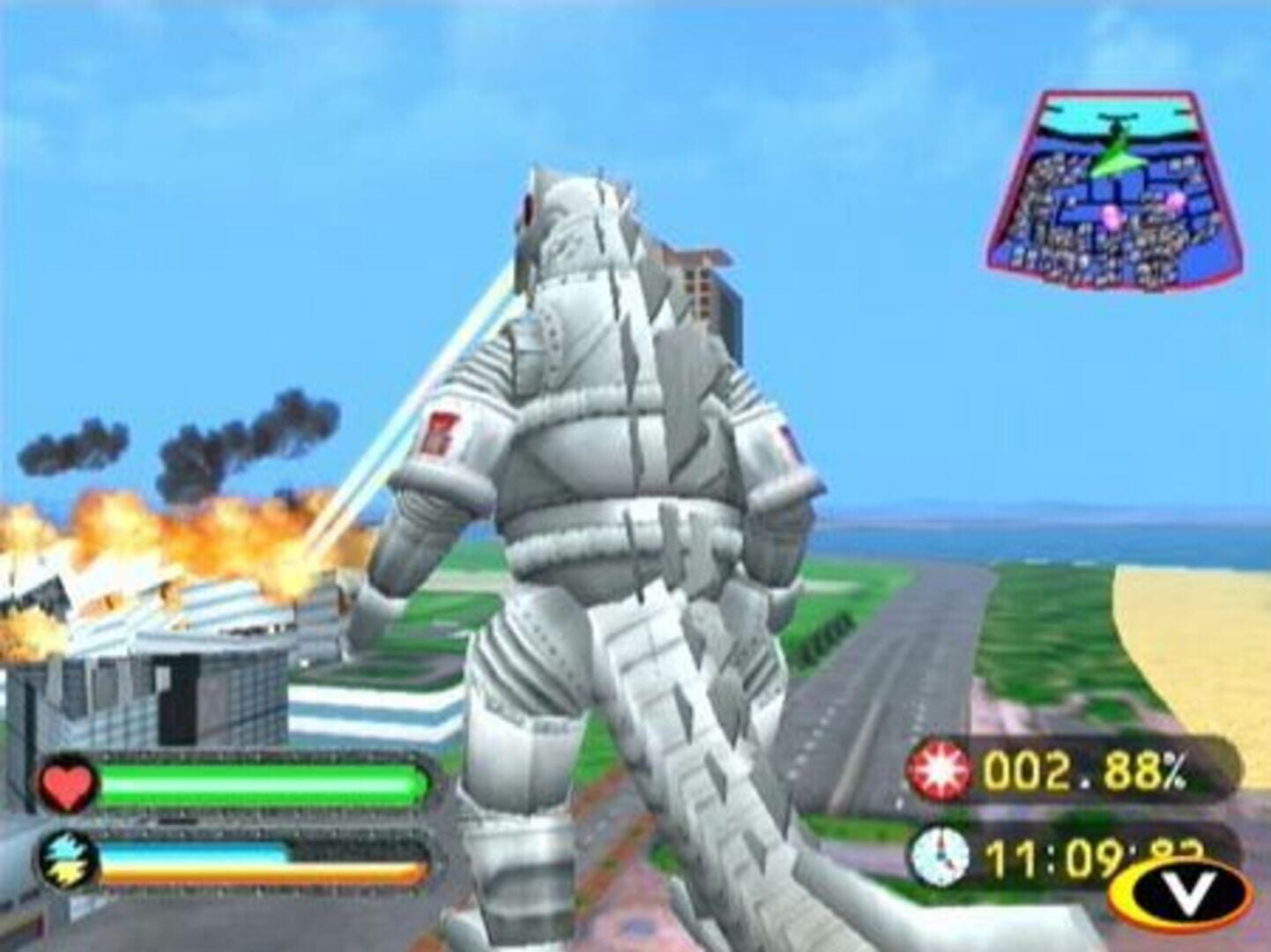
Graphically, Godzilla Generations is a beautiful-looking game. All the buildings and monsters are beautifully detailed, as is the scenery: trees, boats, even what looks like a golf course driving range. When I first started, I was stopping every minute or two just to look at the scenery. When I wasn’t gawking, I was trying to learn how to control my character. Some people say the control is too slow and unresponsive. That’s true, but it should be that way: Godzilla is a big, I mean REALLY big, creature, and if I were that big I know I wouldn’t be quick or responsive either. I don’t really believe control is a major issue here anyway, since the only purpose is to destroy whatever is in your path, and you don’t need tight control for that. It all works out in the end. The next thing I noticed while being dragged along by this game was the awesome audio. The Yamaha sound processor is doing its job: the sound effects are crystal clear and dead on, especially the roars of the various monsters and vehicles. Helicopters and planes rush at you and sound so realistic you’d swear you were stationed at a military base in Japan.
Now to the not-so-good aspects. First and foremost are the camera angles, which can destroy an entire game if they aren’t done right. Luckily, these aren’t as bad as the camera angles in other games such as Rascal, or to a lesser extent Gex 2: Enter the Gecko. To tell the truth, after the fifth or sixth game I was totally comfortable with them, and only really noticed them when I couldn’t locate what I hadn’t destroyed yet. It’s quite easy to get turned around in this game, even with the radar they give you. Next on the complaint list is the clipping, most noticeable in the larger cities with the bigger buildings. I’ve walked through pieces of buildings I’d destroyed, watching myself pass through a piece that reached my monster’s knees or even waist. These should have been fixed when the programmers tested the game, but it was clearly rushed. My next-to-last complaint is the lack of levels. There are five levels in Godzilla Generations, with two stages each except for the last, which has three. I believe there could have been at least three more. It’s a let-down to see a map of Japan during the loading screen, only to find out you’ll only be visiting about half the places on it; I was expecting more, and the lack of levels disappoints me more than any of the above. My last complaint is the difficulty: this game is too easy. It’s nearly impossible to die thanks to an energy-recovery button you can use whenever you’re low. I’d have added difficulty settings to make it more challenging for seasoned gamers. Still, I believe most players will be able to look past most of these faults and find that Godzilla Generations is actually a beautifully detailed, fun game to play.
Your mission is simple: destroy everything you see. You do this by walking over objects, walking through them, using your tail (if your character has one) to destroy them, or using your special attacks. You’re given a radar, a full gauge of energy, a special-attack meter, a meter that tells the percentage of the city you’ve destroyed, and a time meter counting down from a set time. Your time limit seems to depend on how big the city is and how much there is to destroy. You’ll soon find that destroying 100% of a city isn’t easy; I’ve played through quite a few times and only done it four times. The reason it’s so hard is that you have to destroy everything, I mean EVERYTHING, you can’t leave a single tree or building standing. I can’t describe the frustration of wandering all over a city with 99.85% destroyed, just looking for the one tree or piece of building I missed. It’s a good thing you don’t need to destroy a level completely to beat it, or I might never have finished the game. After beating a level you’re graded on a scale from A to E, on things like power, speed, combo and balance. Take it from me, you are not going to get straight A’s.
When you first start Godzilla Generations, you have a choice of only two characters: Godzilla or Mecha-Godzilla. That selection is soon joined by four others as you beat the game. Beating it with Godzilla unlocks Godzilla-1st; beating it with Godzilla-1st unlocks Godzilla-US; then Minilla; then Dr. Serizawa-Giant. Each has its own strengths and weaknesses. Godzilla is the version from the 80s and 90s movies, a darker shade than his predecessor, with a longer tail and two breath attacks, Red and Blue Flame. He’s a touch faster than Godzilla-1st, so use him if you’re struggling to pick between the two. Mecha-Godzilla, Godzilla’s arch-nemesis, is a metal replica with enhancements: he’s slightly faster than Godzilla and shoots energy beams from his eyes and bullets from his hands instead of fire. His downside is his short tail, about half the size of Godzilla’s and even shorter than Godzilla-1st’s, but he has one of the strongest special moves in the game, counter-balanced by the slowest energy recovery, so only use him once you’ve tired of beating the game with the real lizards. Godzilla-1st is the version from the 60s movies, quite different from the newer one: taller, with a shorter tail and only one breath attack, but able to recover more energy at once, so choose him for more of a challenge. Godzilla-US is the version from the American Godzilla movie, true to the film with a hunched body and chicken-like legs and a fairly long tail that doesn’t touch the ground. Like Godzilla-1st he has one breath attack, but he makes up for it in speed, the fastest of the bunch, and his special, a running rampage, makes him faster still; I’ve destroyed cities in one minute with it, so choose him if you want an easy game. Minilla is tough to explain, a baby version of Godzilla that looks like a cross between a midget and a pug-faced dog, the shortest character in the game, which combined with a near-total lack of a tail makes it that much harder to destroy buildings and countryside. His pluses are a quick-filling attack bar, a special with longer range than most, and very fast energy recovery, second only to Dr. Serizawa-Giant, so only pick him if you’re bored and have beaten the game with everyone else. Dr. Serizawa-Giant is hurt at both ends: he has no tail, making it hard to wreck cities, but he recovers the most energy at once, and his super, in which he uses a cylindrical glass case holding some kind of crystal to shoot rays of lightning that destroy everything around him, is easily the most damaging in the game, so use him only after you’ve beaten it with everyone else. That’s about it for the characters. Personally, I wish they’d included some different ones, like Rodan and that three-headed dragon guy whose name escapes me.
Finally, the Arena game. I’ve been hindered somewhat by my lack of Japanese, but I’ll do my best to explain it. It’s only accessible to those with a Godzilla VMS unit, the green ones released when the American Godzilla movie came out in Japan, which is basically a regular VMS with one added extra: a Digi-pet-style game that lets you raise and train a monster. See where this is going? This is where Godzilla Generations gets really fun: if you breed a monster on your Godzilla VMS and own the game, you can battle other monsters in the Arena mode on the disc. There are two modes. In the first you fight one-on-one against a computer-selected monster, a battle to the death, so make sure you’ve trained your monster well on the VMS first, and a word of caution, if your monster dies in the Arena, he’s gone for good: “You Died” shows up on the VMS screen and you start over with a new monster. In the second mode you pit any of the monsters you’ve encountered in the Arena game (which kind of look like Pokemon) against others from the game, and with a few friends and extra controllers you can all fight each other to the death, with one of the real monsters like Godzilla or Mecha-Godzilla as the main opponent. I haven’t worked out all the details on how you decide who attacks and how to block, but I only just started this mode yesterday, so as soon as I do, you’ll be the first to know.
A gorgeous, surprisingly enjoyable city-stomper held back by too few levels and no real challenge. Far better than its worst-game reputation.
A Dreamcast and the GD-ROM (a Japanese import); a Godzilla VMU unlocks the Arena mode.