Benefits of Gaming: Problem Solving
The problem-solving skills games quietly teach, and how they carry over.
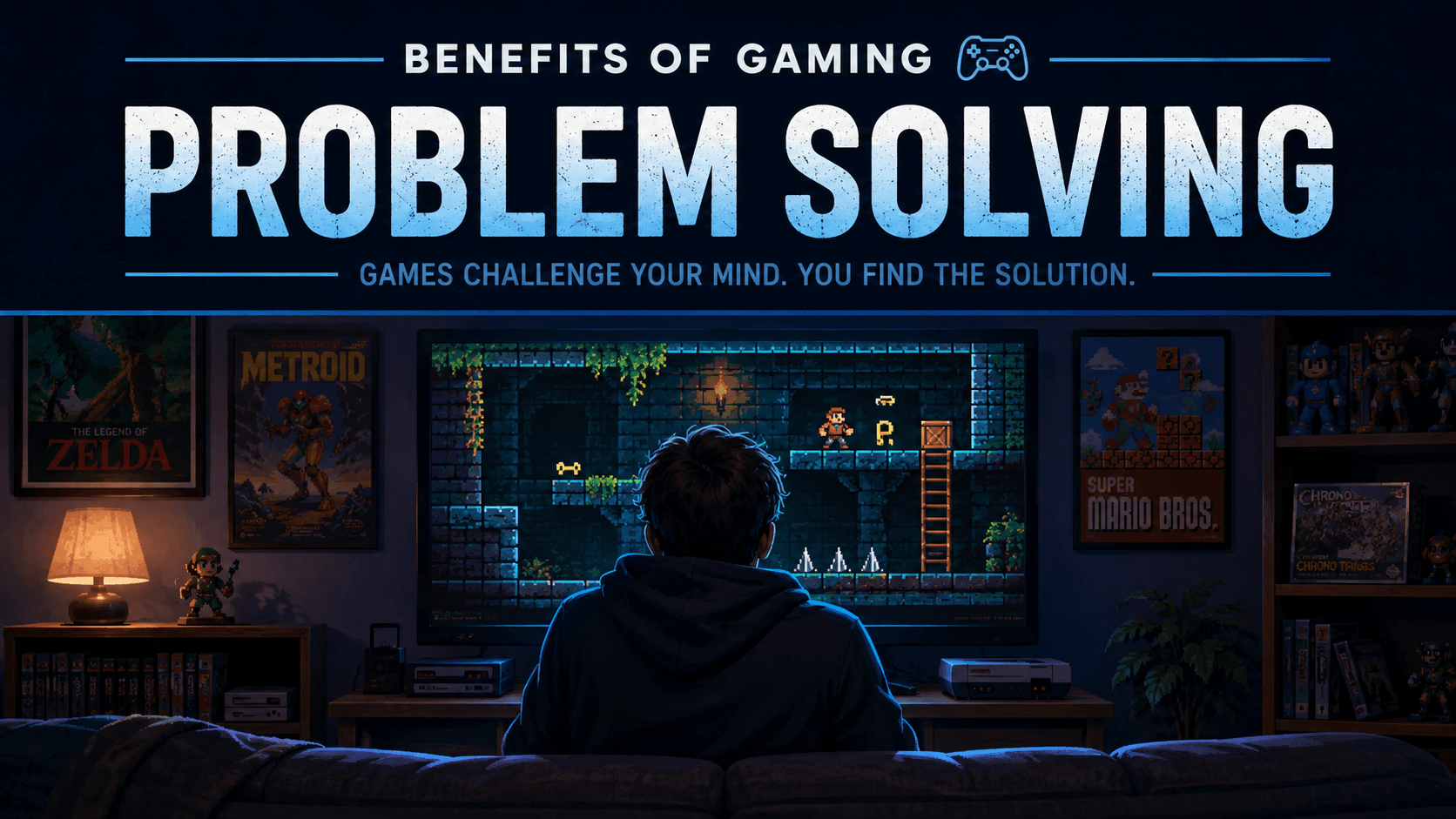
Despite what many people think, there’s a wide range of developmental benefits you can get from playing video games. Last time I touched on a few of the social ones, and while there are many more, it’s good to mix it up, so this time the focus is on the ways games help players strengthen and explore different problem-solving methods.
Whether you’re playing a puzzle game or a full action RPG, there’s probably something to learn. Problems are a near-essential part of any game’s plot, ranging from something as simple as some coloured blocks that need rotating to an army of aliens coming to destroy a planet. Whatever the problem, it’s your job as the player to solve it, and games tend to evoke a few common problem-solving methods in the process.
Root-cause analysis. As the name suggests, this has you identifying what’s actually causing the problem. It isn’t a solution in itself, but it’s an important step toward the right course of action. If the cities in your game aren’t receiving cargo on their trade routes, violent bandits may be the culprit, and once you know that, you can decide how to deal with them. It’s not perfect (you can always dig deeper: what’s causing the bandits to attack?), but it’s a good way to exercise deeper thought.
Means-end analysis. Solving a problem often means reaching a specific goal, and this method helps you get there by having you recognise your current state and the steps needed to close the gap. Want your character to reach a higher level? You’re low now but want to climb, so gaining experience points is the path that gets you there.
Collaboration. Working with others is an often-overlooked strategy that matters both socially and cognitively. Collaborating gives you real practice communicating with other players as you solve an issue together. In MMOs you might be handed a distinct role on a team, which is practical experience in delegating tasks and taking on responsibility, everyone has their own strengths and weaknesses.
Trial and error. This guess-and-check method is often a last resort, but depending on the situation it can still come in handy.
The great thing about these strategies is that players don’t just use them mid-session, they’re also more likely to reach for them in real life. Getting experience solving in-game problems can make you more adept and more willing to take on the challenges you face day to day. So even though playing games can seem like a totally irrelevant waste of time, rest assured it isn’t necessarily the case: these strategies really can come in handy with real-world problems.