The Subsidy
Microsoft is calling Xbox a subsidy it has to fix. Watch what that one word puts up for sale.
This past April, Compulsion Games won a Peabody Award for South of Midnight. Not a gaming award. Not something handed out at The Game Awards or by PC Gamer. A Peabody, the prize that goes to the great reporters, the documentaries, the magazines. Journalism’s award.
Matt Booty, who runs Xbox’s studios, called the win “such a validation of the storytelling capability of games these days.” Around the same time the new Xbox CEO, Asha Sharma, told Game File that “every day there’s something wonderful there.” And on June 7, at the Xbox Games Showcase, Ninja Theory walked out on stage and announced a new Senua game to a wall of applause.
What most people watching did not know is that Microsoft had reportedly already decided to cut Ninja Theory loose before that reveal ever happened. The read going around now is that they put the studio up on the stage anyway, hoping the moment would help sell it to somebody.
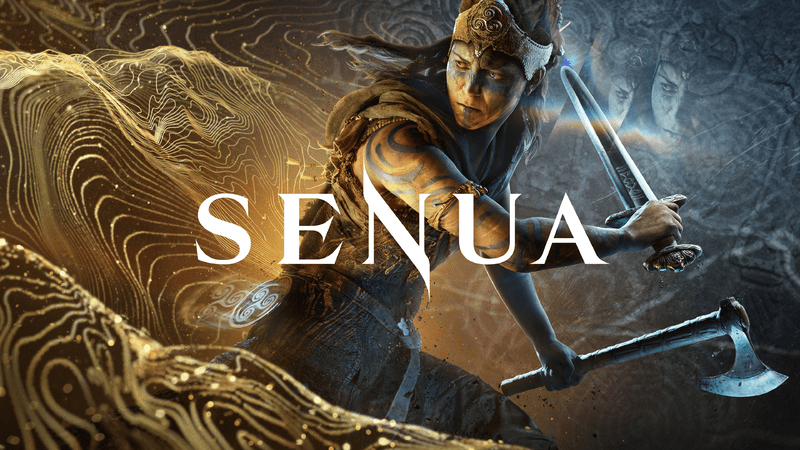
Fast forward to this week. On June 15, Jason Schreier reported that Ninja Theory is closing. Compulsion and Double Fine are trying to negotiate buying themselves out, because they are on the chopping block too. Ninja Theory’s people reportedly found out on a Monday, on a call from Microsoft. Compulsion’s writers are already out looking for new jobs.
And even if those studios buy themselves out, a big chunk of those teams will be gone anyway. We have watched a number of studios buy their way to independence lately, and every time they come out the other side leaner, smaller, and short a lot of the people they used to have.
The problem with all of this is the speed of it. Two weeks ago, every one of these people was on the record about how great these studios were, how good the game development was. The whole time, Microsoft was already lining up the cuts. Look at who left and when. Phil Spencer, the former Xbox CEO, and his heir apparent walked out the door at the same time. Spencer was a guy for the gamers, and the way the two of them left tells me they could see Microsoft putting the pins in. Microsoft wants to spend more of its energy on AI and less of it on video games.
So here is the question that actually matters to me. If a Peabody, a showcase reveal, and your own bosses praising you by name two months earlier still cannot keep your studio open, then what was any of it for? What does that say about where this industry is right now?
The problem is that word
On the New York Times Hard Fork podcast in June, Satya Nadella said Microsoft has “been subsidizing that entertainment, and not monetizing it.” Then, with a laugh, he added that there is more monetization of Xbox games happening on YouTube than at Microsoft. A few days later, word got out that Microsoft has had real conversations about spinning Xbox off, into a separate subsidiary like GitHub or LinkedIn, maybe a joint venture, some structure tight enough to eventually sell. Nothing is imminent, supposedly. But Microsoft needs to confirm it or deny it, because right now it is just hanging there.
I reached out to a few people who work in Microsoft’s gaming department. None want to be on the record, but each of them told me they were updating their resumes and LinkedIn pages.
Now, strip the corporate verbs out of what Nadella said and part of it is true. Microsoft bought a lot of studios. It spent a lot of money making good games. And it never built a business that captured the value those games created. A streamer playing Hellblade probably makes more dependable money off that game than the team that actually built Hellblade. He probably is not wrong about that.
But look at what that word, subsidy, smuggles in. It takes a thing the company chose to buy, these studios, these developers Microsoft went out and acquired, and reframes them as a cost that was bleeding the business dry. Nobody forced Microsoft to buy Ninja Theory in 2018. Nobody forced them to greenlight a second Senua game, and then a third. The subsidy was a decision. It was made by the same company that is now describing it as a mistake it has to correct.
And once that word is in play, it does not stop at the studios. It attaches to everything Microsoft has ever done with Xbox. Watch politics for any length of time and you know how people feel about the word subsidy. Microsoft reaching for it is a harsh choice, especially in the climate we are in right now.
Why a site about old games cares
So why does a site mostly about retro gaming care about a corporate reshuffle? A couple of reasons.
To me, Microsoft was always the new Sega. They showed up right as the Dreamcast was dying, and a fair amount of that talent and energy came over from those Dreamcast projects. The first Xbox was good, but it did not take over the world, the same way the Sega Master System did not. Then the Xbox 360 changed everything and gave Sony a real run, the same way the Genesis did to Nintendo. Xbox is a big part of retro now. OG Xbox consoles constantly sell out. There are great Facebook and Reddit communities for them. And now the 360 is also retro, and it is getting more popular. Especially with younger generations.
And somewhere along the way, Xbox decided that buying a game should mean keeping a game. Phil Spencer was all about giving you the option to play: your Xbox games on Xbox, on PC, on Switch, on a PlayStation 5. In 2015 he committed Xbox to backward compatibility, and they did not just let you load up old games. They made them run better. OG Xbox and 360 games on the Xbox One, then on Series X and S, at higher frame rates, higher resolutions, sharper than they ever looked on the hardware they shipped on.
Jason Ronald, who ran that program, explained why it was worth doing. “It’s not about selling more copies,” he said. “It’s about preserving the art form that we know and love.” And: “There’s no other medium, like music or movies, where if you choose to buy a new device, your catalog doesn’t come forward with you. We want that same kind of experience with games.”
Phil Spencer said it plainly in 2024: backward compatibility is “a pretty fundamental brand promise for Xbox.” Sarah Bond, the Xbox president at the time, stood up a whole team dedicated to game preservation. For a few years there, the biggest company in the room was on our side, as gamers, as collectors, as people who care about this stuff staying playable.
That promise is the second thing that word, subsidy, now hangs over.
The crack in the glass
Here is the uncomfortable part. That promise already has cracks in it.
In July 2024, Microsoft closed the Xbox 360 store. That is the trouble with digital storefronts. Sometimes they come with an expiration date. There were around fifty digital-only Xbox 360 games that had no physical version and no backward-compatible version anywhere else. They are gone. Once that store closed, a new player has no legal way to ever buy them again. Beyond those, there is a much bigger pile of 360 games you simply cannot purchase anymore. If you already owned them, you still have them, and they still run through backward compatibility. But you cannot buy them. Some 360 games you can still buy on the regular Xbox store. Hundreds more you cannot.
So “your purchases are safe” and “the history is preserved” are two different sentences. What you bought, you get to keep. What you did not buy, you can no longer get.
And here is the other thing about digital. You cannot trade a digital game. There are movies and physical games I love, like the original Tomb Raider, and just the other day I bought a boxed copy off somebody on eBay. I still have that option. I can go find it. But when a digital store closes, and that store was the only place a game ever lived, and there is no trading it and no selling a used copy, that is it. The purchase was safe. The history is not really as preserved as it sounds.
Who is steering now

Sarah Bond, the executive most tied to preservation and backward compatibility, the obvious heir to the throne, left the company outright. The new CEO of Xbox is Asha Sharma, who came from Instacart and Meta and has never worked in games before.
That is not a bad thing by itself. We have seen it before. Back in the 90s, executives who had never touched gaming came in and turned out to be great at it. So I am not knocking Asha for coming from Instacart or Meta.
What I am knocking is that her first real act, by her own memo, is a reset of Xbox. She wrote that Xbox will finish the year at around a 3 percent margin, that it has spent over 20 billion dollars in five years while revenue actually fell, and that, in her words, this “cannot continue.”
And I agree with her. But that is the easy version of this article, and the easy version is dishonest.
She is not a cartoon villain, and the business problem is real. A division of a company this size losing this kind of money on every console it sells, propped up by subsidies, is a genuine mess. They have not even shipped a Halo in what, almost five years, and Halo has always been Xbox’s. The in-game ads panic of the last few days is its own kind of mess, a thing getting blown way out of proportion, people hunting for ways to push ads into games. I will give Asha and Booty and the rest of them credit for trying to fix something that is actually broken.
But something is broken beyond Xbox. Something is wrong with the industry, and with Microsoft as a whole. They buy up these devs or publishers that were already profitable, then fire a bunch of people, then say the purchase was too expensive and that they are losing money, and shut down or dissolve the companies they purchased. It’s just wrong.
So we’ll see
I am not telling you the sky is falling. I am not telling you your downloads are going to stop working tonight. Microsoft recommitted to backward compatibility as recently as this spring, and it still has the best track record in the industry by a wide distance.
Maybe a more independent Xbox would be freer to invest in its own platform. Maybe the promise gets stronger instead of weaker. That is a real possibility, and I want to be fair to it.
But at the same time, you have to remember that Microsoft recommitted to Ninja Theory on June 7th at the Xbox Games Showcase… How did that work out? And you have to remember the people who looked us in the eye, who stood up on a stage and told us backward compatibility is here to stay, that the game you buy today will work tomorrow and the game you bought ten years ago will still work years from now. Those people are gone. They are out of the building. More and more of them are leaving every day. But the key ones left when the new Xbox CEO took over. Now you have to realize that the most pro-preservation thing the biggest company in gaming has ever done is now sitting on the wrong side of a margin sheet, right next to the studios that won all those awards and did all that great work and got hyped up so loud by the same CEOs and directors and presidents who are now cutting them.
So we’ll see.
If you are a developer reading this, this lesson is older than POCG itself. You do great work. The honors and the awards belong to you, every one of them. But job security was never one of the things this business handed out. And the day a company starts talking about how it has been subsidizing you, understand that the awards on your shelf are just marketing for them, and the bottom line to them is how much money you bring in.
And if you are a player, buy physical when you can. Back up what matters to you. And do not mistake a promise for a guarantee, no matter how good the company making it has been.
We have lost enough of this history already. The whole reason this site exists is to try to recover a history of gaming that I did not save in time.