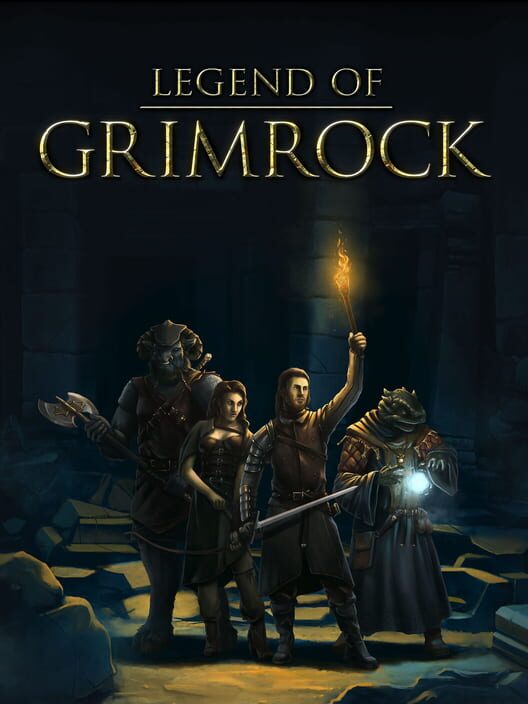
Legend of Grimrock
When a player is asked about the classic dungeon-crawl genre, they may have to take a visit to their attic and dust off some floppy discs. When it comes to the modern-day dungeon crawl, it exists as a blended genre, usually with an action-RPG. The merging of both of these worlds can create a noxious experience that is awkwardly given the label “game.” Legend of Grimrock attempts to blur the line between classic and modern with its old-school feel and its modern graphics. That leaves one to wonder whether Grimrock is up to the challenge of attracting players who aren’t just around for the sweet taste of nostalgia.
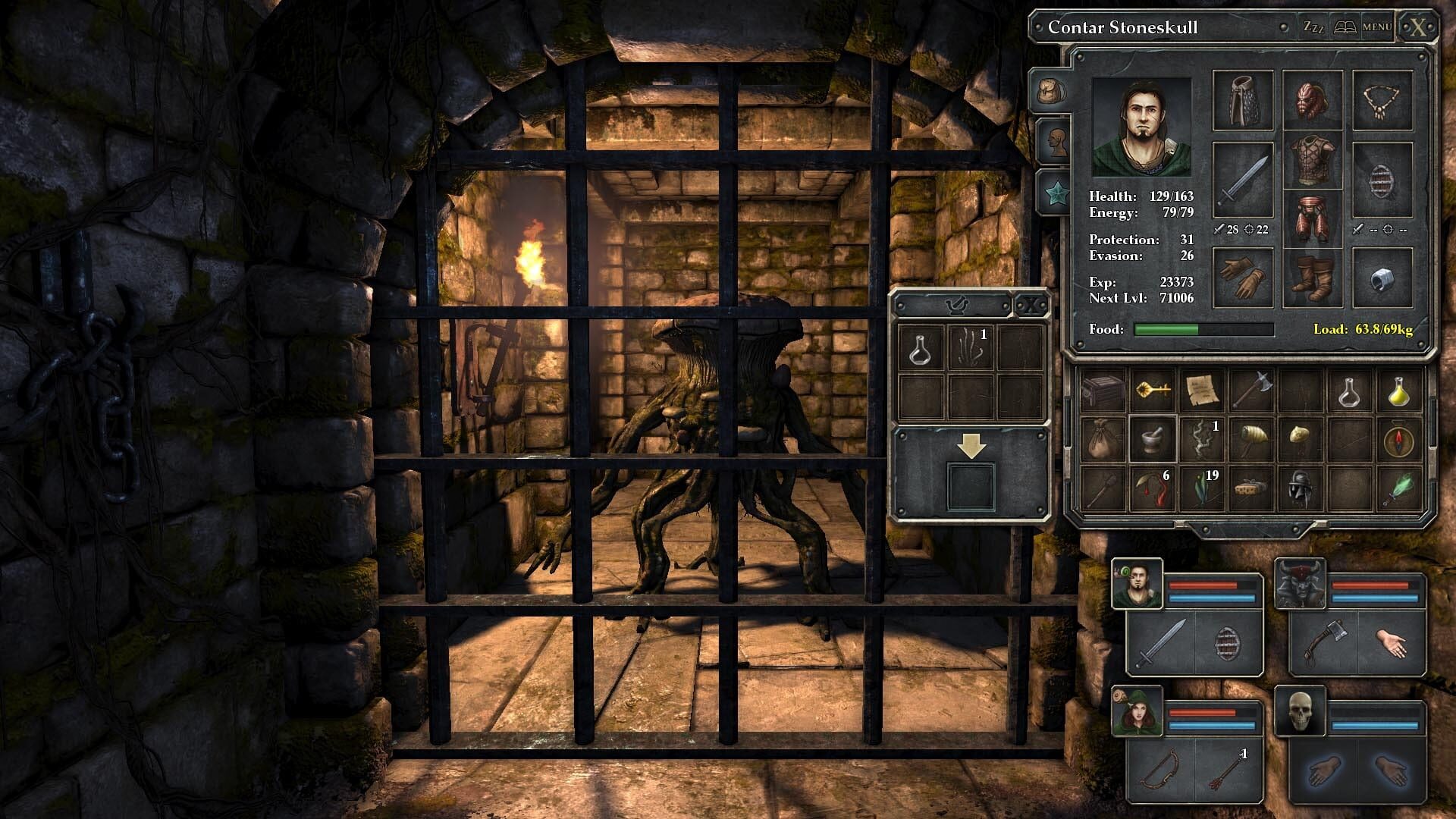
The game graces the player with a menu screen upon entering. When a new game is selected, a player is offered either the option of selecting a pre-made group or fully creating and customizing a party. The customization during this process was excellent. A player selects the character’s race, traits, and skills to help get the party members tuned exactly to suit their playstyle. Out of the races, it boiled down to four races but two options: human and “ugly” (minotaur, bug, or lizard). We say “ugly” because there are no exotic races like one may expect with this genre, such as elves. However, this fact continues to lend to the uniqueness of the game world the developers created for the inhabitants. Customization did get a small hit due to the fact that characters can be fully customized, but the game doesn’t immediately make them capable. For example, a player might make a customized archer, but they will have difficulty finding a bow in the first three levels of the game.
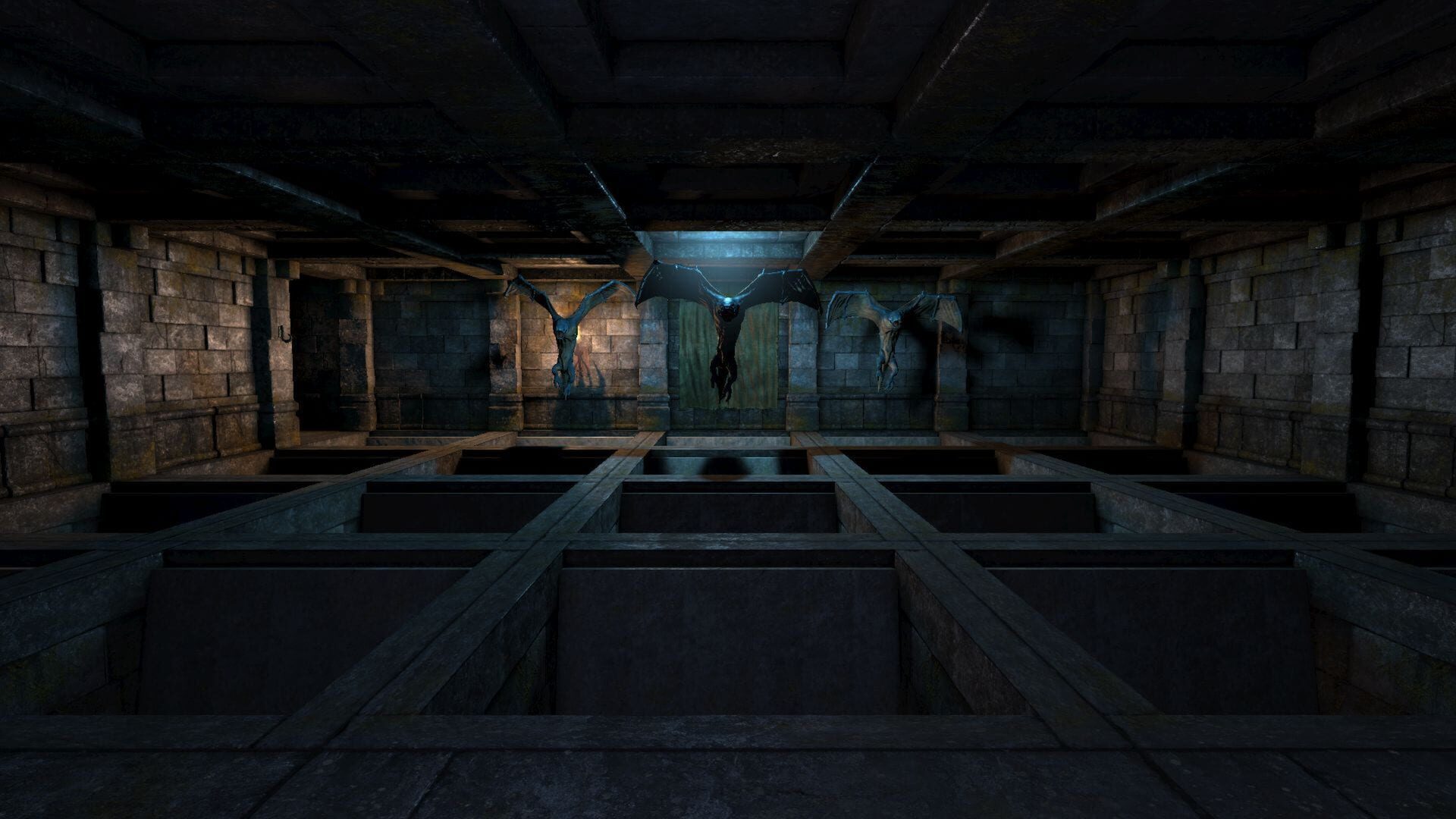
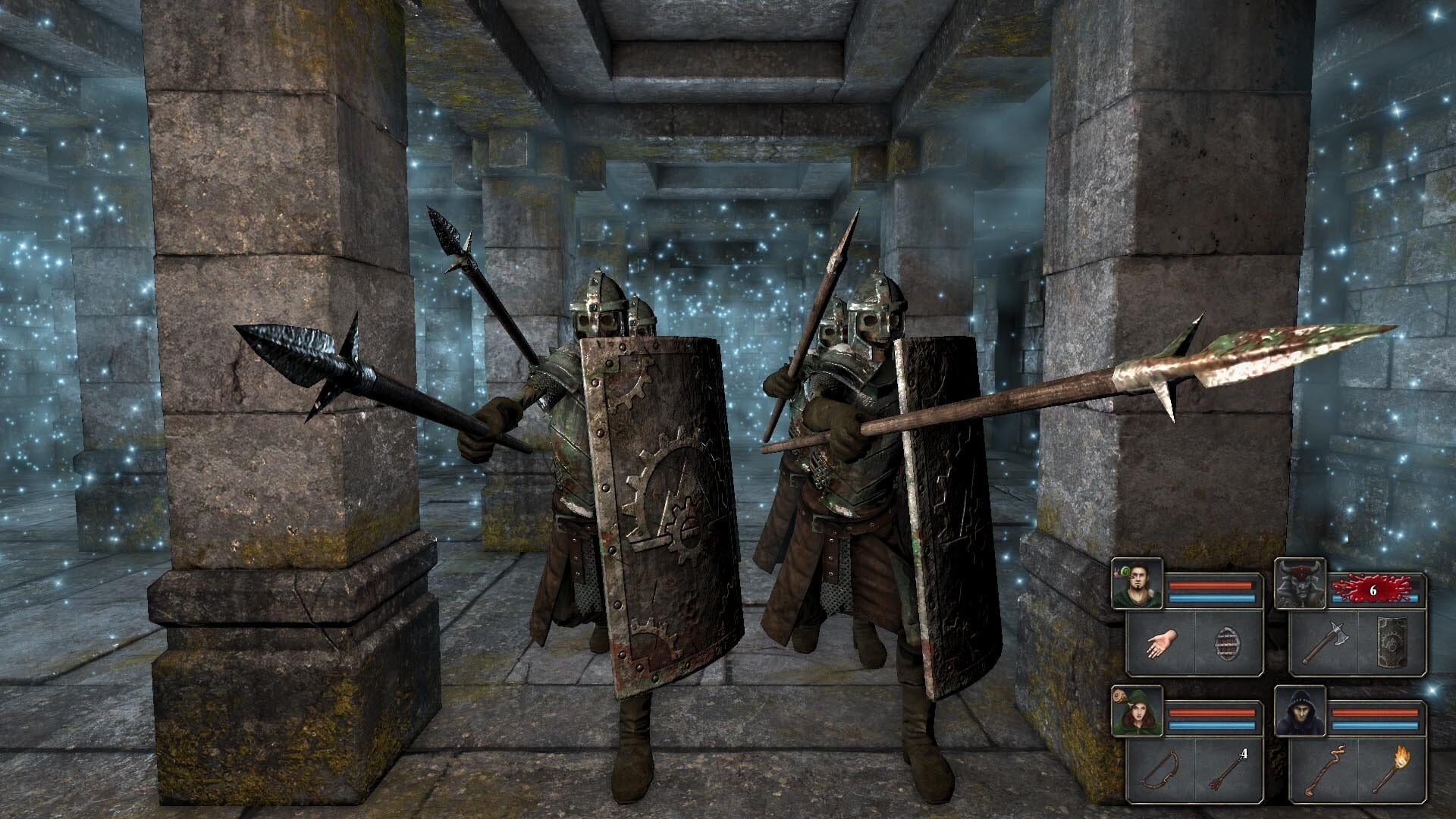
Traditionally, storyline and plot are not always the strong point of dungeon crawlers. This fact is no different for Grimrock. The game offsets this weak area with a concise and well-illustrated introduction and the occasional injection of plot when the party rests. Upon arrival into the game, a player will immediately notice the similarities to Wizardry, with the strict ninety-degree turning and the rigid moving one block at a time. Shortly after arriving, players will run into their first combat scenario: battling a snail. The initial impression is that the monsters are going to be lacking. However, shortly after this introduction, the dungeon will start spewing monsters that vary in both ability and tactics. For instance, the player will either battle or avoid plant monsters shooting AOE acid balls, spiders that dish out fast attacks with a side of poison, and skeletons in heavy armor that stack two by two. The final thing to note about combat, something Wizardry lacked, is that players have the ability to move during it. Consequently, making use of tactics can help minimize the use of resources and maximize the life expectancy of the party members.
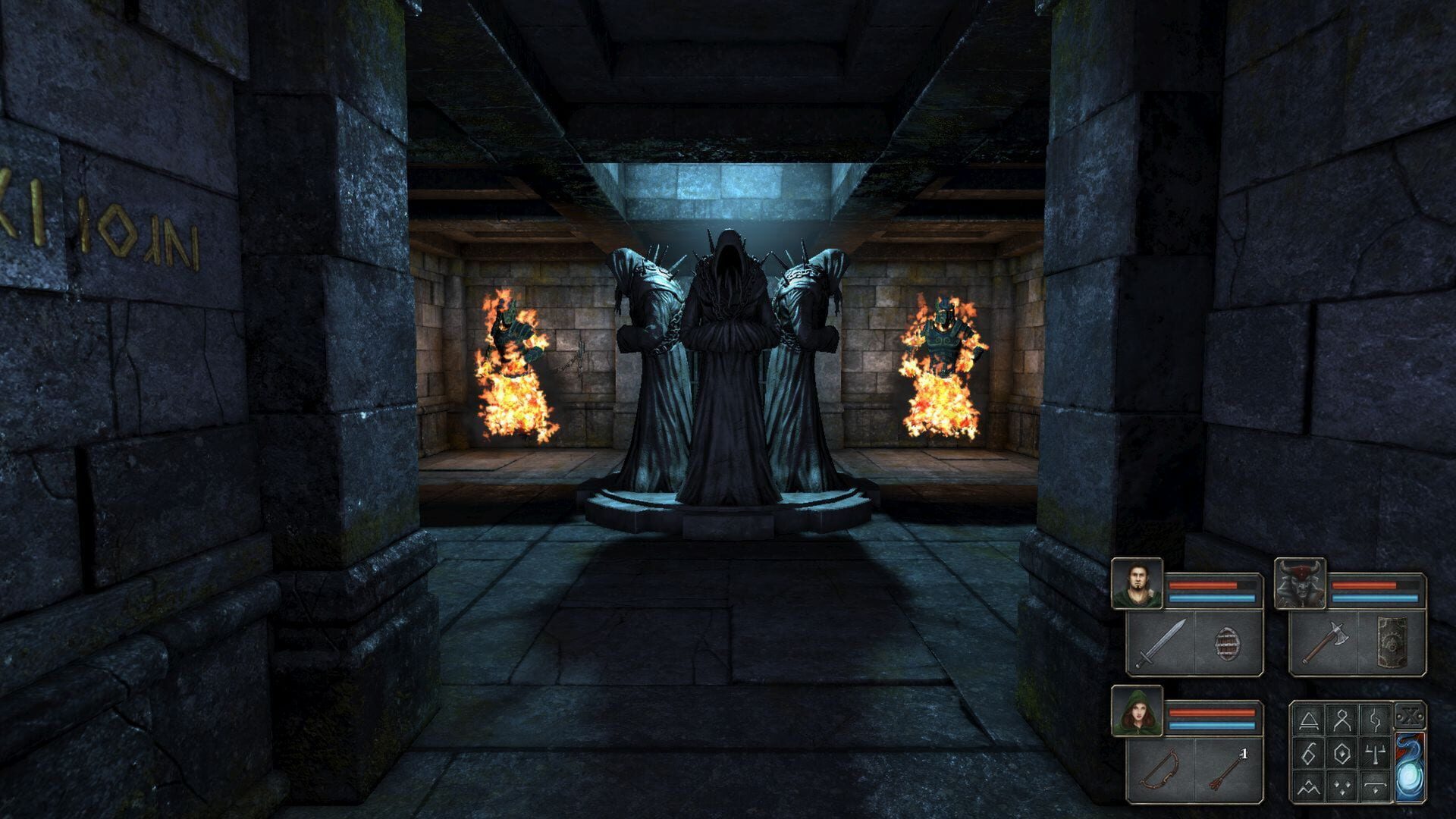
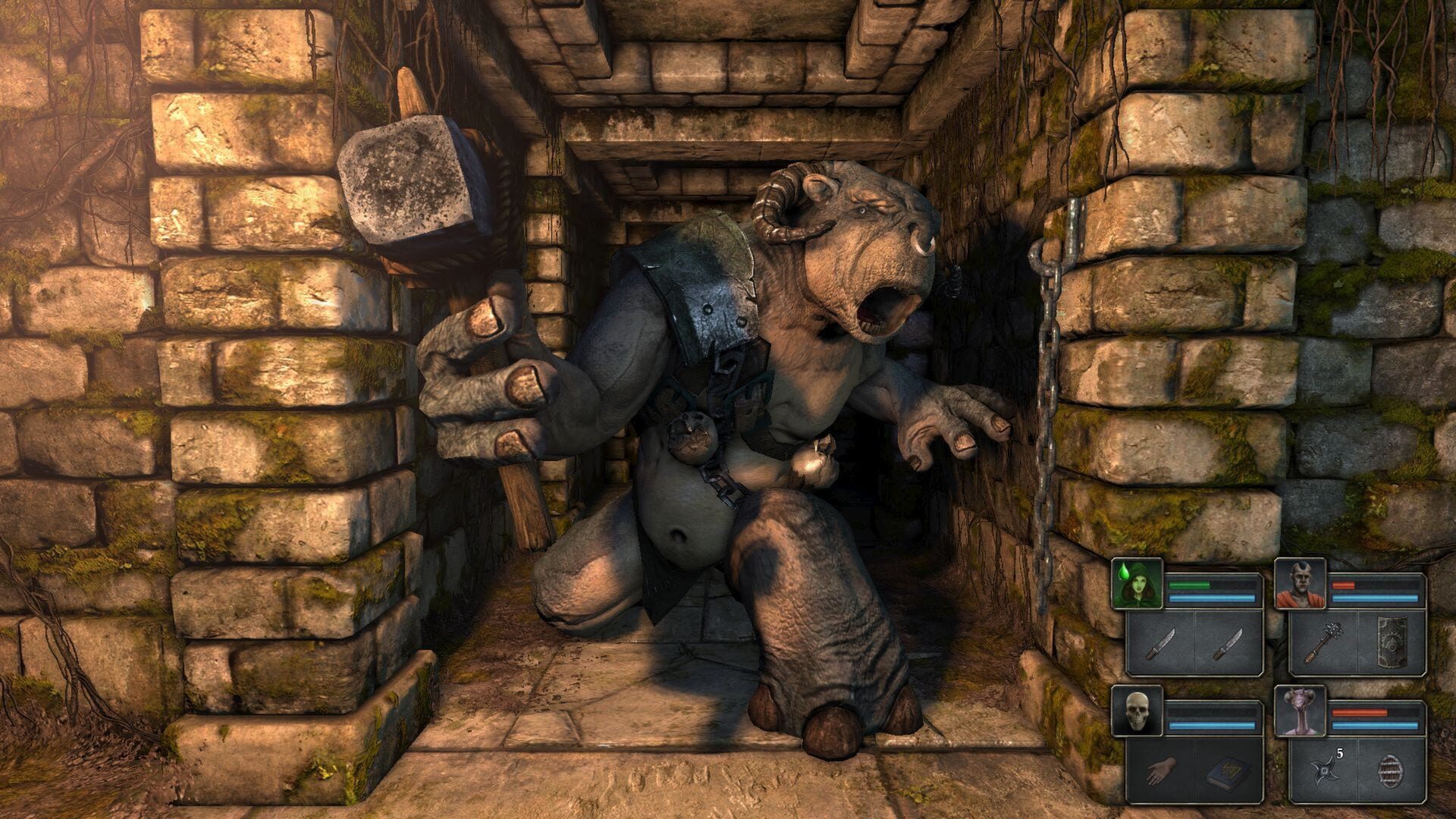
The character customization in Legend of Grimrock leaves nothing to be desired. Everything is included, from name generation to importing custom portraits. The only thing missing is the kitchen sink. The Grimrock environment is one that the player will want to become very comfortable with, for they will be seeing a lot of it. However, the graphics that make up that environment are very detailed, down to even the tiny rocks in the walls. In combat, players will be able to see the slime on the snails and be up close and personal to the face of a spider while the party’s mage (assuming they have one) incinerates it with a fire burst or gives it a dose of ice shards. The game provides the right diet for the gamer when it comes to graphics: it gives enough to not let a player starve, without allowing for overindulgence. The graphics are nothing short of amazing. Albeit you will be seeing a lot of the same, there are awe-inspiring moments throughout.
When it comes to audio, Grimrock focuses on a central idea: that the player should hear what is going on in the dungeon, and not the soundtrack. Other than the great accompaniment to the game’s introduction, there isn’t a soundtrack to speak of. Playing the game comes down to a few straightforward ideas. The first is, how does a player learn everything they need to know? The game offers a straightforward tutorial on all the mechanics through the game’s menu. The game consists of knowing three fundamental elements. The first is manipulating the environment with the mouse. Picking up torches, equipping gear, and opening doors all come through management of the mouse pointer. In addition, the mouse can be used in place of the movement keys to move the characters if the player so desires; the game becomes an entirely fly-by-mouse affair with this option. Assuming the default controls are used, the player will manipulate movement with the classic WASD keys, with Q and E making the ninety-degree turns. The third element, combat, is a combination of the first two, allowing for moving the party out of harm’s way as needed and right-clicking (or clicking a certain pattern for spells) to attack with a weapon. The spell system leaves something to be desired. Specifically, a player has to input a pattern to learn and cast spells. Inputting more complex patterns while trying to negotiate movement and attacks and opening menus for potions, if needed, creates a more complex combat environment than necessary.
When it comes down to it, the game is fun to play. The monsters are diverse enough to challenge a player’s tactics, which can sometimes lead to frustration. The puzzles throughout the game provide a plethora of stimulation for the mind, and the ever-longing lust for treasure might just be enough to see the player through to the end. Replay value will only come in one of two forms. A player can try the challenges of the game with a different party makeup, or go through the game and find the secrets that were missed the first time. Other than those specific areas, the game isn’t going to have much more replay value.
If you were to take a mortar and pestle and combine it with modern graphics, character customization, challenging puzzles, good controls, and combat maneuverability, you would get Legend of Grimrock. Unfortunately, some of the bitter ingredients that got mixed in were unnecessary complexity with combat functions, lack of story, absence of a soundtrack, and only decent replay value. Despite this, Legend of Grimrock still comes out tasting pretty good for both those sipping for the first time and those drinking in the full flavor of nostalgia.
A confident revival of the grid-based dungeon crawler, classic bones and modern looks, with deep party-building and devious puzzles. Fiddly pattern-based spell-casting and a missing soundtrack are the bitter notes.
A Windows PC; available on Steam and GOG, with an iOS port. The sequel followed in 2014.
| Platform | PC (Windows) |
| Released | 2012 |
| Developer | Almost Human |
| Publisher | Almost Human |
| Genre | RPG |
| Reviewed | June 4, 2012 |