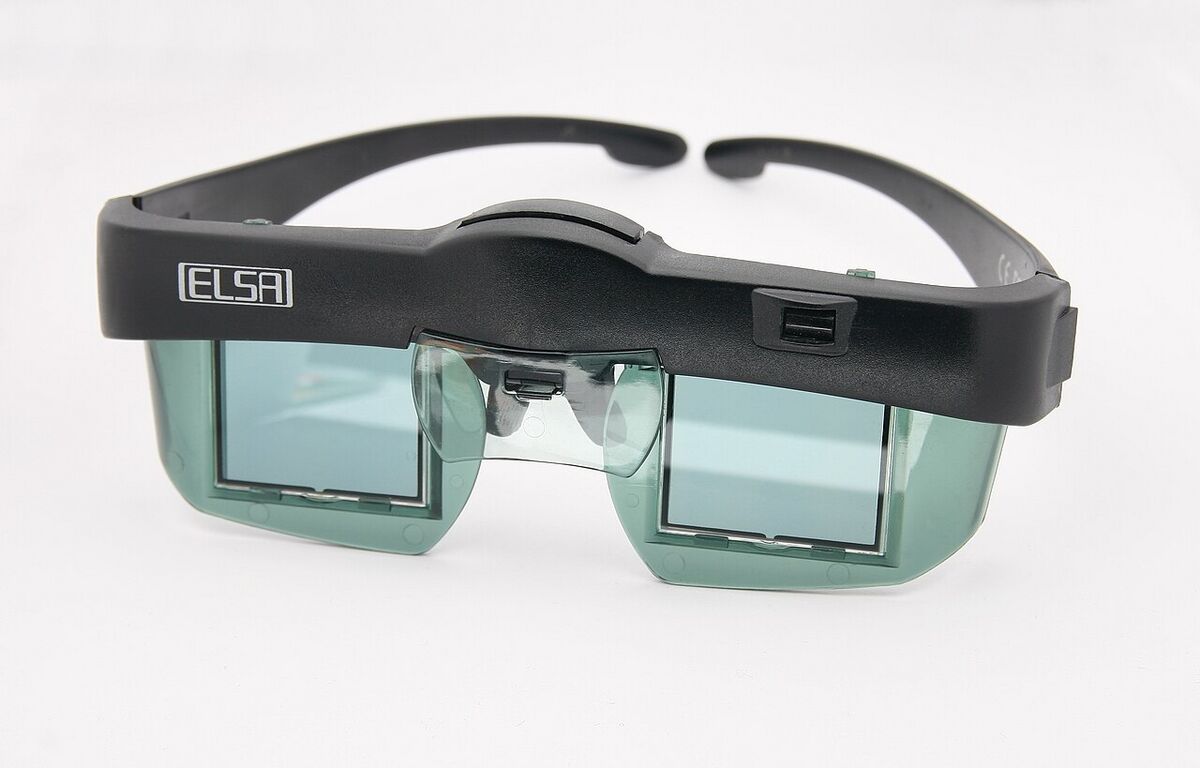
ELSA 3D Revelator
I have wanted something like the ELSA 3D Revelator for years, mostly because I am a sucker for any PC hardware that makes games feel less like games and more like something trying to crawl out of the monitor and smack me in the face.
That is exactly what these things are trying to do.
The 3D Revelator is a pair of LCD shutter glasses that works with your 3D card and monitor to give supported games a real stereoscopic 3D effect. Not red and blue paper glasses. Not some cheap toy gimmick from a cereal box. These are actual powered glasses that flicker each eye in sync with the image on the screen. When everything is set up right, your games suddenly have depth. Guns stick out. Hallways sink backward. Explosions look like they are happening in front of the glass instead of painted on it.
The first time it works, it is awesome.
The problem is that when everything is set up right is doing a lot of work in that sentence.
This is not plug it in, click one thing, and go. You need the right video card support, the right driver, the right monitor refresh rate, and a game that behaves correctly with the stereo driver. If your monitor is running at a low refresh rate, forget it. Your eyes will hate you. The flicker can get annoying fast, and if you already get headaches staring at a CRT all night, these glasses may be your express ticket to pain city.
But when they work, man, they work.
Quake II is the kind of game that makes the Revelator make sense. The corridors suddenly have real shape. Rockets flying toward you look like rockets flying toward you. Even simple stuff like walking through a room feels different because your brain is no longer seeing a flat picture. It is not perfect, and sometimes the depth looks strange, especially around weapon models or HUD elements, but the effect is strong enough that I kept taking the glasses off just to compare the game with and without them.
That is usually the sign of good hardware. It makes you keep messing with it.
Unreal also benefits a lot from it. The outdoor areas already looked great, but with the glasses on, cliffs and walkways start feeling more like actual spaces. It does not make the graphics sharper, and it sure does not make the game run faster, but it gives the world a neat physical feel that normal 3D acceleration does not. I would not want to play an entire six-hour session like this, unless I wanted my eyeballs to resign, but for showing off a game or playing in bursts, it is one of the coolest PC tricks I have seen.
Comfort is okay. Not great, not terrible. They feel like hardware made by engineers, not sunglasses made by people who understand noses. You are always aware you are wearing them, especially if you already wear glasses. The wired version also gives you one more cable dangling around your desk, and my desk already looks like someone murdered a Radio Shack in here.
The Revelator is not for everybody. If you want a practical upgrade, buy a faster video card. If you want better sound, buy a better sound card. If you want something that makes your friends walk into the room and say, what in the world is that, this is it.
That is the real appeal. It is a toy, but it is a serious toy. It is a piece of weird PC gaming hardware from the exact moment where 3D acceleration still felt new enough that companies were willing to try crazy stuff just to see what would stick. Sometimes it is a pain. Sometimes it flickers. Sometimes a game looks wrong and you spend more time fiddling than playing.
Then one game clicks, the depth pops in, and suddenly you are leaning around like an idiot trying to look behind the monitor.
I cannot call the ELSA 3D Revelator essential. It is too picky, too dependent on your setup, and too hard on the eyes for that. But I can call it cool as hell, because it is.
And sometimes cool as hell is enough.
The ELSA 3D Revelator is not a must-buy upgrade, but it is the kind of strange PC hardware that makes 1999 gaming fun. When the depth effect clicks, it feels like the future. When it does not, it feels like a headache with a driver disk.
| Platform | Windows 95/98 |
| Released | 1999 |
| Maker | ELSA AG |
| Street price | $20-60 on eBay depending on condition and completeness (June 2026) |
| Reviewed | July 30, 1999 |
| Restored | June 5, 2026 |