ANBERNIC RG CubeXX
Handhelds are a tricky thing, trickier than most people understand. The honest truth is that reviewing one isn’t easy, because to do it properly you have to understand what the handheld is actually for. In the retro world that isn’t always the popular take. People grab a $40 or $50 handheld and complain that it won’t run Nintendo 64, that Dreamcast chugs, that PS1 doesn’t look perfect. But every one of these devices has a specialty. You are not going to get a $50 or $60 machine that runs everything flawlessly, and plenty of the $200 and $300 machines don’t either. So this review looks at what the RG CubeXX does best, and judges it on that.
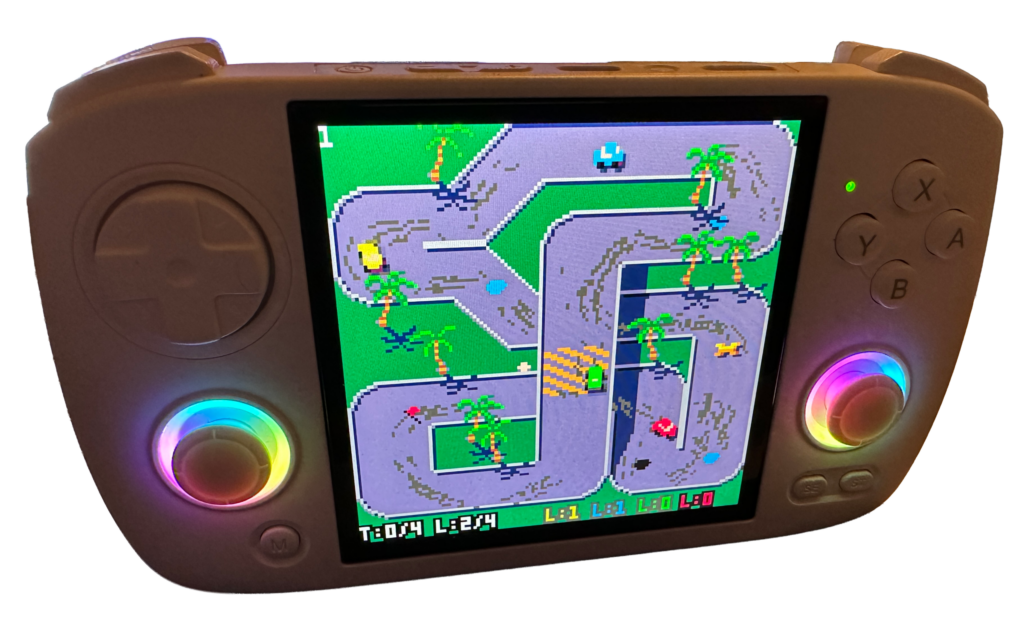
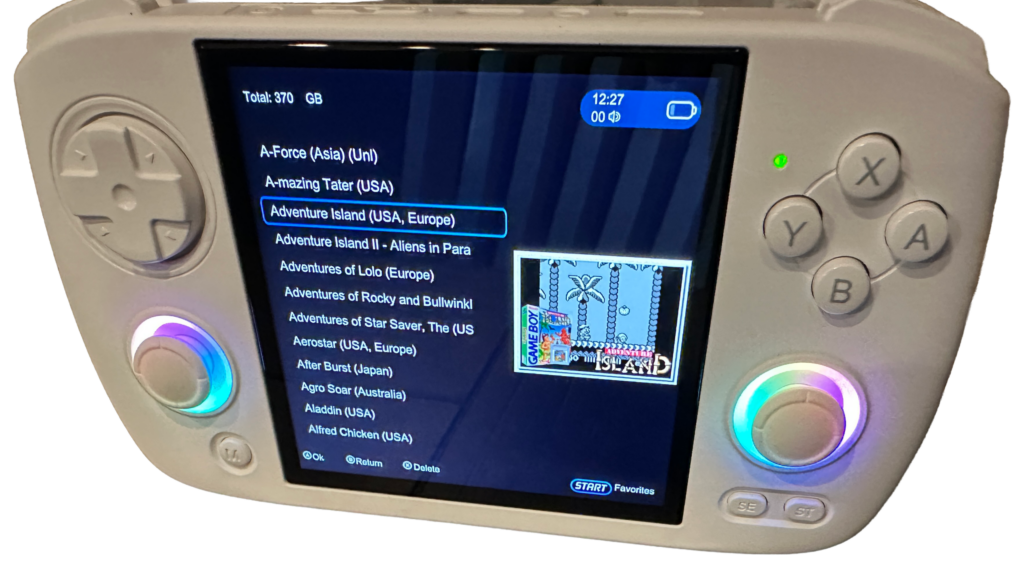
The CubeXX has a one-to-one screen, so the square and vertical dimensions match, and you have to look at the games that suit that shape. Game Boy, Game Boy Color, Pico-8 and vertical arcade games like 1943 are the natural fit. NES, Super Nintendo and Genesis still leave a little border, but they use far more of this panel than they would on a widescreen handheld, and they play great. PlayStation 1, a lot of DOS, Nintendo 64 and Dreamcast are mostly 4:3, so they use a smaller portion of the square screen. They still look good, but this is not the display’s main strength. Nintendo DS will play, but two screens squeezed onto one square panel are hard to read. PSP looks cramped behind much larger bars, and the frame rate struggles because the machine was never built for it. That is the key. You can’t review this thing by trying to run PlayStation 2 or GameCube. It was never built for that and it isn’t going to do it.
So what is it? The CubeXX is ANBERNIC’s budget square-screen handheld. One-to-one aspect ratio, Linux-based emulation, built on the Allwinner H700 that ANBERNIC has leaned on across nearly its whole budget line for about three years, from the RG35XX family to the RG34XX. These are the cheaper siblings of the Android-powered models: lower price, square screen, Linux instead of Android, less power. The hook is the screen. A 3.95 inch, 720 by 720, one-to-one IPS panel. That shape is ideal for square-ish handhelds and vertical content, especially Game Boy, Game Boy Color, Pico-8 and arcade verticals, and they look better here than they do on a 16:9 or 4:3 handheld. The trade is that anything wider than 1:1, from 4:3 consoles to 16:9 PSP games, uses a smaller portion of the display.
This one has been out about a year and a half and it’s still on sale. I bought mine, so nobody is paying for this review, and I’ll show you the receipt if you want it. I paid around $45 on AliExpress from the official ANBERNIC store, and that last part matters. In a previous review I covered a clone I got instead of a real R36S, and these things are not all the same. Some of the clones are genuinely bad. Buy from the real store.
For me the biggest strength here is the ergonomics. It feels really good in the hand. It’s small but it never feels cramped, it’s light, and the build is solid. I can slip it into a shirt pocket, a pants pocket, or one of the padded pockets in my backpack and it just disappears. I can carry it everywhere. I’ve started reviewing a lot of these handhelds, and for the price, for what you get, for what you can do with it, this is probably the budget king. I paid $43 and change, $46 all in. That’s hard to beat.
It ships with a stock Linux OS, you can flash custom firmware, and it has PortMaster support, opening the door to native Linux ports, commercial games such as Stardew Valley and community projects that are unusually well suited to a small retro handheld. It has HDMI out, and Wi-Fi and Bluetooth are built in, so you don’t have to mod it the way you do an R36S to add those. One practical tip: the bundled SD card, like most of them, isn’t great. I’d buy a fresh card right away and clone the original onto it. Pick whatever brand you trust. I usually use the industrial SanDisk cards because they’re rated for more writes, and being in IT I end up with a few spares. With files this small there’s no real loading difference, so the card is about reliability, not speed.
There are weaknesses. The main one is sleep mode. I put mine to sleep one day and it was perfect, came right back to the game. I did it again the next day and came back to a dead battery. It just kept draining in sleep, and I lost a save in the Sega Master System game I was playing. There’s no internal storage, which is both a pro and a con, so always keep your microSD with you and keep a backup, because they do go bad. The square screen is a downside for certain games, anything on PSP and some of Dreamcast, but you can see it was never built for those, so I’m not marking it down much for that. It isn’t what it’s made to do. Bluetooth 4.2 is dated, although the Wi-Fi itself supports both 2.4GHz and 5GHz. It’s also another H700. There are a ton of H700 machines right now, especially in ANBERNIC’s line, but the more of the same chip they buy the cheaper they can price the device, which is the whole point. And it doesn’t come in the flashy colors you get on something like an R36S, no purples or blues or clears, just white, gray and black. A couple of the custom firmwares also don’t carry every feature the stock OS has.
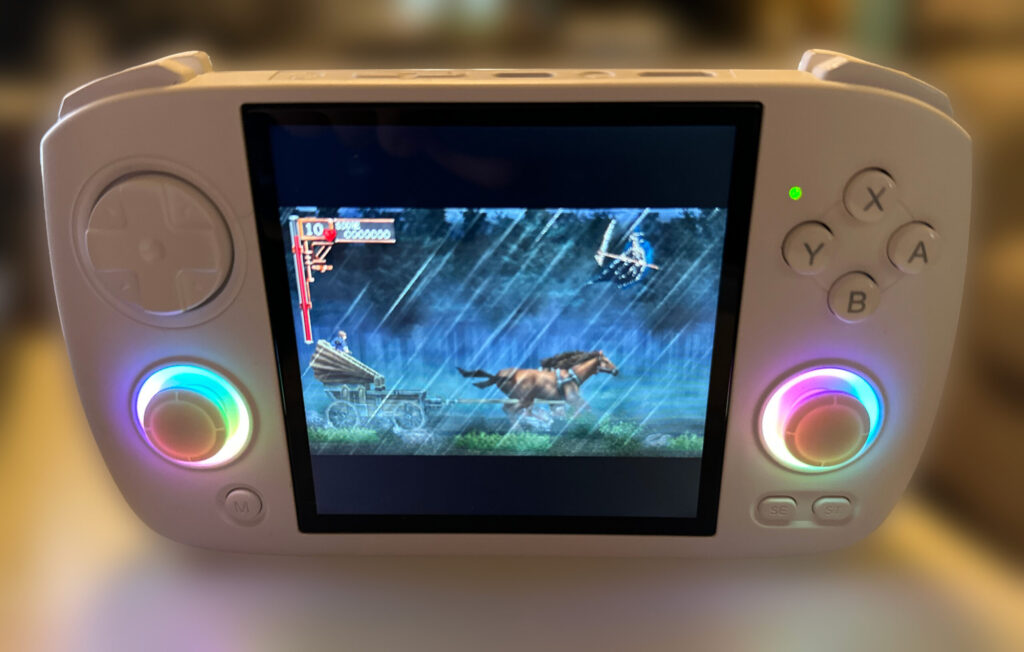
But here’s what matters: it’s fun. It is genuinely fun to pick this thing up, fire up a Master System game, a Genesis game, a Game Boy game. I was more of a Sega kid, so I’ve been playing a lot of Game Boy games I never got to back then and seeing things I missed. That’s great. And there’s a lot of free and legal stuff out there for it, plenty of new games people are still making for these old consoles that you can buy, and of course you can back up and dump the games you already own.
Is it as powerful as the original Android RG Cube? No. The T820-powered Cube is in another class and can reach much farther into later systems. It also costs considerably more. The CubeXX is lighter, cheaper and simpler. If your real target is handhelds, arcade games, 8-bit and 16-bit consoles, DOS and PlayStation 1, the extra power may not matter. If you want another one-to-one option there’s the Powkiddy RGB30, same screen. ANBERNIC’s own RG35XX family uses the same chip with a different aspect ratio, and those are the better choice if you mostly play 4:3 games, though I prefer the ergonomics of the Cube myself.
This is a legitimate system, and I’m judging it on what it can do and what it was built for, not on what some people wish it would do. I’m giving it a 4.5. There are a few things that could push it to a masterpiece, but it’s so close already that I’m not going to undersell it, because I love this thing. The sleep-mode problem is the one issue keeping it from a 5.0. The H700 ceiling and square-screen compromises are real, but they are honest tradeoffs for the price, not failures.
A roughly $65 square-screen handheld with a lovely 1:1 IPS panel that runs handhelds, 8-bit and 16-bit consoles, arcade, most DOS games and PlayStation 1 beautifully, with some N64 and Dreamcast as a bonus. Judge it for what it's built to do, not the PS2 games it was never meant to run, and it's the budget king. The sleep mode needs a fix, but it does not spoil a machine this likeable at this price. Bought genuine from the official store, and worth every dollar.
| Screen | 3.95" IPS, 720x720 (1:1) |
| Battery | 3800 mAh (~5.5–6 hrs real use; ~3 hr charge) |
| Weight | 246 g |
| OS | Linux (stock) · Knulli / muOS custom firmware supported |
| Review unit | Purchased |