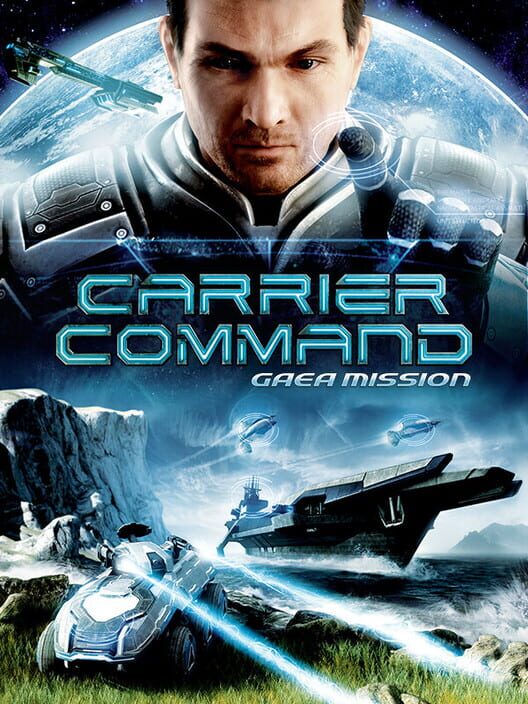
Carrier Command: Gaea Mission
Bohemia Interactive, makers of the award-winning Arma combat simulation series, set their sights on remaking what many critics claimed to be the best game of 1988: Carrier Command. The production and release of BI’s own remake, Carrier Command: Gaea Mission, was a surprise to many gamers and fans alike. We decided to take a look at what all the excitement was about, and to take you with us out on the waves.
Before one looks at Gaea Mission, one needs to look back to the 1988 classic. Due to the fact that I was born the year of its release, I was, quite understandably, entirely unfamiliar with the game. So I looked up several YouTube videos and screenshots with great intrigue to see how good it really was. It was to be expected that, by today’s standards, the original Carrier Command’s graphics and controls were lacking in epic proportions (and do not get excited; twenty-four years from now I will be saying the same about today’s games, maybe even sooner). But the basic concepts of the game were transferred wholesale to BI’s modern remake, right down to the identical main-menu options, even if BI’s background animation blows the old one to bits. The conclusion: either BI was lazy and just did a straight remake, or the original game kicked some serious butt. The answer, as I would discover, was far more complicated.
As stated, when you start up Gaea Mission you are immediately reminded of its predecessor. The game has two distinct options, either the campaign or the strategy game. The former is, obviously, a storyline-based version of the game, while the second is analogous to a typical RTS’s skirmish mode, only there are fewer options and it is only against a single AI. You notice the lack of multiplayer from the very start. It must be emphasized that Gaea Mission has absolutely no multiplayer at all, something critics are all over. It is indeed rare for such a big game to be published without it, and it is clearly a large shortcoming. There is also no true tutorial. Rather, the tutorial is contained within the first few missions of the campaign, which also explain who you are and why you are floating around in a carrier trying to take islands in the first place.
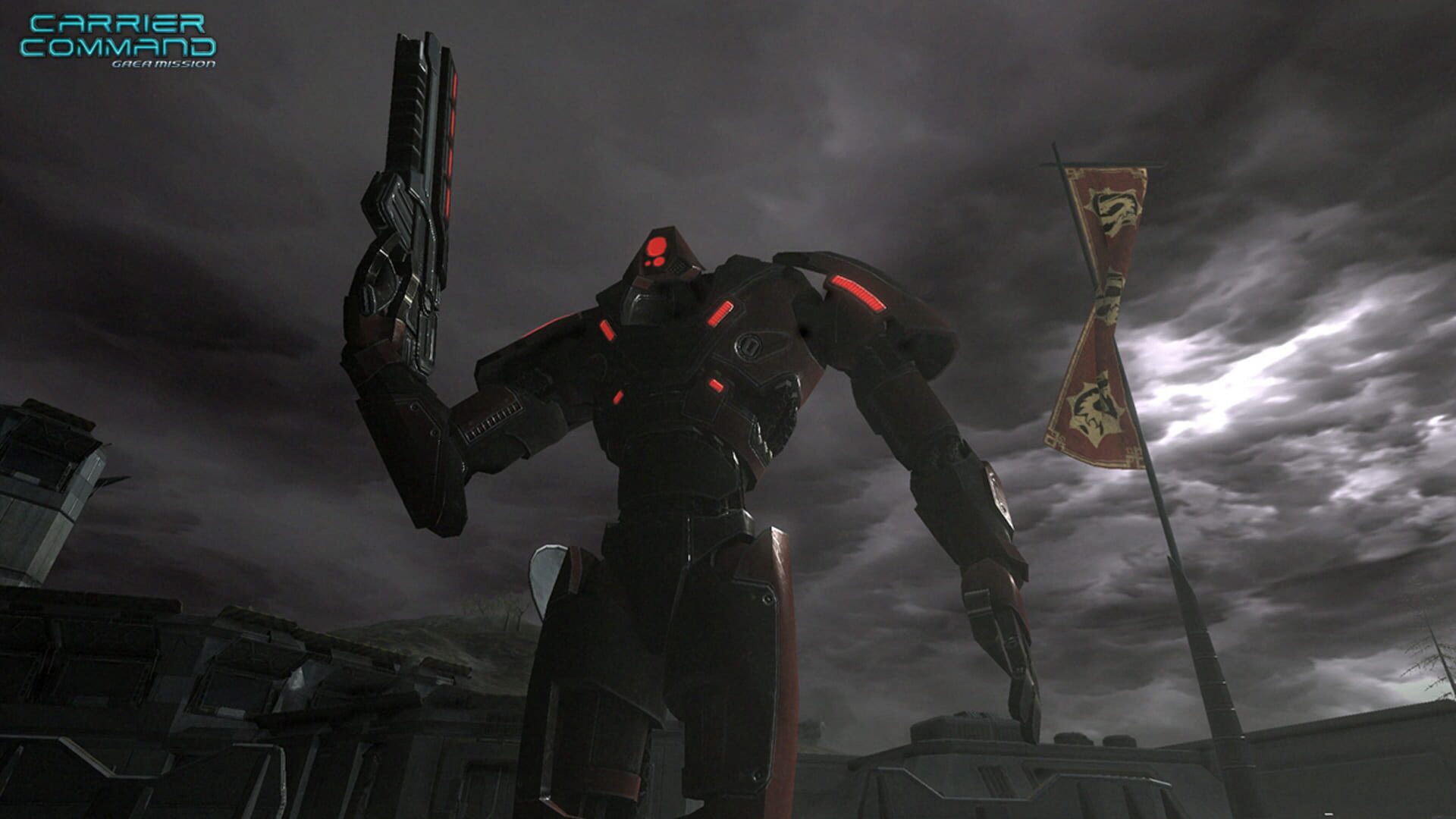
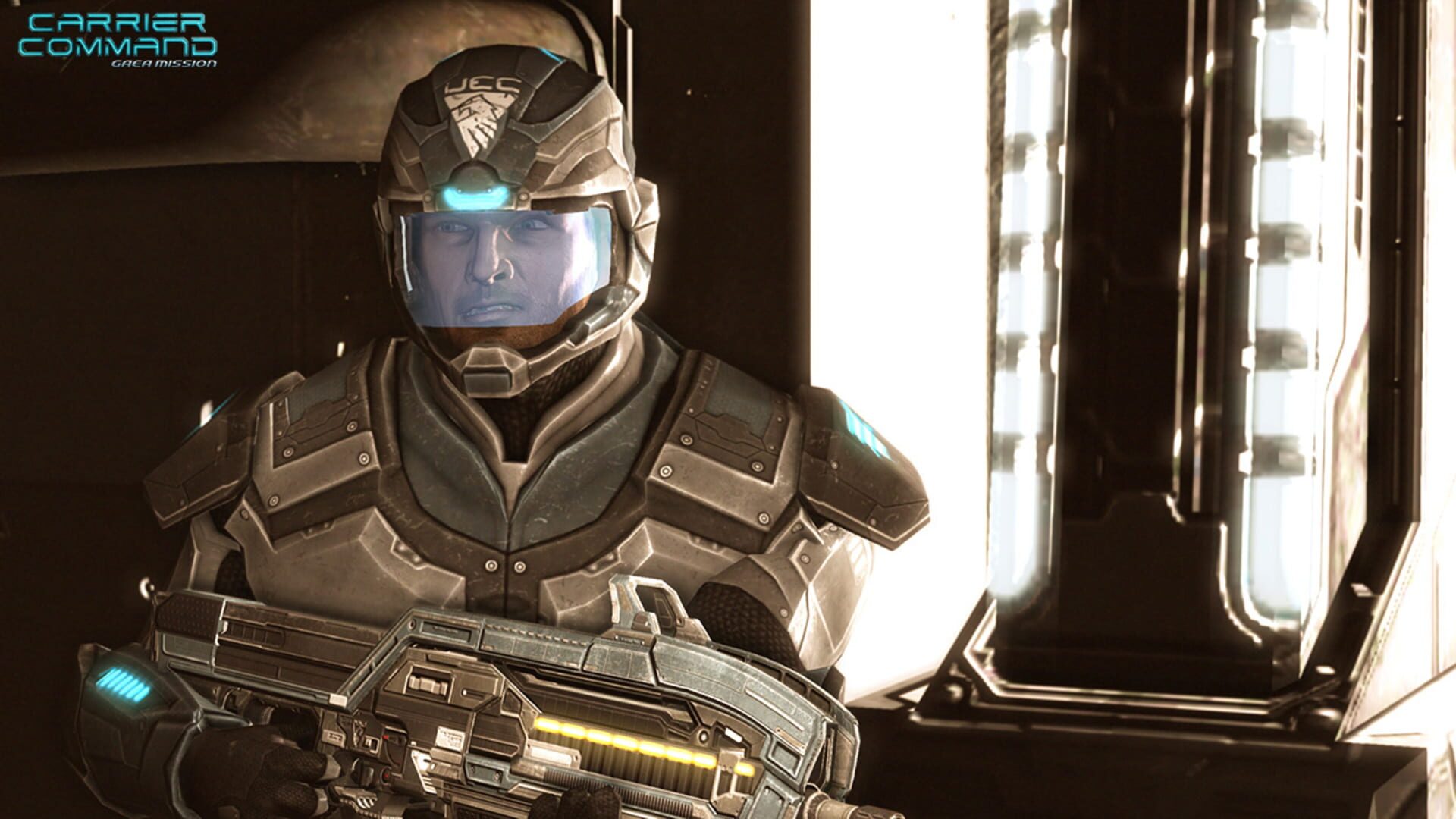
BI does fit its signature gameplay, the FPS, into the first mission of the campaign. Granted, the graphics there are somewhat disappointing and the AI dies too easily. But do understand that this is the only on-foot shooter component in the entire game. It is simply there to explain why you are present, for those who are interested. The successive missions teach the player the basics by capturing a series of islands and repairing the recovered carrier. Eventually you battle it out against the enemy carrier after taking a plethora of islands. The campaign is, in effect, an explanation of the game’s functionality and controls.
However, if you are like me, the linear constraint of campaign missions feels too controlling. After learning the basics, and I cannot stress enough that you need to learn the basics from those first few missions first, I hopped right into a head-to-head battle against the enemy carrier in Strategy Game mode. The game can indeed be customized, but the customization is limited and includes only a couple of options such as the number of islands, income, and so on. Once the proper settings are in place (the defaults, for me), you are thrust right into the fight.
Because Gaea Mission is an RTS with a capital S, the main commander interface is a tactical map. This lays out the entire battlefield, in this case an archipelago. Blue islands are ones the player controls, red islands are ones the enemy AI controls. Each island can serve a single purpose: Resource, Industry, or Defense. Resource islands provide the raw units of resource that the player uses to construct equippable weapons, subsystems, command centers, and units. Industry islands accelerate the rate at which these items are produced. Defense islands are islands with an abnormally high number of defensive structures and units. There is one last designation: Supply. Perhaps the most difficult aspect of the game is not what to build or where to build it, but where the supply island is located. This island is where all supplies for your ship are deployed from to meet up with your carrier. It is highly ill-advised to designate your supply island far from your area of activity. The player can switch which island is the supply island on the fly, but it is a very time-consuming task and should be done only after careful consideration of the overall tactical plan.
Keep one other thing in mind: the carrier needs fuel to move. This fuel is expended very quickly, and since travel outside of time compression is in real time, you need to make sure that a supply ship is constantly shipping fuel to the carrier. This adds a degree of complexity, and frustration, that can be either a serious hindrance or a great tactical challenge for the RTS junkie.
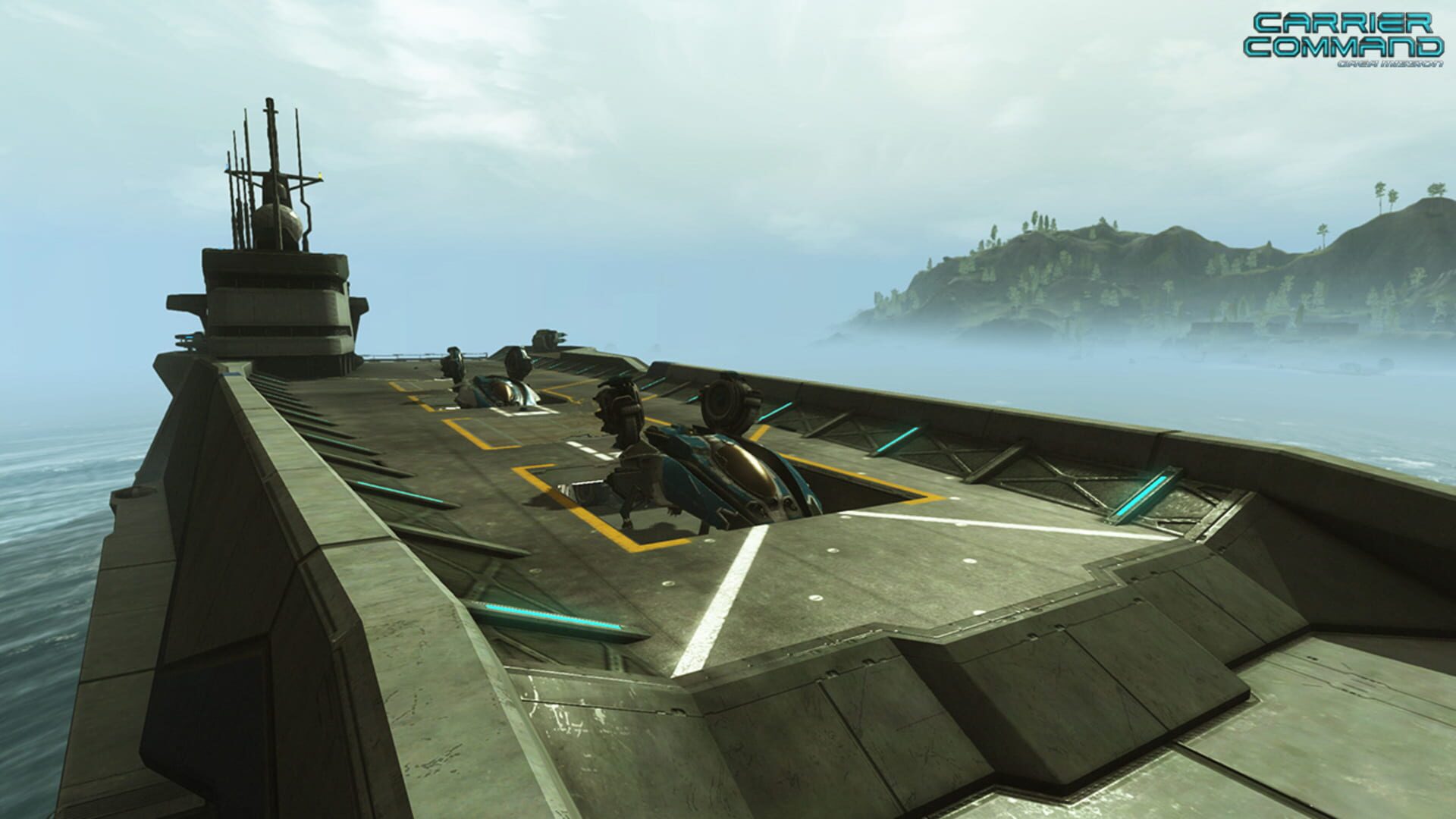
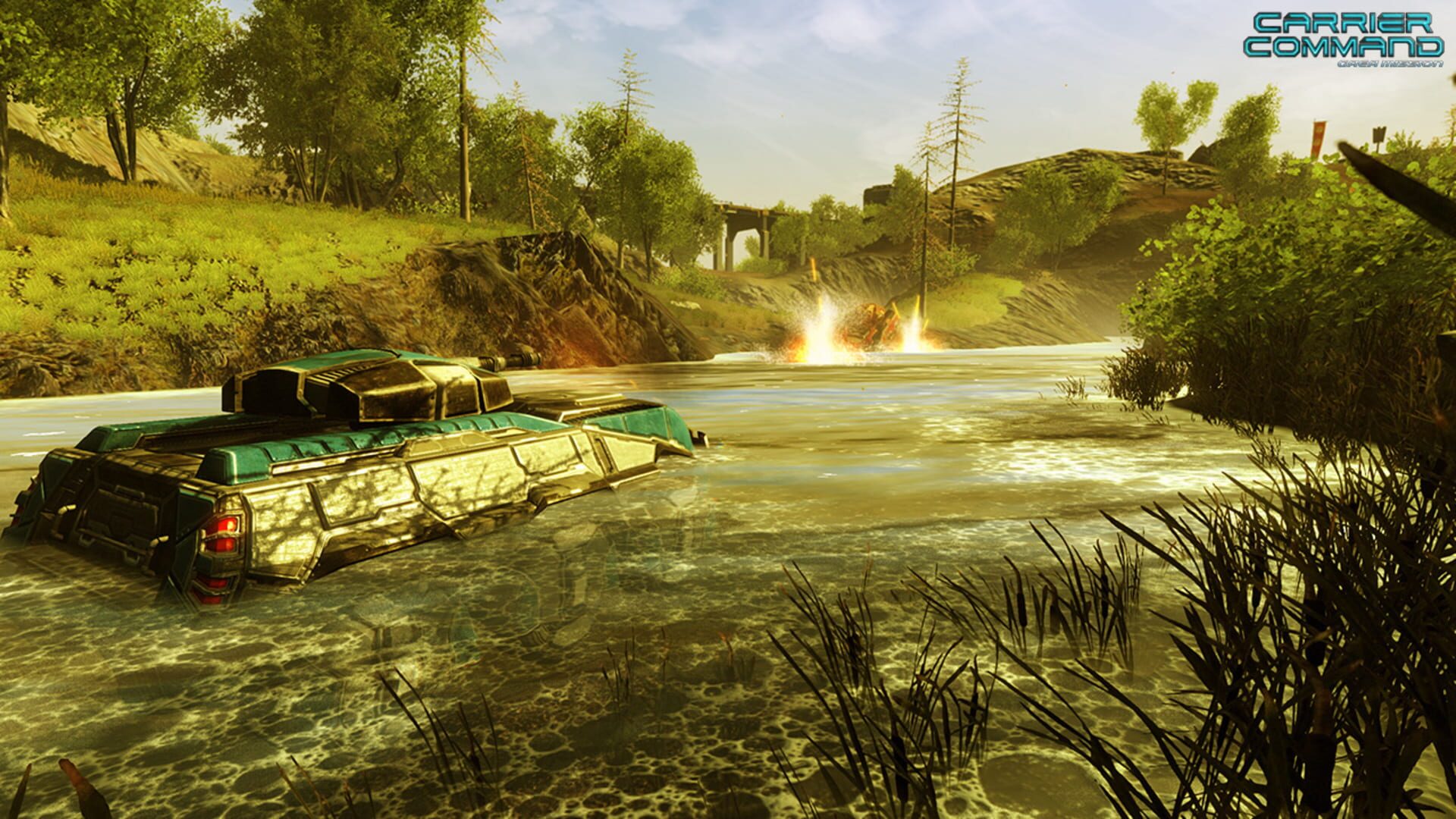
Speaking of production, it is now time to look at the units that are available. There are, in fact, only two units in the entire game: the helicopter-like Mantas and the amphibious tank Walruses. From the start of the game to the end, the maximum number you can have is four of each type. In comparison, enemy islands may field an assortment of almost twenty units along with extensive fortifications. As you might expect, taking over islands is not an easy task and it requires some excellent strategic opportunism. It also takes time, lots of time. But there are plenty of weapons and items to make life a little easier. Lasers, artillery, plasma weapons, missiles, torpedoes, bombs, cruise missiles, rockets, Gatling guns, flak cannons, armor, hooks, scanners, and many other interesting modules are equippable to the seemingly small force at your command. The basic equipment must be constructed using the carrier’s production menu and then shipped to your carrier; ammo for most modules, however, is created seamlessly on the ship itself. You can also build extremely useful scout drones for recon over islands, upgrades to the carrier’s weaponry, and, for those like me who just want to obliterate the enemy’s command center, the stunningly beautiful Hammerhead thermonuclear warhead.
One of the most enjoyable aspects of the game is the ability to see it from both the commander’s perspective on the strategic map and from the seat of each individual unit. The only thing more beautiful is the degree to which control is given so seamlessly. One moment I am bombarding the enemy’s defenses with the main cannon on the carrier, the next I am flying high above in a dogfight with aircraft attacking the carrier, and the next I am deploying my Walruses to the shore to engage anti-air fortifications, all with the touch of a button. The player also has the confidence that, when they relinquish control, the AI will take over and continue right from where they left off. If commanding were this easy in real life, we would only have to pay one person to fight our wars.
However, there is one hang-up: ground AI path-finding. BI has acknowledged complaints about the stupidity of the Walrus’s path-finding, which often runs into walls or gets caught in trees, and has said it is working diligently on a solution. Personally, I believe a fix is not far in the future. I find the game almost more enjoyable taking control of the Walruses myself and invading the shore with the main gun blasting while my Mantas strike from above and the carrier bombards the island mercilessly. Arguably the most beautiful sight in the game is the impact of a Hammerhead nuclear weapon. Reminiscent of the days of World in Conflict, which arguably presents the most accurate visualization of a tactical nuclear blast, the Hammerhead is certainly a sight to behold.
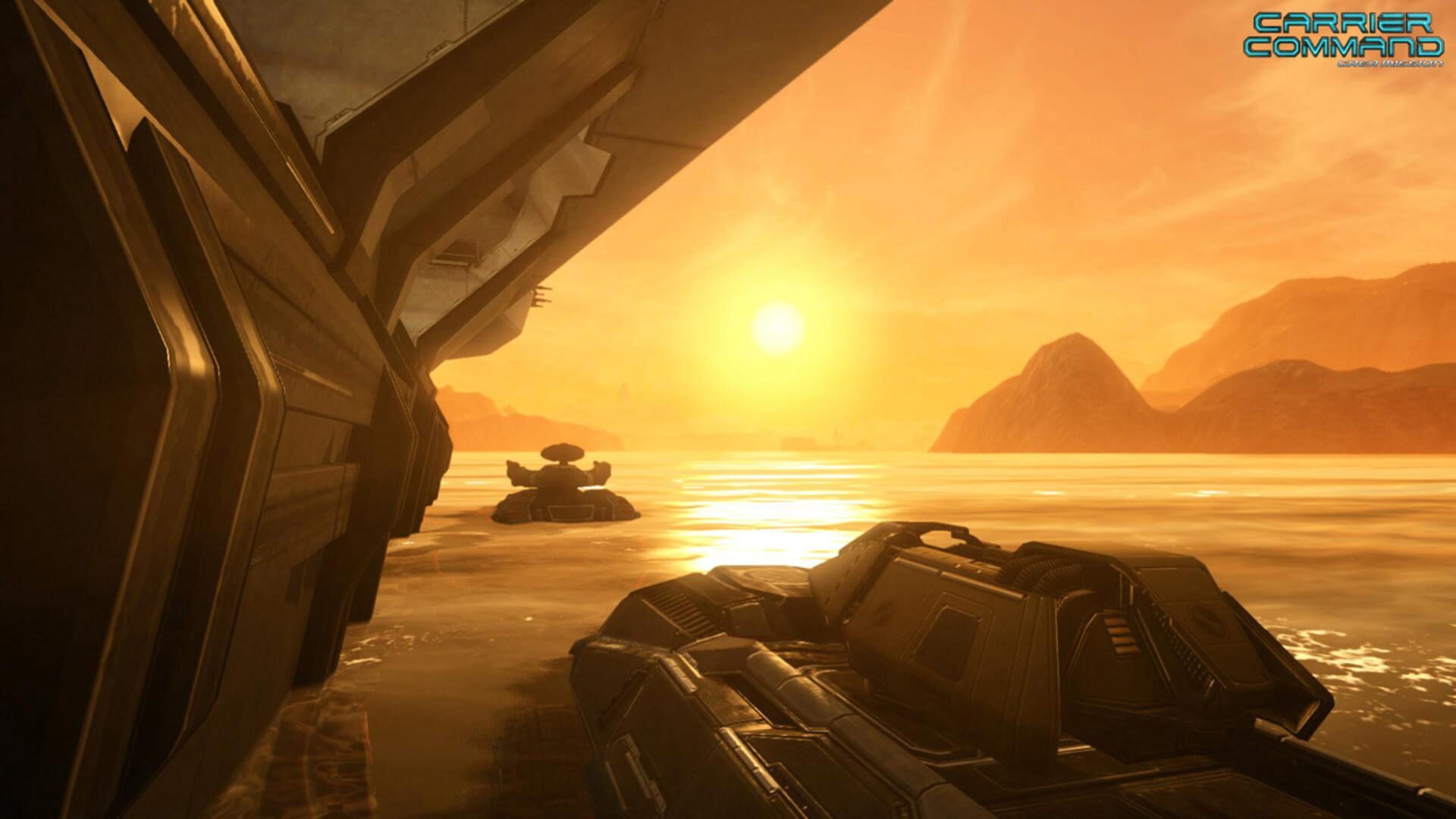
In terms of beauty, there are precious few games that rival Gaea Mission. Without a doubt, BI spent countless hours developing an amazing and dynamic environment to fight in. Rain, snow, dust, lightning, fog, and volcanic vapor are some of the atmospheric beauties to observe while you rain down fire from above, not to mention the change in lighting from day to night. As your on-board adviser reiterates, units are not affected by the atmospheric effects, but visibility certainly is. This makes weather a real consideration in whether to invade manually, hand it to the AI, or hold out until better conditions present themselves.
Following on the heels of the graphics, audio appears to have been a focal point of much effort on BI’s part. Convincing sound effects are everywhere, whether you are firing off the main carrier cannon, shooting down aircraft with a chain gun, or lowering the Walruses into the ocean. The background music appears to be contained only within the main menu and the campaign, quite regrettably given the epic and convincing nature of the soundtrack. The voice-overs, while not as convincing as Command and Conquer’s Hollywood cast, are certainly nothing to laugh at; apart from the campaign, however, they are few and far between and generally repetitive. The campaign also includes some mild expletives that parents should be aware of, though as far as I can tell they are not pervasive. Content-wise, the audio makes an excellent pairing with the graphics to produce a convincing and engaging environment any strategy gamer would enjoy.
Carrier Command: Gaea Mission was reviewed on the PC using a Steam key provided by Bohemia Interactive. BI’s Carrier Command remake could be described as building a better mousetrap, the difference being that this modern mousetrap is equipped with a mouse-sized thermonuclear warhead instead of an iron bar. Nostalgic gamers will be comforted to know that Gaea Mission maintains the majority of the conceptual framework the 1988 original was built on, but brings it into the twenty-first century. If you enjoy strategy, flight and tank sims, and do not mind playing against the AI, this is a game to seriously consider adding to your collection.
A gorgeous, deep remake that faithfully modernizes the 1988 classic and lets you command the whole carrier seamlessly. The complete absence of multiplayer is its biggest flaw.
A Windows PC or Xbox 360.
Sold on Steam and GOG; some editions bundle the original 1988 Carrier Command. Note there is no multiplayer.
| Platform | PC · Xbox 360 |
| Released | 2012 |
| Developer | Bohemia Interactive |
| Publisher | Bohemia Interactive |
| Genre | Strategy |
| Reviewed | October 30, 2012 |