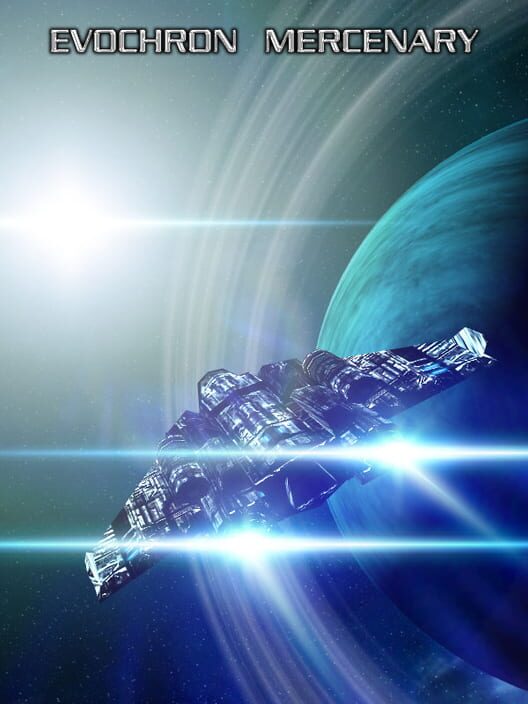
Evochron Mercenary
Evochron Mercenary, the latest installment of Starwraith 3D Games’ Evochron series, no doubt scares away a lot of pilots with its Bryce 3D-like visuals. But under the hood of this indie game lies complex and rewarding gameplay for those who dare to master what the stars throw at them. When you first start the game, you are tossed right into the story behind your character’s recent past (which I will leave out, spoilers you know). Although the premise is pretty cliché, it gives a reason behind why you will be flying around mining asteroids, shooting other ships (or running away), trading, exploring, and racing, rather than settling down on your home world to work at a metal factory. After the brief intro, the first essential step in your successful life will be to name your character and choose a career path, whether it is the relaxed life of a miner and trader, the white-knuckle flying of a racer, the respectable life of a navy pilot, or the risky and somewhat shady life of a mercenary. There seems to be little difference in your choice apart from your first ship. If you have trouble deciding what to be, don’t take the time to murder three other test characters for the sake of a career change.
Speaking of death, you are highly advised to start by going through all of the training sessions, otherwise you are guaranteed to be seeing a lot of explosions, generally your own. I certainly experienced my fair share in the tutorial itself, trying to grasp navigation and jump drives while in a planet’s atmosphere (which, because of the laws of friction and physics, doesn’t generally end well). While the option is available to do all of them in sequence, it is recommended to do each training mission individually. Starwraith had high hopes that all ten pages of instructions per training mission (thankfully both auditory and textual) would be successfully processed by the new player within two minutes and followed to the letter. If you were not successful at absorbing a bombardment of letters and words of such caliber, you will likely be drifting off at umpteen-thousand units of speed a second, with no hope of following the next orders.
If you didn’t absorb the training missions, there is still plenty of hope. Hidden at the bottom of the training page, above the “Exit to main menu”, is a somewhat scarily prefixed button with the text “Close Game and View Instructions”. While this manual is another twenty-plus pages of text and the spare image or two, it has much, if not all, of what the training missions were trying to explain. However, there is so much the game does not explain through tool-tips, in-game hints, or even a Civilization-style in-game encyclopedia. This lack of instruction is a huge drawback in ease of playability, when even a few simple, strategically placed tool-tips, hints, and item details would greatly assist new players. Luckily for us, fearless and relatively well-written pilots have conquered the unknown universe and have left several multi-chapter manuals, YouTube movies, and even forum groups on how to fly safe and make a few credits at the same time. The most useful information I have found is not a guide for Evochron Mercenary, but rather the official strategy guide for the previous version of the game, Evochron Legends. Word out among the asteroids is that there is little difference between the two games in several aspects. If you need more help, a simple Google search will grant you much more information.
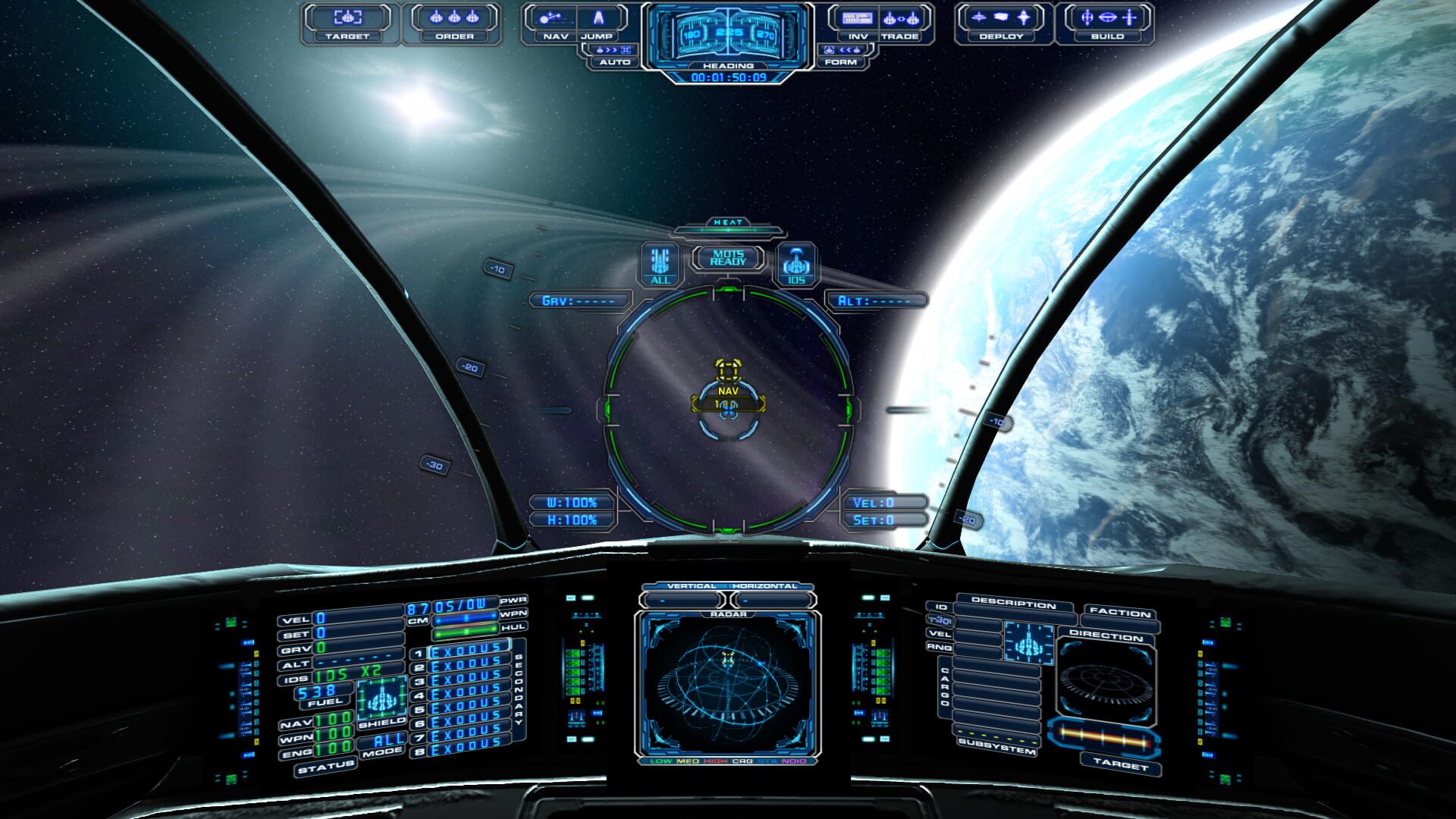
As if the lack of instructions wasn’t enough, the game’s menu interface leaves much to be desired if you are used to polished, major-publisher games. If you have primarily played indie games, the interface is somewhat standard, but you will have to master and understand Starwraith’s obsession with the Alt key (and the lack of dragging anything) to fully grasp control over the UI. With all its drawbacks, the game’s in-ship controls and meters present all the data you could ever need to fly your ship. Since the ship is, quite realistically, influenced by Newtonian physics and laws of friction (or lack thereof), you need to have enough data about angular motion and speed to prevent crashing into a space station. Thankfully, Starwraith has accomplished this through a clunky but relatively easy-to-grasp HUD and in-ship control panel.
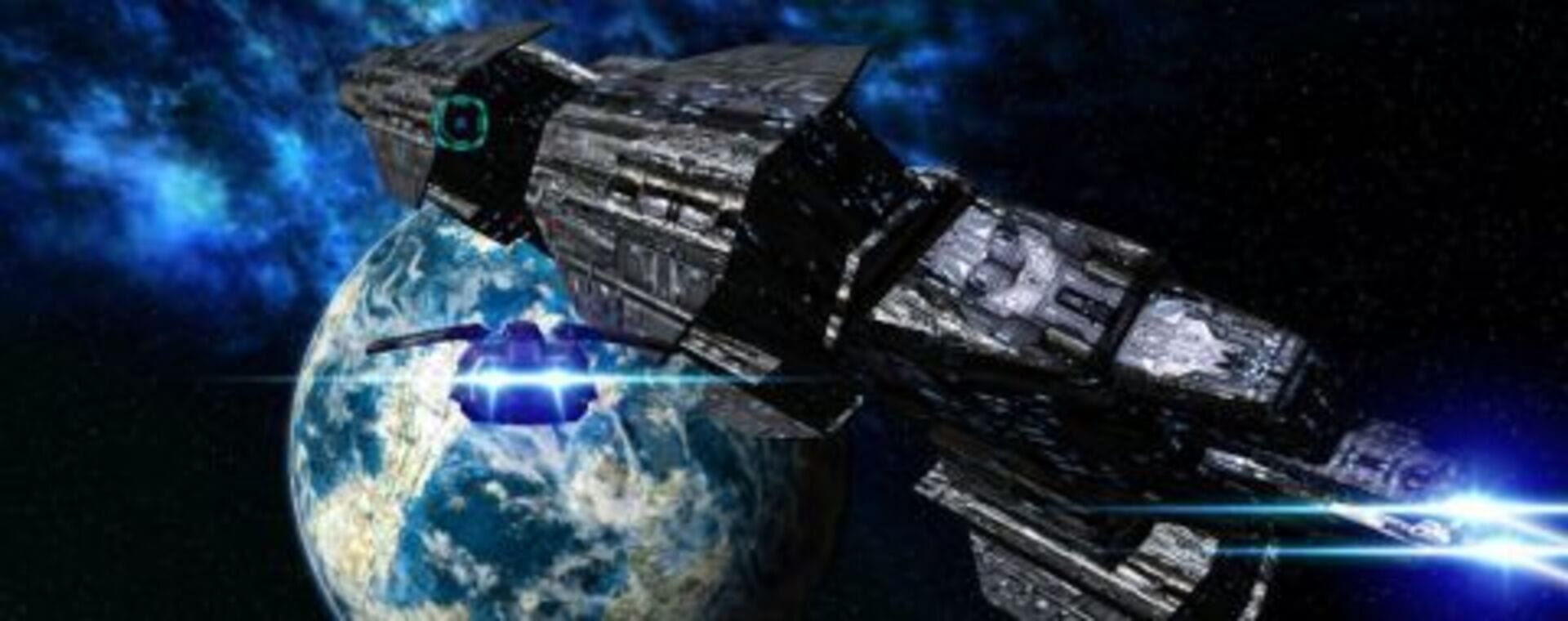
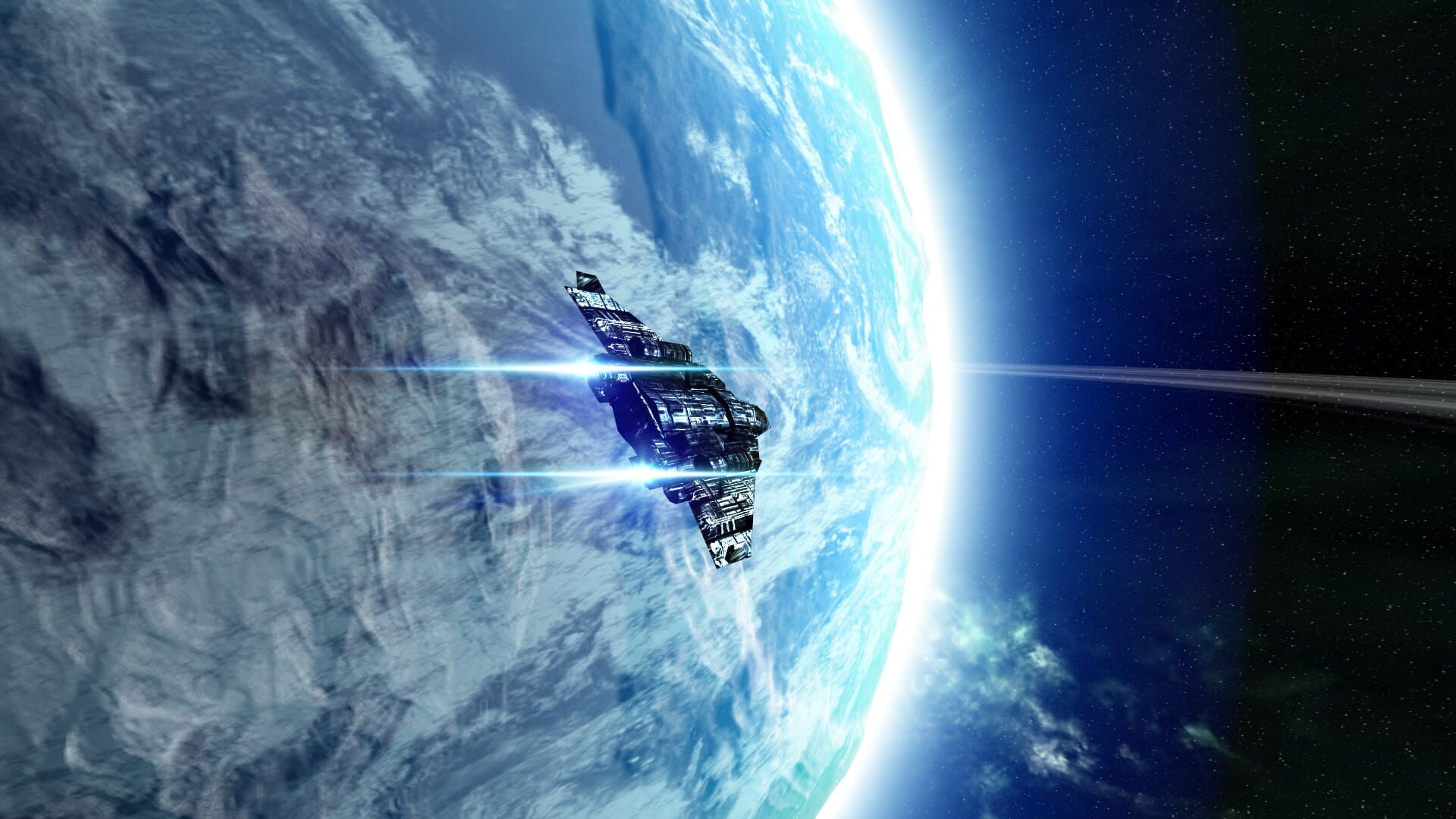
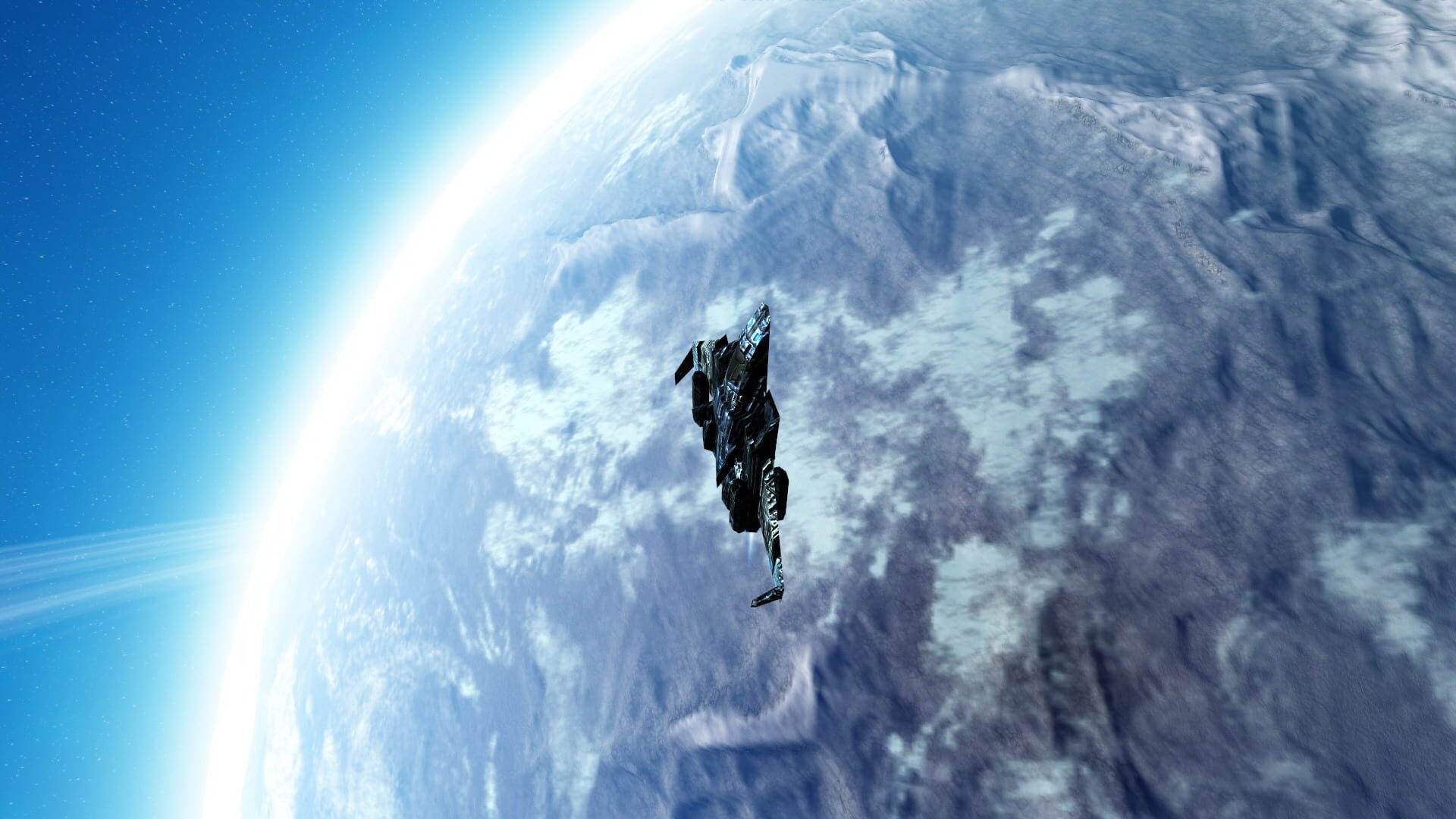
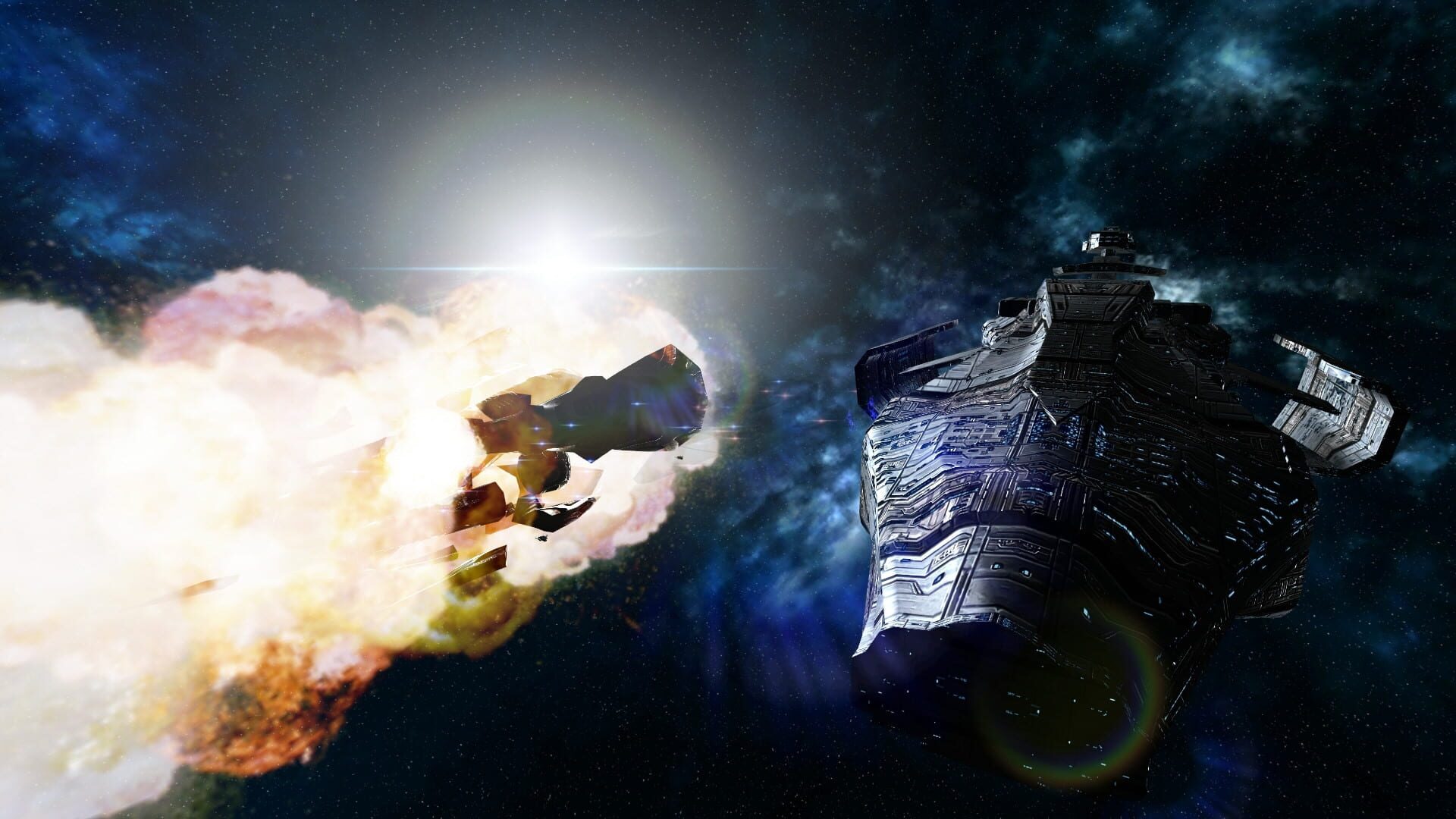
Apart from the UI, the graphics in the game range from blocky ships (and very odd, skyscraper-sized trees) to, in my opinion, very well-crafted nebulae and atmospheric effects. Nothing sums the game up like a screenshot of a destroyer in the midst of lightning-charged blue nebulae, or flying through a thunderstorm on a planet. Indeed, it seems much more time was spent on crafting worlds, environments, and atmospheric effects than objects. This should give great satisfaction to the FX-junkie inside. Although the unrealistically fiery explosions appear like those in a low-budget sci-fi movie, the combination of particles and objects flying out added to the thrill of blowing just about anything into a million pieces.
Explosions are common to what, unexpectedly, became the most enjoyable part of the game for me: combat. What began as innocently blowing up asteroids that wouldn’t give me enough diamonds soon led me down a path to alienating myself from all the major system navies. Combat was thrilling. Combat against a couple of fighters while flying through an asteroid field and trying to shoot down missiles at the same time was amazing. Jumping through a gate to find an entire navy waiting for me, not so much fun. I soon discovered that my thrill for shooting things landed me as “kill on sight” with the navies. But while most games have a way of working your way back up the ladder of respect, I soon found that Mercenary did not. Any attempt to do missions for the navy resulted in me being suckered into a site where awaiting naval forces laughed as I arrived and proceeded to vaporize me in an assembly of lasers, projectiles, missiles, and whatever else they could throw at me. The moral of the story: don’t shoot at the navy, just run away.
Mercenary offers a multitude of less adventurous, but much safer, professions that you can choose from. Mining asteroids is less than exciting, but is much more lucrative early on than even missions. Unfortunately, there is little you can do with the materials apart from selling them to the highest bidder (with the exception of metal, which can be used to build somewhat more expensive armor plating). One who believes themselves a master at zero-gravity physics might find racing an enjoyable career. If neither of those sounds appealing, there are a surprising variety of missions available at any space station or planet, including putting a satellite in orbit, cleaning solar panels, “mining” a planetary atmosphere for oxygen, escorting ships, attacking ships, and more. For a game that lacks in graphics, it appears to make points back in engaging gameplay.
One aspect of gameplay that I found particularly interesting was the ability to truly create and customize your own ship, albeit from a list of preset modules, parts, and colors. Composed of a body, shield, engines, fuel tank, cargo bay, wings, and a dab of paint, a ship can be shaped and designed as exotically as you desire using a three-directional designer. While most modules simply proceed to get better from top to bottom, there is enough variation in each design to find one that appeals most to the gamer. Weapons and modules on the ship are somewhat less interesting, consisting of an assortment of increasingly strong projectile weapons, lasers, missiles, cargo scanners, shields, tractor and mining beams, repair systems, jump drives, a fuel converter (great for nebulae), a cannon relay system, and a stealth generator. Rumor has it that you can even manipulate space by building and deploying structures, including full-fledged space stations (be ready to spend millions on each).
Whether you are customizing your ship, flying around with precious cargo, or dogfighting with enemy naval forces, you can always count on a fitting, though somewhat repetitive, orchestral soundtrack that changes when in peaceful or hostile conditions. In fact, apart from the intro, all the sounds in Mercenary are what I would consider high-quality indie sounds that equal or even rival some from major publishers. This gives a nice polish to a game with several rough spots. Evochron Mercenary has not been rated by the ESRB, but I could not find a single thing that would cause a bad rating. There is, of course, fantasy violence, and many missions involve blowing other spacecraft to smithereens, but this is expected in a space combat sim. Most important is to remember that this was created by a single person acting on their own personal drive. The graphics may not be the latest technology, and the interface may not be the easiest to use, but the fact that this was created by one person is truly remarkable. If you enjoy space simulators but don’t want to risk spending the money, try the demo on Starwraith’s website.
A dated, under-explained indie space sim hiding deep, rewarding flight and genuinely thrilling combat. Rough, but remarkable as a one-person creation.
A Windows PC; a joystick or HOTAS helps with the Newtonian flight model. Still sold on StarWraith's website and Steam, with a free demo.
| Platform | PC (Windows) |
| Released | 2011 |
| Developer | StarWraith 3D Games |
| Publisher | StarWraith 3D Games |
| Genre | Simulation |
| Reviewed | July 28, 2012 |