FTL: Faster Than Light
There are big-budget space epics with casts of thousands, and then there’s FTL: Faster Than Light, which hands you one little ship, a skeleton crew, and a galaxy full of people who want you dead. Somehow the small game is the one that’s kept me up until 3am muttering “just one more jump.”
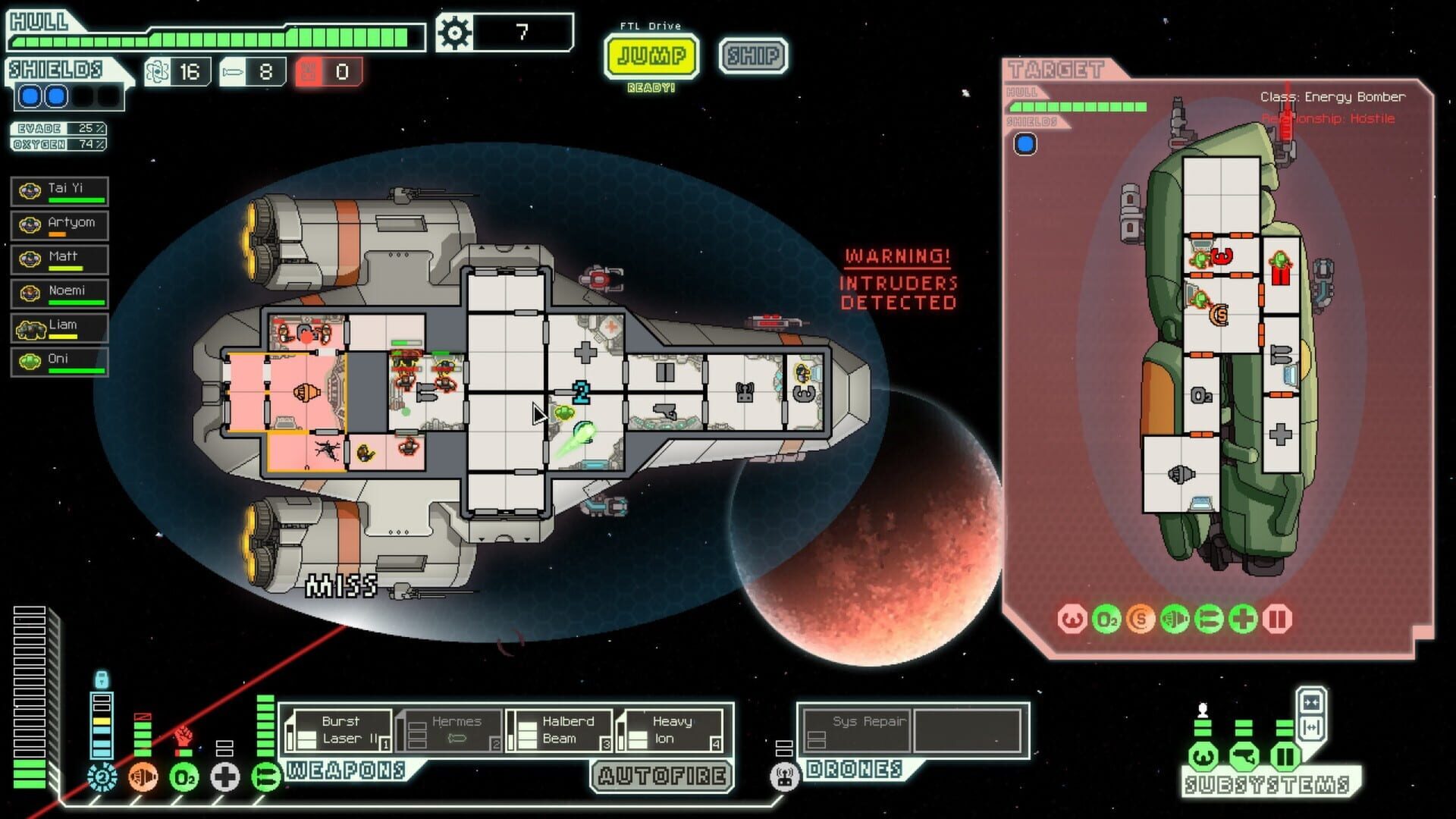
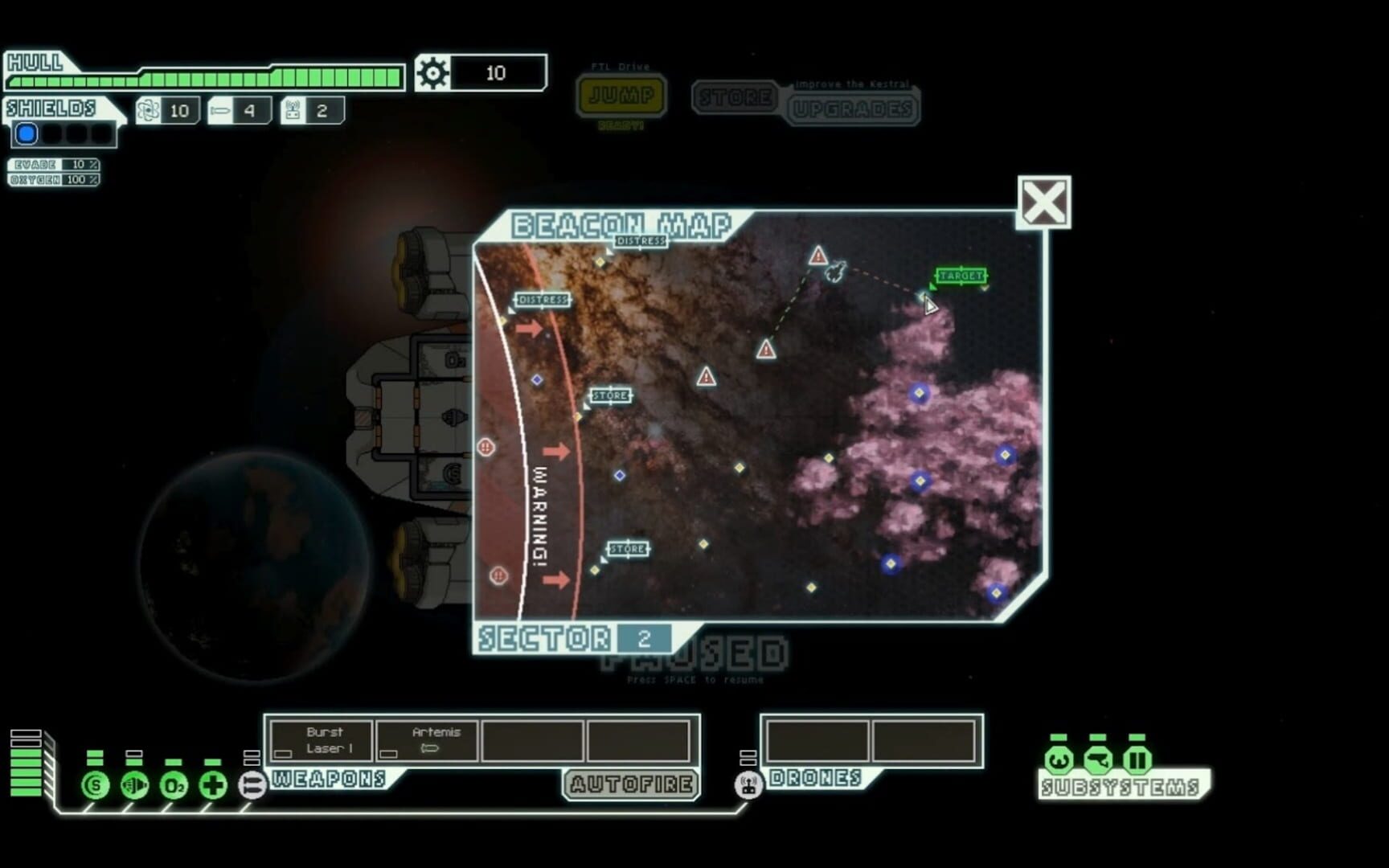
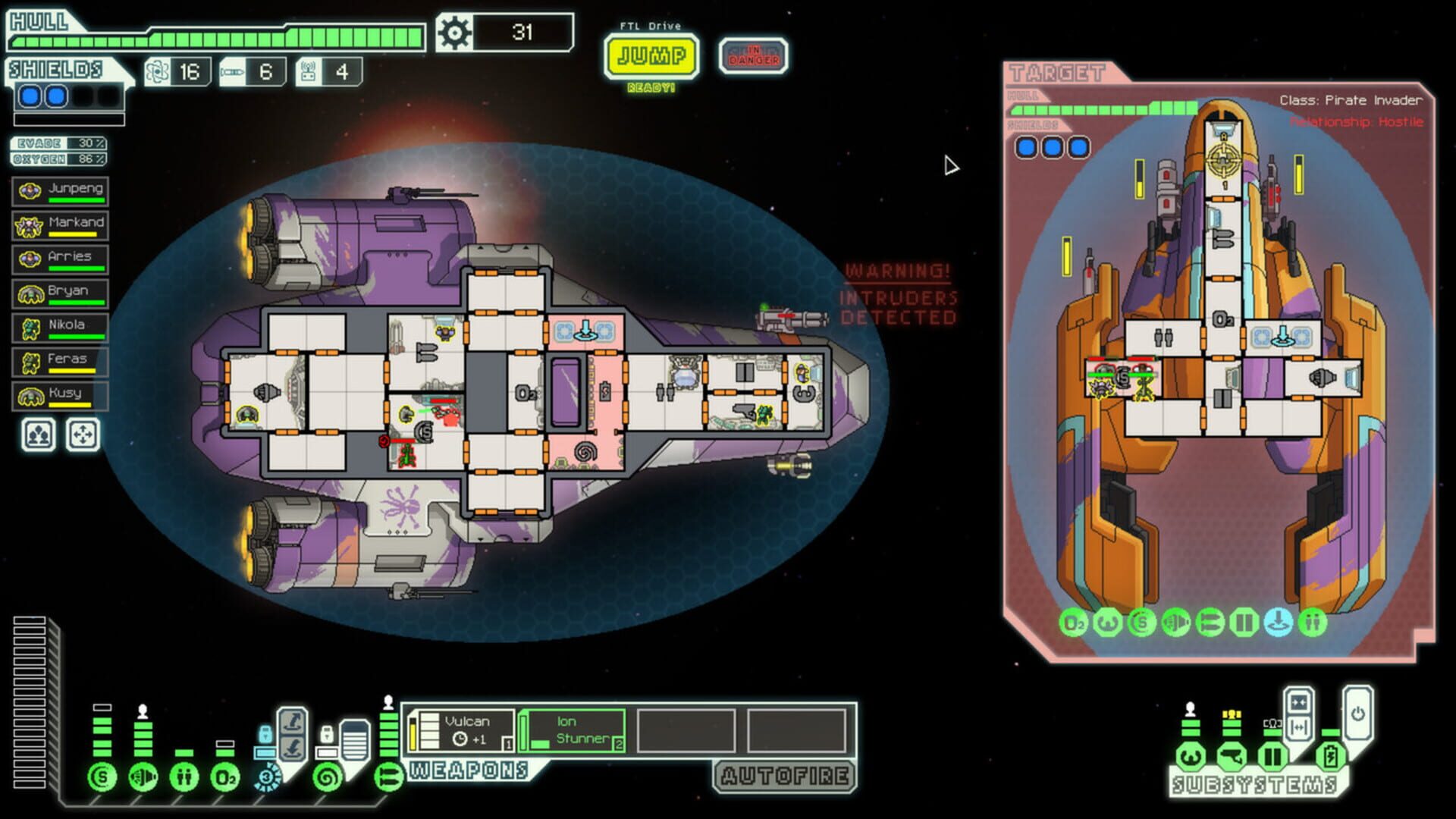
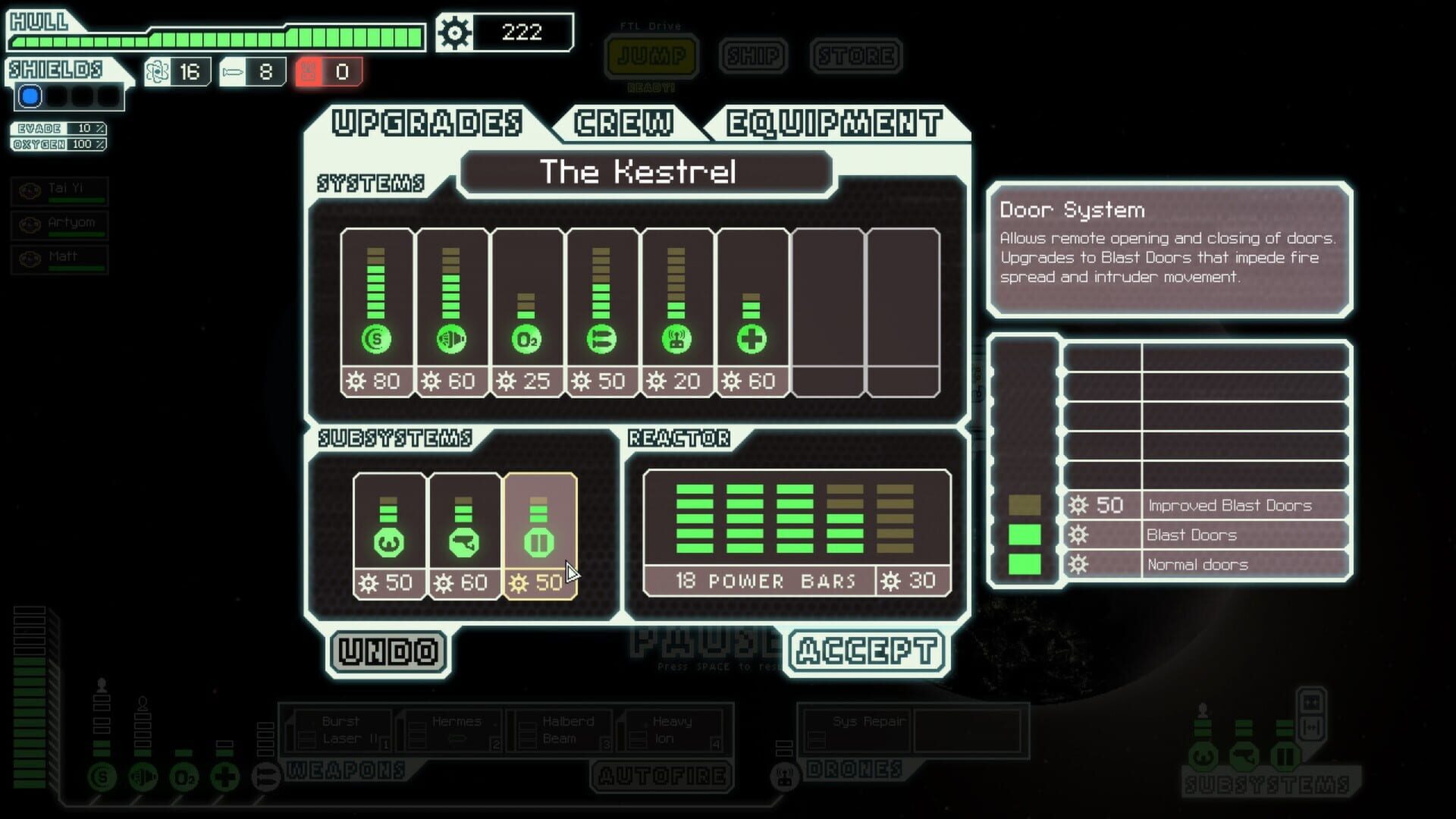
The premise is wonderfully simple. You’re carrying vital information across the galaxy, the Rebel fleet is right behind you, and you have to leap from sector to sector to stay ahead of it. Every jump drops you into a new random encounter: a distress beacon, a hostile warship, a slave trader, a quarantined station, a chance to recruit a new crewmate. You manage the whole vessel from a top-down cutaway view, diverting power between your engines, shields, weapons, and oxygen, sending crew to man stations or stamp out fires, and timing your shots in real-time-with-pause combat that rewards a cool head. Pop open the pause menu, line up a volley at the enemy’s weapon room, vent a hull breach, redirect a wounded crewmate to the medbay, then let it rip. It’s tense, tactical, and totally absorbing.
And here’s the thing the game never lets you forget: you only get one life. FTL is a roguelike through and through, and it doesn’t shy away from the “hardcore” label, when you die, you die, and the whole run is wiped. Other games would call this perma-death and treat it like a punishment. FTL treats it as the entire point. Because you know there’s no respawn, those daring escapes and way-too-close-for-comfort battles become genuinely thrilling. That last-second jump out of a fight you were about to lose feels earned in a way no checkpoint save could ever match.
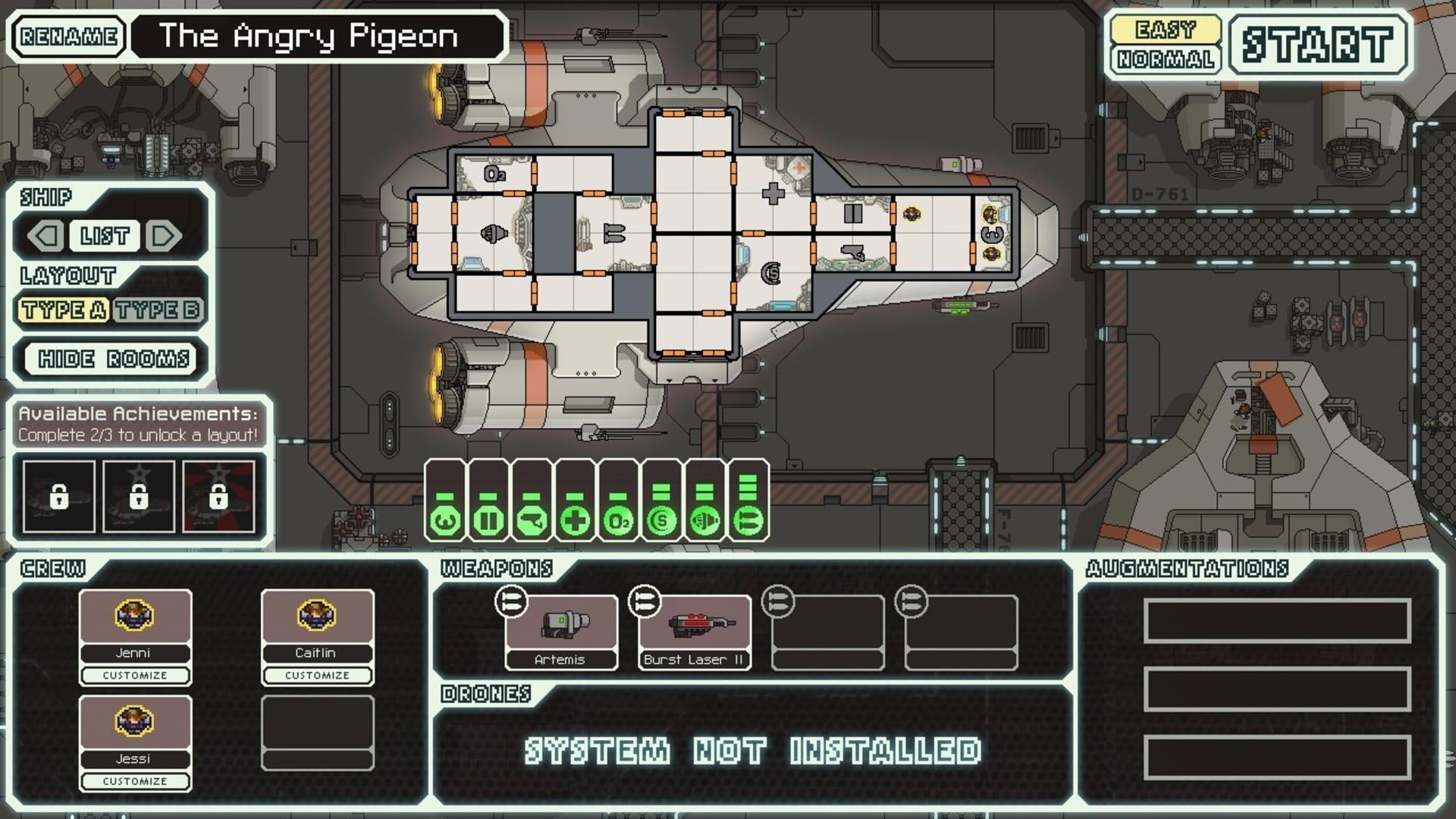
The best part is that every death is the start of a new adventure. The galaxy is 100% randomly generated, so each restart is a fresh map, fresh events, and fresh decisions about how to build your run. On top of that there’s a clever progression hook: an achievement system that unlocks new ship types and alternate layouts, plus ships you can earn by stumbling into the right random events out in the sectors. You can’t buy any of it, you have to find it or earn it, and that’s exactly what keeps pulling you back. You finish a run, you’ve cracked open a new ship, and now you can’t wait for the next “restart” just to take it for a spin. This is a game where even dying is, somehow, a reward.
It’s not flawless. Normal mode is a steep jump up from Easy, and I genuinely think a middle difficulty would have helped soften the climb. Some players will bounce hard off the loop of starting over again and again, that’s not for everyone. And because the whole thing is built on random chance, there will be runs where you simply draw terrible luck: a poorly stocked store, a boarding party at the worst possible moment, an asteroid field with no shields. That’s the deal you sign up for, but it can sting.
None of it changes the verdict. FTL is a stellar game that stands alone in a galaxy of other indie titles. The premise couldn’t be simpler, yet the gameplay is some of the most rewarding I’ve played all year, and yes, this is my personal Game of the Year. If you’re into sci-fi or space simulation, or you just want a smart, exciting new game to sink your teeth into, pick it up. It’s well worth your time. Believe me, once you start, you won’t be able to stop.
A simple premise wrapped around endlessly replayable, permadeath roguelike gameplay. Tense, tactical, and impossible to put down, a clear Game of the Year and a five-star indie masterpiece.
Buy and play the original PC release on Windows, Mac, or Linux through Steam, GOG, or the Humble Store. It runs on almost anything.
All current purchases include the free Advanced Edition update, which adds a new race, new systems, and extra events. There's also an iPad-optimized iOS version.
FTL is a PC-native game, no special setup needed. Grab it from Steam or GOG and you're flying within minutes.
| Platform | iOS · PC |
| Released | 2012 |
| Developer | Subset Games |
| Publisher | Subset Games |
| Genre | Roguelike, Space Simulation, Strategy |
| Reviewed | September 15, 2013 |