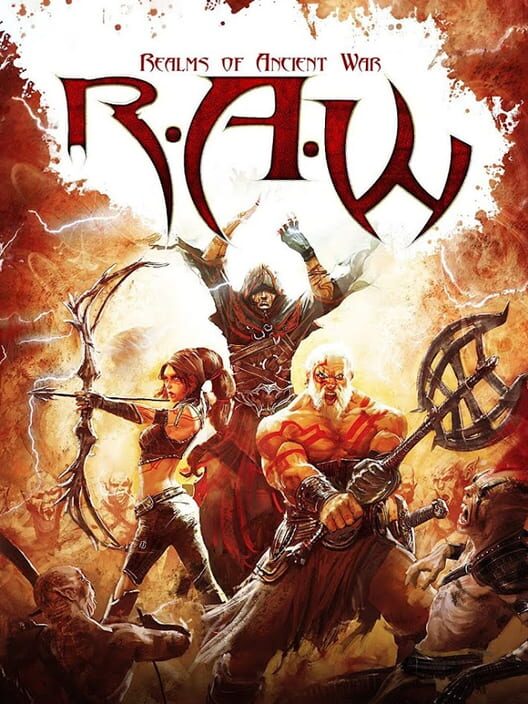
Realms of Ancient War
Many a player enjoys the wanton destruction that comes from a hack-and-slash video game. Sometimes a player simply has to vent some frustration, and what better way to relieve it than destroying bad guys who come at you in mass quantities, repeatedly? Realms of Ancient War (RAW) is a game designed by Wizarbox. It shares the hack-and-slash genre of its brothers like Diablo, Torchlight, and Divinity, and is available for Xbox LIVE, PlayStation Network, PC, and arcade.
Within RAW, we, as the players, take part in the aftermath of a decade-long war. The war has left nothing but devastation in its wake. The four kingdoms involved in this conflict want to bring an end to the ongoing destruction, so their kings put together a plan to meet alone and put together a peace treaty. During the negotiations, a vicious ambush takes place. Three of the rulers barely make it back to their kingdoms alive, but they return as empty shells. The fourth of the rulers disappeared without a trace.
As a player you can take on one of three roles: the warrior (although barbarian would be a more appropriate title, as he wields two axes, screams war cries, and grunts endlessly), the rogue for ranged, melee, and AOE (the only woman of the bunch, who acts more like a ranger than a thief), and the wizard for ranged and AOE (the guy who glares at you from underneath his cowl before obliterating you with his magic, if he doesn’t get annihilated by a swarm of enemies first). Unlike other games of its type, RAW’s characters have their own intro story and starting location. Their merge into the main story is a fast and harsh one. As a result, players are going to feel as if they were shot into the main plotline via a slingshot and left standing in the middle of things with that “huh, what just happened?” feeling. The game grasps many creative concepts and ideas within the world it introduces, but fails to capitalize on what could have been a great story by taking too many shortcuts. RAW, in many places, forces the player onto routes that quickly jump from point A to point C, skipping point B altogether. This lapse in sequence hurts the brain.
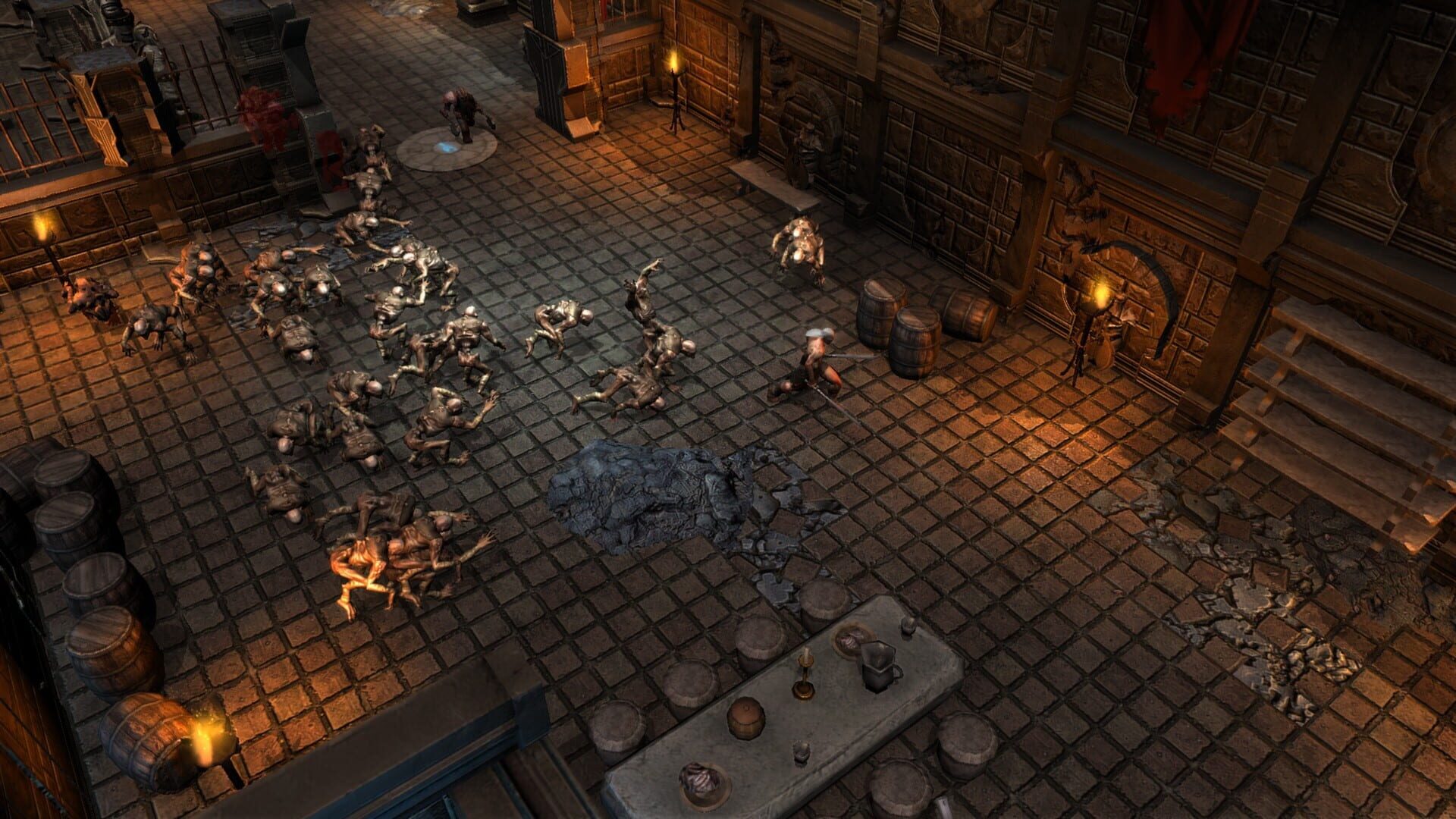
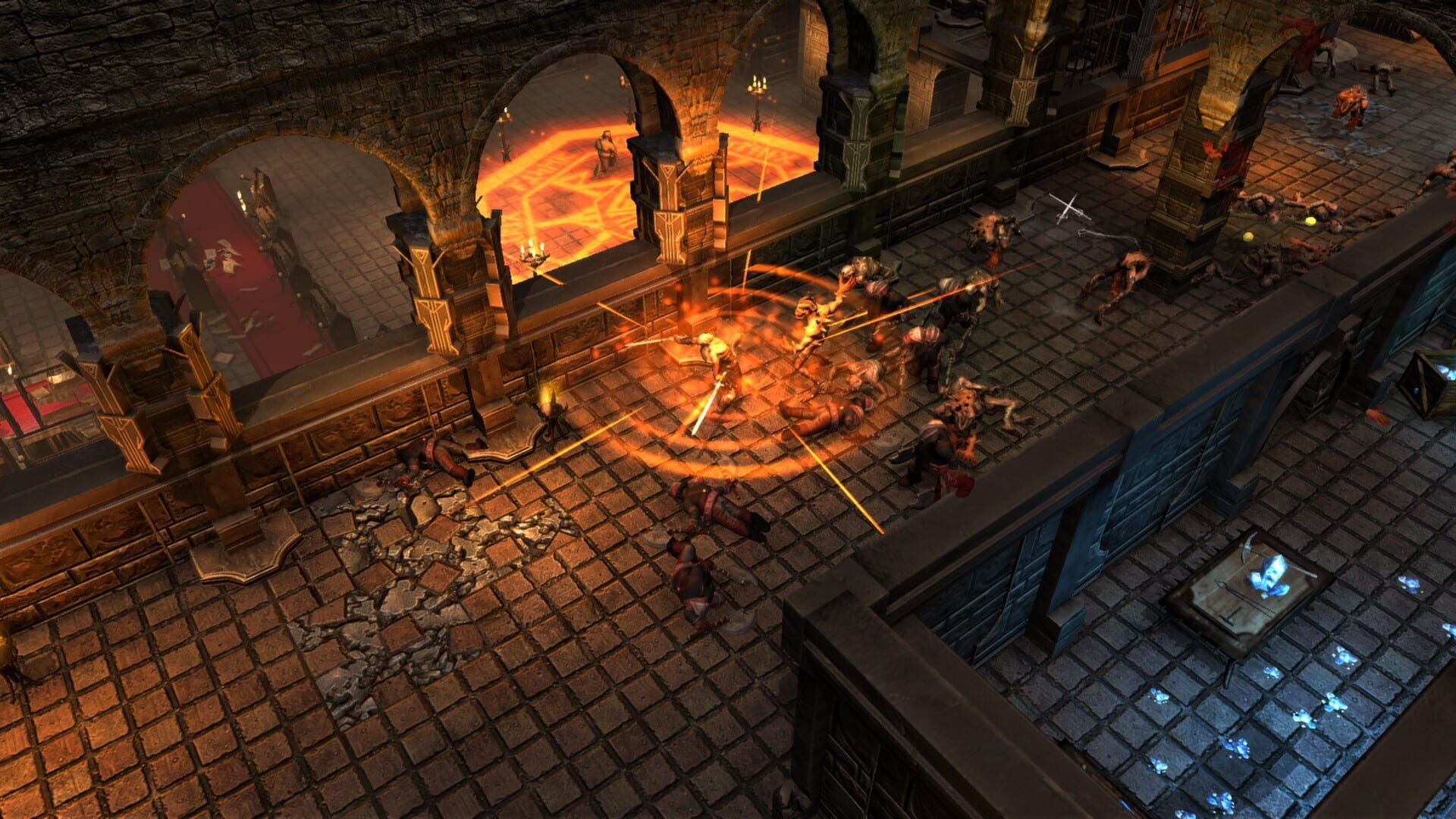
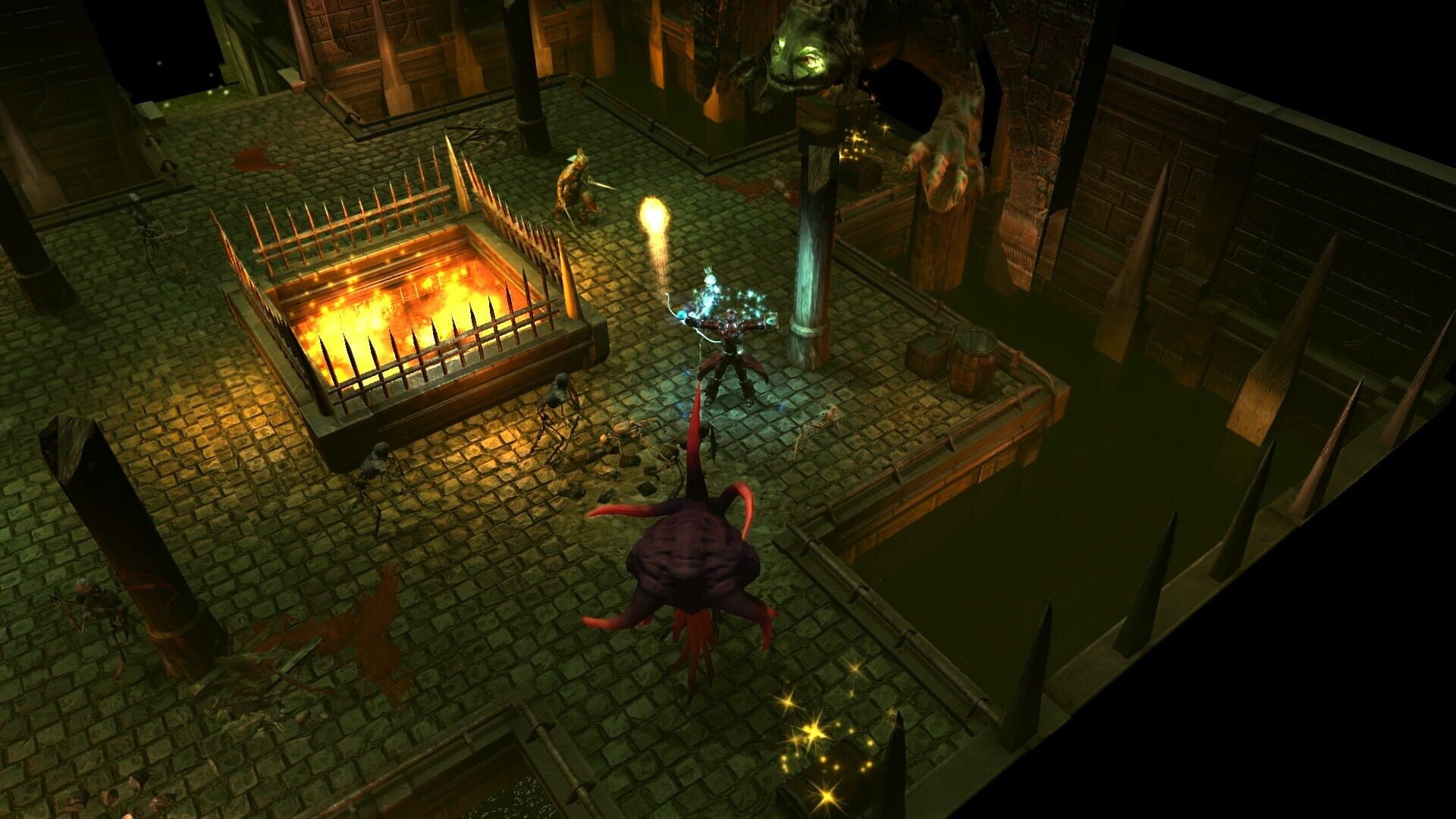
While following the route from A to C, you might get a chance to notice the enjoyable, but short of spectacular, environment. The setting is attractive; on the other hand, the character models could benefit from a bit more detail. Each stage has enough unique properties to give a player the impression that they are in a truly unique world; however, players will not get to experience all this world has to offer because of a fundamental flaw with the camera. It is locked into a perspective that makes it difficult to admire the detail the designers put into the environment. Also, when it comes to combat, this same camera angle will hamper the player’s ability to detect the enemy before they have a chance to swarm. This is not an extreme problem until enemies come from both sides, making it difficult to escape and often forcing the player to swig down healing potions faster than the Irish can guzzle down shots of whiskey.
While players are contending with the camera angle, they can be captivated by the background music of each of RAW’s levels, that is, if it were a little more audible. The in-game music gets drowned out quite a bit by the ambient noise and sound effects. Removing all other sound does allow the player to hear the music, but is the cost of the other sound effects worth it? The most audible music in the game can be found at the title screen. Albeit it is a decent piece of music, it will quickly become repetitive. Finally, there are the sound effects. Once the player finishes the introduction quest, they will be introduced to the majority, if not all, of the sound effects in the game. That makes the rest of the game monotonous when every attack, every death, and every status effect has the same sound attached. This, however, is not atypical for the genre. One thing to note is that, despite the difficulty of either hearing the music or it being repetitive, the music does set the appropriate atmosphere for the game and its various levels.
The controls are straightforward and take little time to learn. The face buttons control all of the powers and attacks of the character and are quickly swappable via the right thumb stick. The left thumb stick is in charge of moving your character around. The shoulder triggers are for your mana and health potions respectively, and the right bumper is used to interact with the world, including picking up items. Potions, soul stones, and money are picked up automatically. The only real difficulty that shows up is with the game’s auto-aim and the rapid fire of the rogue class. The auto-aim likes to aim at nothing on occasion. The rogue gets the ability to shoot faster with her bow (that is, more arrows), and sometimes only one will come out of the bow, while sometimes she will get her full volley. This can be annoying if you choose the bow route for the rogue and need to mow down enemies before they get to her.
All hack-and-slash games have their own amount of hacking and slashing. RAW has an unusually high amount of it, especially with classes such as the warrior. The player will constantly be doing footwork to stay alive during every battle. AOE abilities are limited and can have high cooldown times and limited knockback. This, combined with their high mana costs, means that AOEs are going to be used sparingly and that melee weapons are going to be the weapons of choice, even for a rogue going the archer path. Some might not find this to be a big issue, but the game will throw twenty or more enemies at you quite often, with a few fights ranging at thirty or more. Before the player has a chance to cut their way out, their entire health-potion supply will have been depleted. Another point of frustration lies in the fact that the game does not include a map. There is an included compass that will point you in the general direction of your goal. However, once your goal is complete, backtracking to the individual who gave you the quest in the first place can prove somewhat frustrating for those who don’t have a good sense of direction.
The only worthwhile appeal to replaying the game is to see what the other classes have to offer. On the other hand, that appeal may be short-lived thanks to repeating the excessive grinding performed the first time through. The lack of an audible soundtrack and the cluttered camera further impede a player’s interest in replaying. The developers took a game that had great landscapes and scenery, then stacked a cruel camera, a somewhat difficult to hear soundtrack, and an inadequate story onto it, and topped it off with excessive grinding, all on a game that had excellent potential to be a superb hack-and-slash title. The saving grace is that the environment is very detailed, but this alone cannot be the backbone of the game.
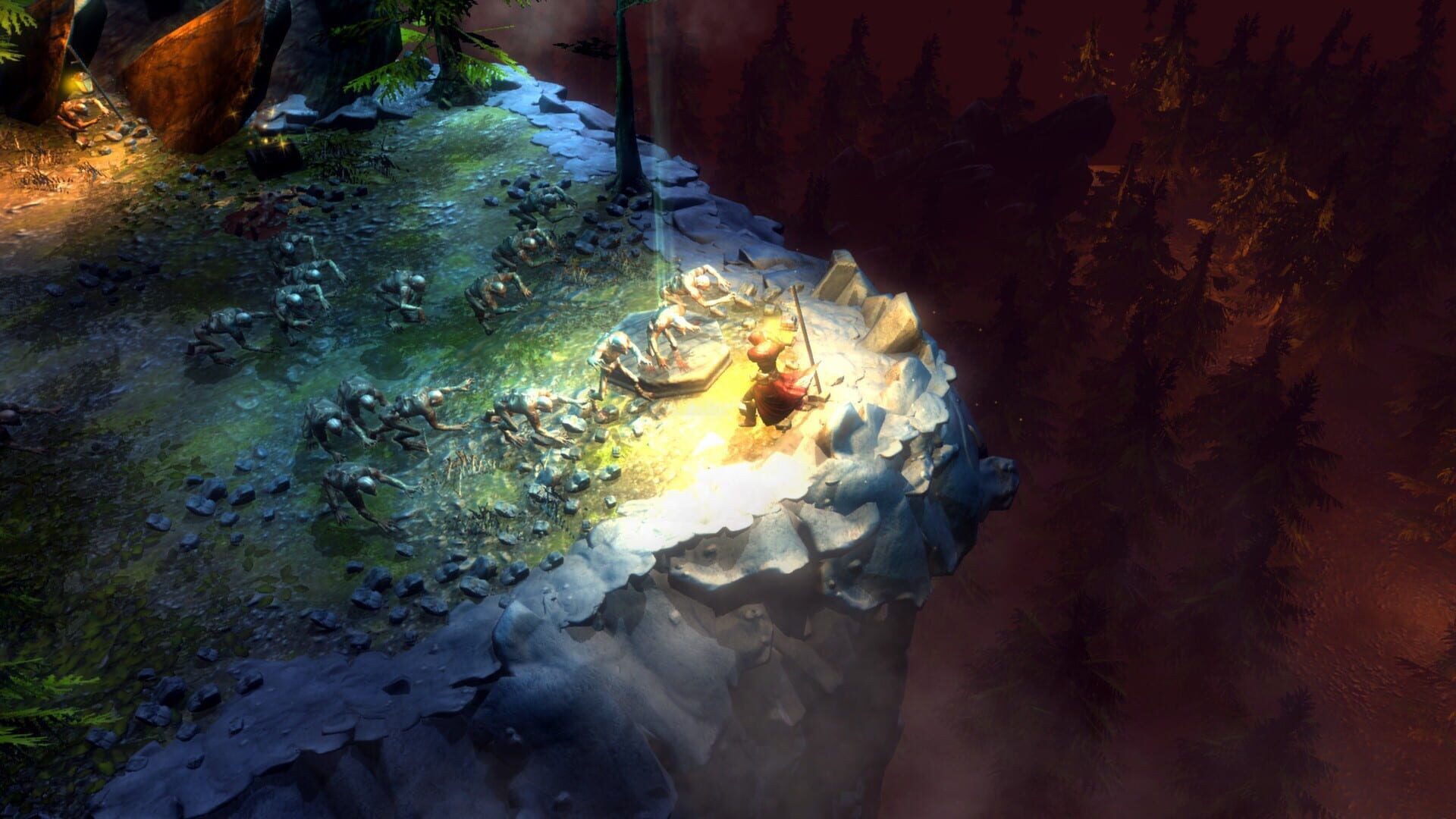
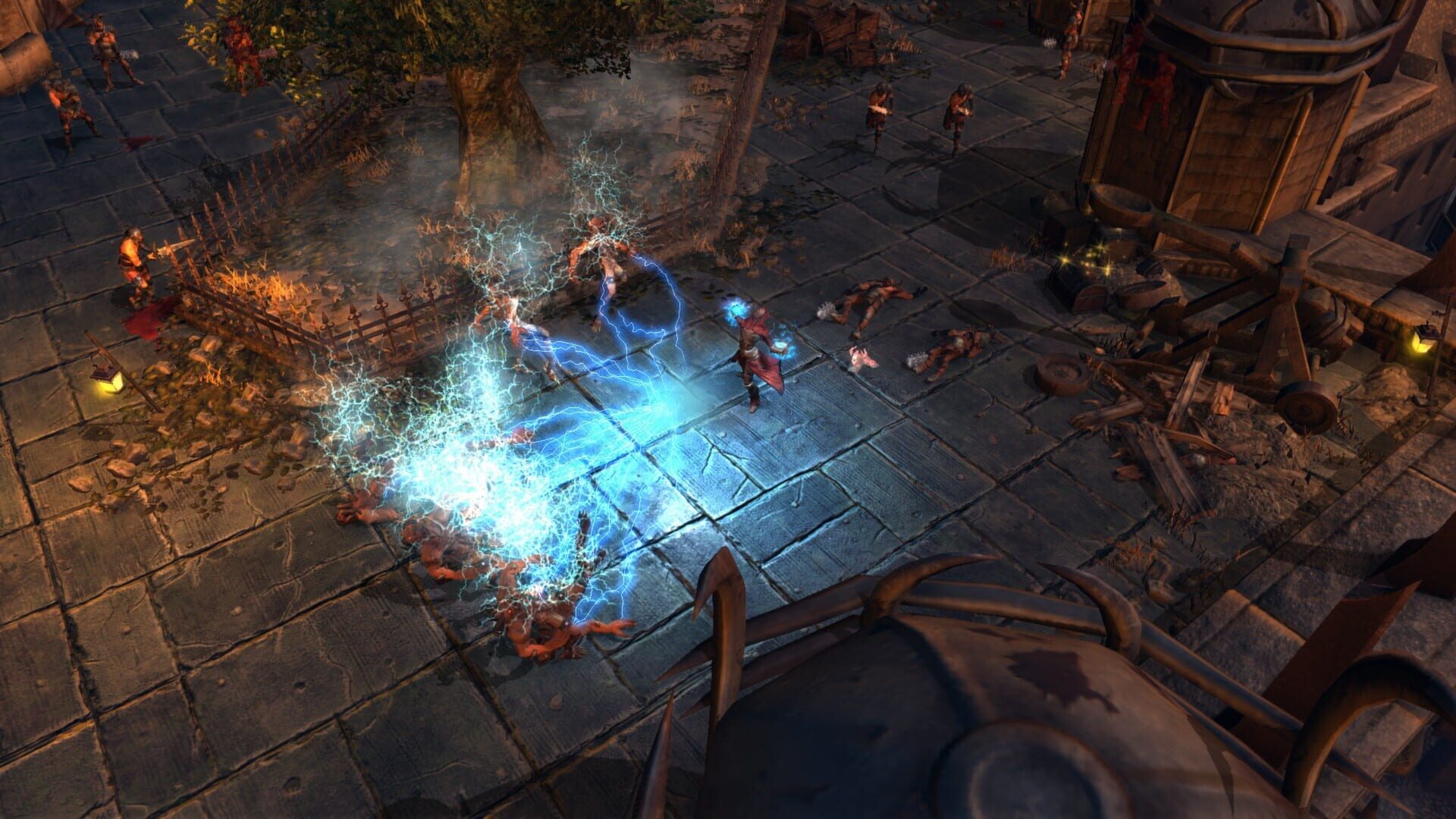
A serviceable but uninspired hack-and-slash whose locked camera, inaudible music, monotonous sound and punishing grind undercut a world that had real potential.
An Xbox 360, PS3 or Windows PC; available via Xbox Live Arcade and PSN.
Available on Steam.
| Platform | PC · PlayStation 3 · Xbox 360 |
| Released | 2012 |
| Developer | Wizarbox |
| Publisher | Focus Home Interactive |
| Genre | action-RPG |
| Reviewed | November 10, 2012 |