First, let me give you a background on my gaming. I started out with Coleco when I was six. Never owned an Atari. After the crash in the 80s (gaming, that is) I picked up an NES a year after it was released, still not back into the gaming scene. I went through the Genesis, SNES, 3DO, Saturn, and PlayStation phases, and now I’m playing my first-ever imported system, the Dreamcast.
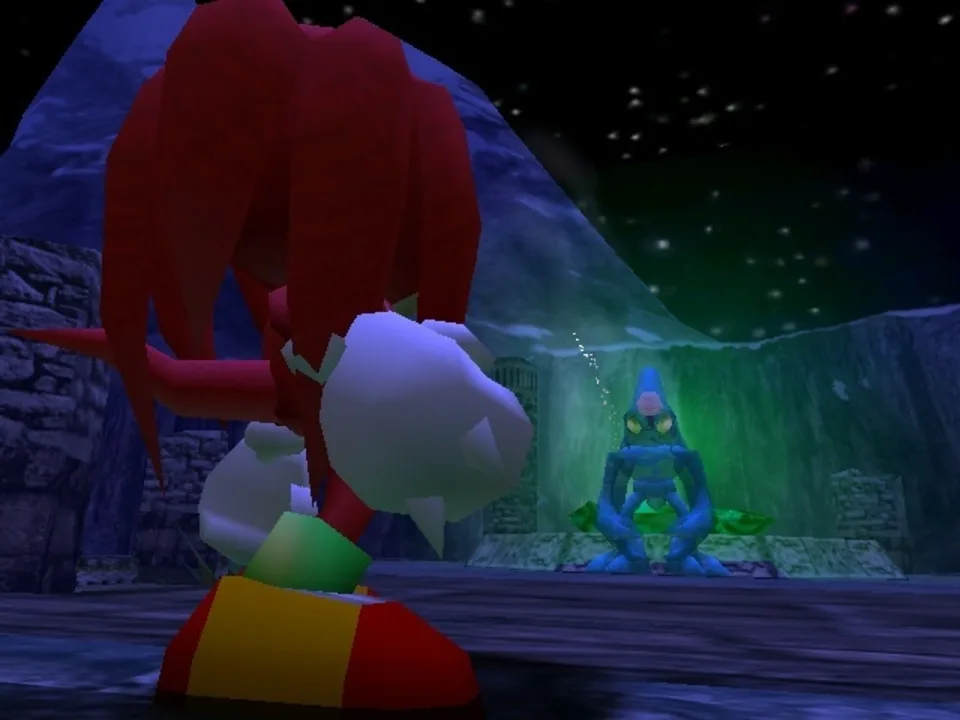
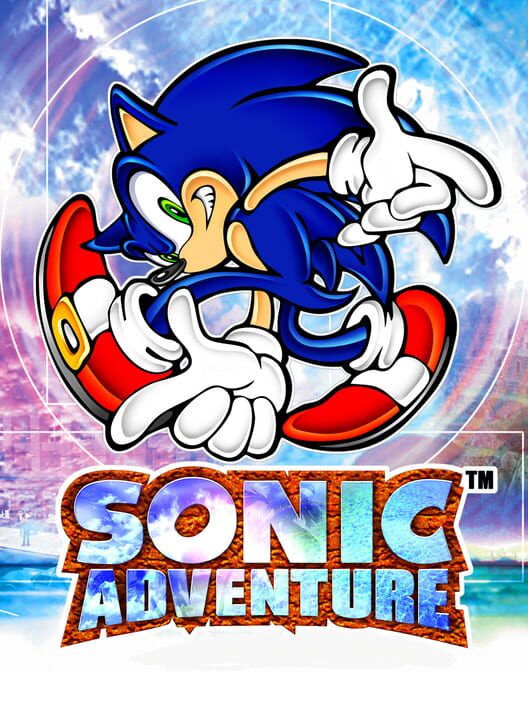
My last thirty gaming hours have been spent playing Sonic Adventure. The game is a true gamer’s game. Sure, you have the standard “C, finish the level” mission, but what really gives you replayability are the A and B missions of each level. The B mission asks you to complete the level with fifty or more coins. Not too difficult, but it can be a challenge on some levels. What really shows your gaming skills is the A mission, where your goal is to complete the level in a specified amount of time. Every level was a challenge trying to gain the elusive A ranking. In fact, I still need half of the A emblems in Sonic’s quest. While other ground-breaking 3D platformers, such as Mario 64, required patience and thought to complete the various levels’ tasks, you never had to deal with the time variable. It really adds to the pressure and makes fully completing the level’s requirements that much more fulfilling.
I’ll give an overview of the graphics, music and sound effects, and gameplay before probing individual levels, all my opinion of course. The graphics, running at either 640×480 at 30 fields per second or 640×240 at 60 fields depending on the stage, are unrivalled at home on consoles or PCs, or in the arcades. The textures are all clean as a whistle, same goes for the background bitmaps; you’ll notice no pixels anywhere in the game. The explosions, water effects, and the rest are all mind-blowing. When you face the first Eggman boss and see the missile and explosion effects, you’ll be shocked. It is almost of video-like quality.
The music is the best quality on any gaming machine. This is more of a fact than an opinion, and the Yamaha 64-channel processor shows its power. The actual music tracks are also very entertaining, and are second only to Dracula X’s musical score on the PlayStation. There is something for everyone, with hip-hop, tribal, and dance/techno all being represented in Sonic Adventure. All the background music is available for your listening pleasure in the options section; great touch. The sound effects are simple but effective. The classic ring “clang” is still here, with quality voice samples as well. Nothing spectacular, but it does the job.
The gameplay feels just like it should for the most part. When you take the Blue Blur for his first spin, the control is like you’d expect, tight and quick. You do have to adjust the sensitivity applied to the analog stick when Sonic is running at full speed versus the normal jog. Jumping and attacking work well in 3D. The new auto-track attack feature is great. Just jump in the general direction of the enemy or power-up and attack. Simple enough.
No game is perfect, and Sonic has its flaws. Most noticeable are the camera-angle problems. They are very good for the most part, but some levels give out some odd and out-of-place angles. This is most prevalent when Sonic is running through a curving tunnel at high speeds. You’ll be running far into the screen, but the camera will still be lagging behind, making you vulnerable to any enemies or obstacles ahead that aren’t on the screen. Usually the problems can be fixed using the L and R buttons to shift the angle, but when you are facing a boss this can be a pain. Still searching for that perfect camera. Another topic that has come up is the glitches in the game. Some can be attributed to faulty game discs, but others are a part of every game. These range from bad collision detection resulting in bad camera angles and getting stuck. Another problem I’ve seen is lagging sound effects, meaning an effect will repeat on and on, not stopping until there is disc access. Lastly, I think the bosses should have been a lot more challenging. What usually happens is you face the boss, die a few times, learn its attack pattern, and then go on to kick its butt. This is true for every boss in Sonic Adventure. I would have liked to see an occasionally straightforward, difficult boss, meaning the objective isn’t that hard, but it really tests your reflexes and gaming skills. Unfortunately, this is not the case for any of the bosses.
That’s enough overview. I’ll try to review each level one by one next. The mini-games are there, but in my opinion are average. The Sky Chase scenes are straight-up boring, with the sandstorm and snow levels offering little entertainment due to poor control. The Twinkle Circuit is pretty fun, showing what we should expect at a minimum for racers and first-person games: 60 fields per second at 640×240. Trying to achieve the A ranking in the mini-games can be a major pain, but it’s part of the game.
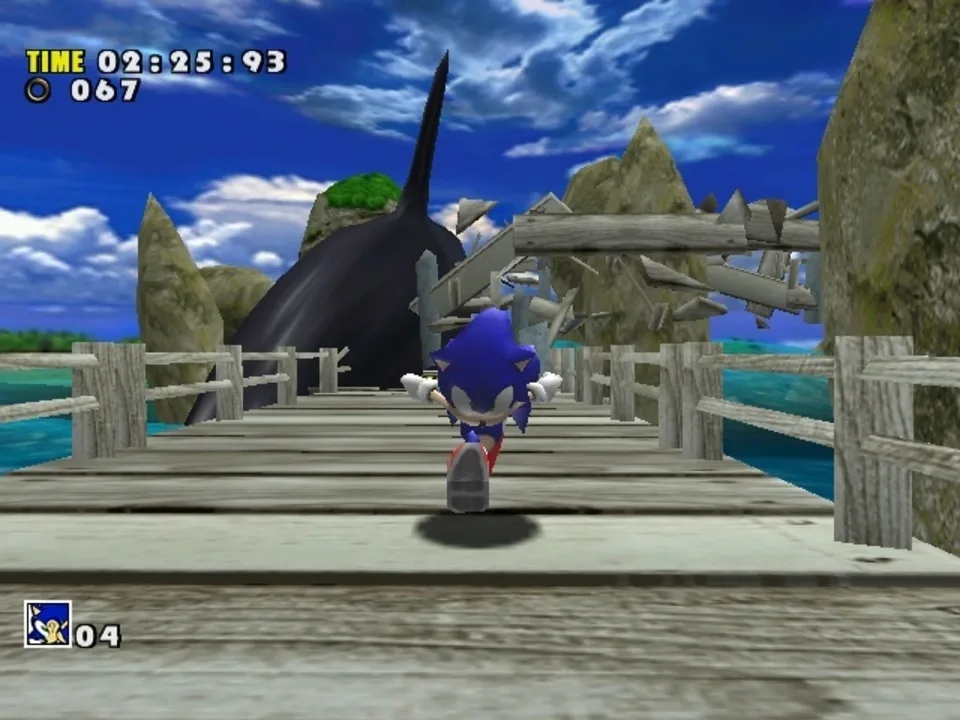
Stage One: Emerald Coast. This level lets you get familiar with the controls of the game. The direction is straightforward and the speed is not overwhelming, but until you find the secret shortcuts, you’ll never earn the A rating. The special effects are great, with just a hint of slowdown in certain areas and some pop-up.
Stage Two: Windy Valley. Ha ha, Windy Valley shows the power of the Dreamcast. Winding curves and amazingly high speeds, multiple paths, and an awesome tornado. This level will make anyone a DC believer. Unfortunately, there is also some really bad pop-up due to the fact that the horizon is so far back. Still, it is kind of unsettling to see big chunks of road jump out of nowhere. I’m having Daytona flashbacks.
Stage Three: Casinopolis. The action section of this level is pretty pointless. Gameplay is fast all the way through with no slowdown. Basically, you have to time the blowing fans to complete the level. It is much better playing Tails’s quest, as racing against Sonic can be quite a test. The mini pinball games are great fun. Sonic pinball is pretty lifeless, but Nights pinball is a blast; you’ll get to see lots of Nights nostalgia. Also, if you’ve earned the A rating on this level, you’ve got skills and luck. More luck than skill, however.
Stage Four: Icecap. This level can be frustrating at some points because the direction is not laid out for you as it was in previous levels. An annoying point comes up when you are jumping from icicle to icicle. The jumps have to be perfectly aligned, otherwise you’ll fall down and be forced to start over. Your patience will be tested when attempting to earn the A rating. The snowboarding is fun for a while due to the cool snow and explosion effects, but in the end is too frustrating because of the poor control.
Stage Five: Twinkle Park. One of the best stages in the game, for the simple fact that there are so many varied textures and moving objects on-screen with very little slowdown. It is a little cute, but the length and special effects make it an enjoyable experience. Again, very challenging to grab the A rating. A very bad glitch occurs in this stage. Very often you’ll be running past an ignited TNT barrel that will give a sparkling sound effect. For some reason, this effect follows you far past the TNT barrels and will not stop until the game loads the next section of Twinkle Park. I’m pretty sure this is not a defect in my game, but a problem that is in all versions. Twinkle Circuit is a fun mini-game; it gives us a view of what we might expect from wipEout DC, if it ever is developed. It runs at 60 fields per second and shows that most of Sonic Adventure runs at 30 fields per second, due to its smoothness.
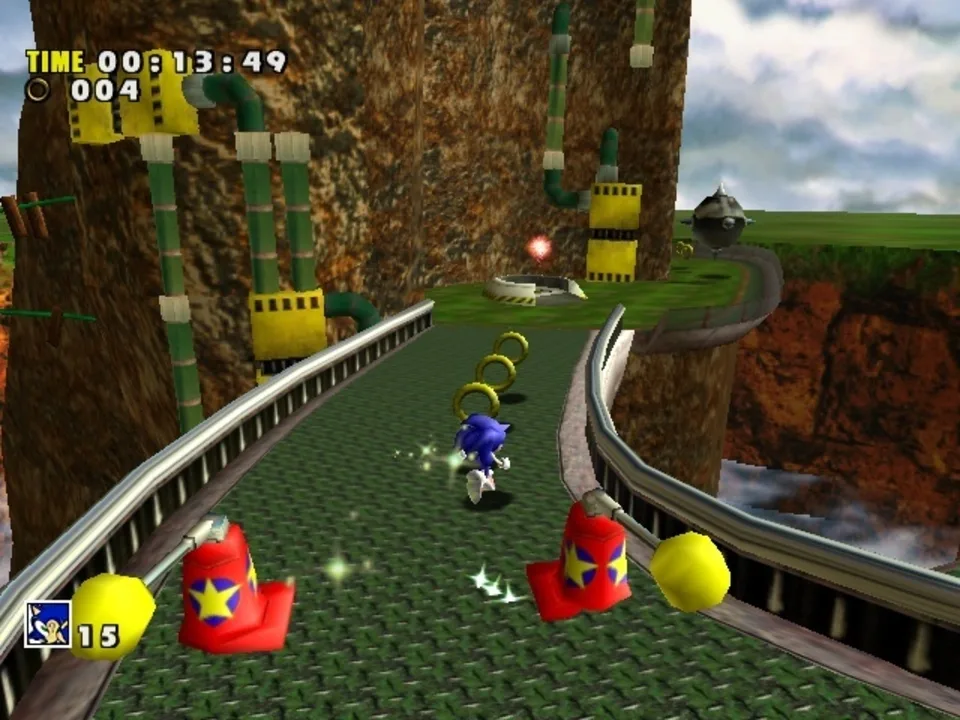
Stage Six: Speed Highway. This will be the stage used in the Sonic Adventure ads in the US. It has rocking techno music, many different paths to take, lots of variation, and, most importantly, speed. Camera angles are perfect for the most part, but when you begin to pick up speed it can become a problem. The city section of Speed Highway is interesting, with lots of on-screen moving objects. My favorite stage, just for the music and sound effects. Use a good Dolby setup to hear the excellent audio separation. Obtaining the A rating in this level seems impossible at first, but once you find the shortcuts and power-ups, you’ll have no problem completing it.
Stage Seven: Red Mountain. Something about this level just seems too slow. This stage has the worst background music, but is still good for gaming standards. The problem with Red Mountain is that there is a lack of direction; there are too many possibilities. You’ll spend more time trying to decide what the best combination is to complete the level rather than just playing it. The speed picks up once you enter the mountain, but still feels generic and rushed. This is a level where I’ll earn the three emblems and then hang it up.
Stage Eight: Sky Deck. This stage shows off the DC’s processing power. There are lots of explosions, multiple levels of transparency, and, unfortunately, lots of slowdown. The game runs fast for the most part, but when you get to the part where there are lots of falling objects and multiple enemies on screen, the game begins to crawl. I mean fifteen fields per second. You can just feel the glaze of slowdown on this section. It is still amazing, with many objects spinning in all kinds of directions and huge missile turrets trying to gun you down, with realistic transparencies and lighting effects. It is also a very long stage and will test you when trying to earn the A rating.
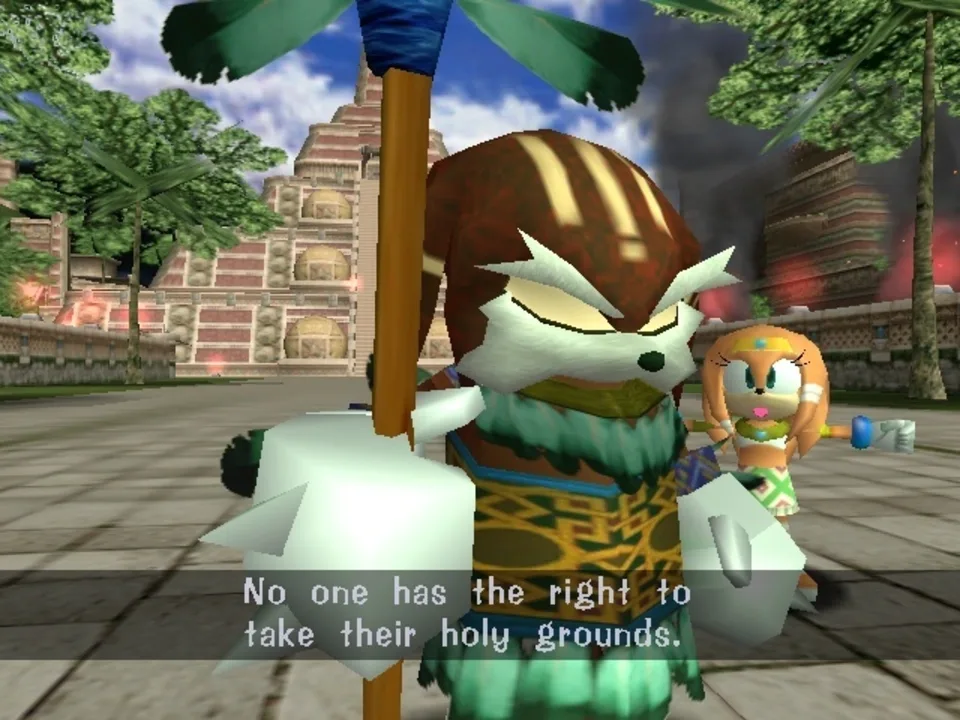
Stage Nine: Lost World. Ah well, we had to have the adventure/Tomb Raider level, didn’t we? While the level isn’t all a matter of button-pushing, it does make up a large part. Sure, you have Sonic blurring down tunnels with fire shooting at you from every direction, but Lost World definitely has an adventure feel to it. It is a good change of pace from the other levels. Worth noting is the lighting. You’ll come to a section where you’ll have to use reflections to see your way through the level. It is, well, really cool. The waterfall sequence is interesting as well, if a little choppy. If you can earn the A rating, you are a gaming god. I have been trying for quite a while and still come up at least a minute short.
Stage Ten: Final Egg. Wow, for being the final stage I expected a lot more. This level has a little bit of everything, but doesn’t have anything that jumps out at you. There are a few high-speed sequences and some challenging jumps to make, but as a whole there isn’t much to say about it. There is also some button-pushing on this level, via stone placement. Another stage that will give you trouble earning the A rating.
Well, that’s it. I’ve completed the game with all characters except for Big. Sonic Adventure shows what a game should be: challenging, fun, and full of replayability. Pretty hard to find that combination nowadays.
A Sega Dreamcast and the GD-ROM.
Re-released as Sonic Adventure DX on GameCube and PC, and later digitally on Xbox 360, PS3 and Steam.
| Platform | Dreamcast |
| Released | 1998 |
| Developer | Sonic Team |
| Publisher | Sega |
| Genre | Platformer |
| Reviewed | September 9, 1999 |
| Restored | June 5, 2026 |