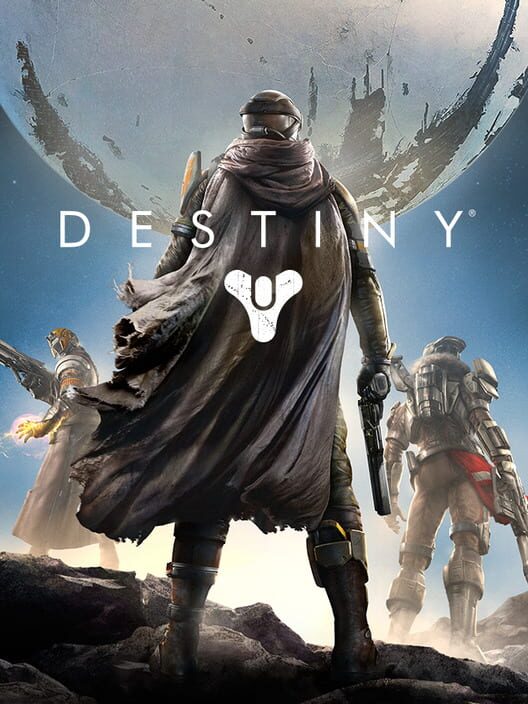
Destiny
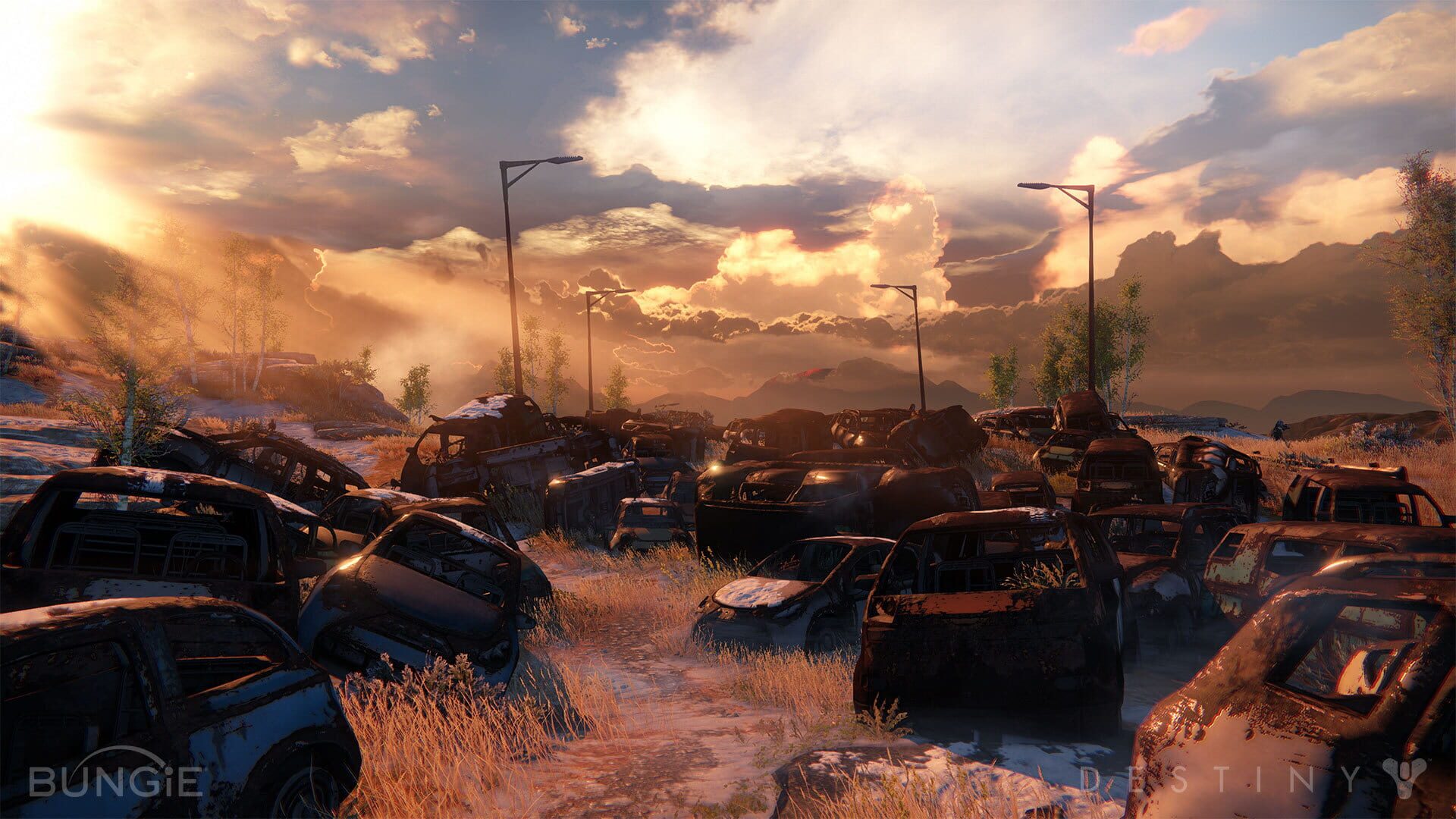
Destiny is a first-person shooter MMO set in a futuristic sci-fi universe. The plot takes place in a post-apocalyptic world in which an entity called the Traveler was discovered upon Mars. Aided by this being, humanity became capable of populating most of the inner solar system (Mercury, Venus, Earth, the Moon, Mars), ushering in what humans called their Golden Age. That Golden Age came to an end when the enemy of the Traveler, called “The Darkness,” swept through the solar system like a plague and all but wiped out humanity. The Traveler now stands watch over the Last City (literally its name, as if “The Darkness” wasn’t generic enough) with the assistance of companions it creates called ghosts. These ghosts are tasked with recruiting guardians to wield the power of the Traveler, called the light, against the darkness. Some have called Destiny a hybrid of Halo and Mass Effect: you protect a tag-along male version of Cortana while he helps you accomplish your goals, all the while in an armored spacesuit, with big guns and unique abilities to boot. But is that all Destiny is destined to be, a hybrid carrying on the legacy of other well-known games, or can it hold its own?
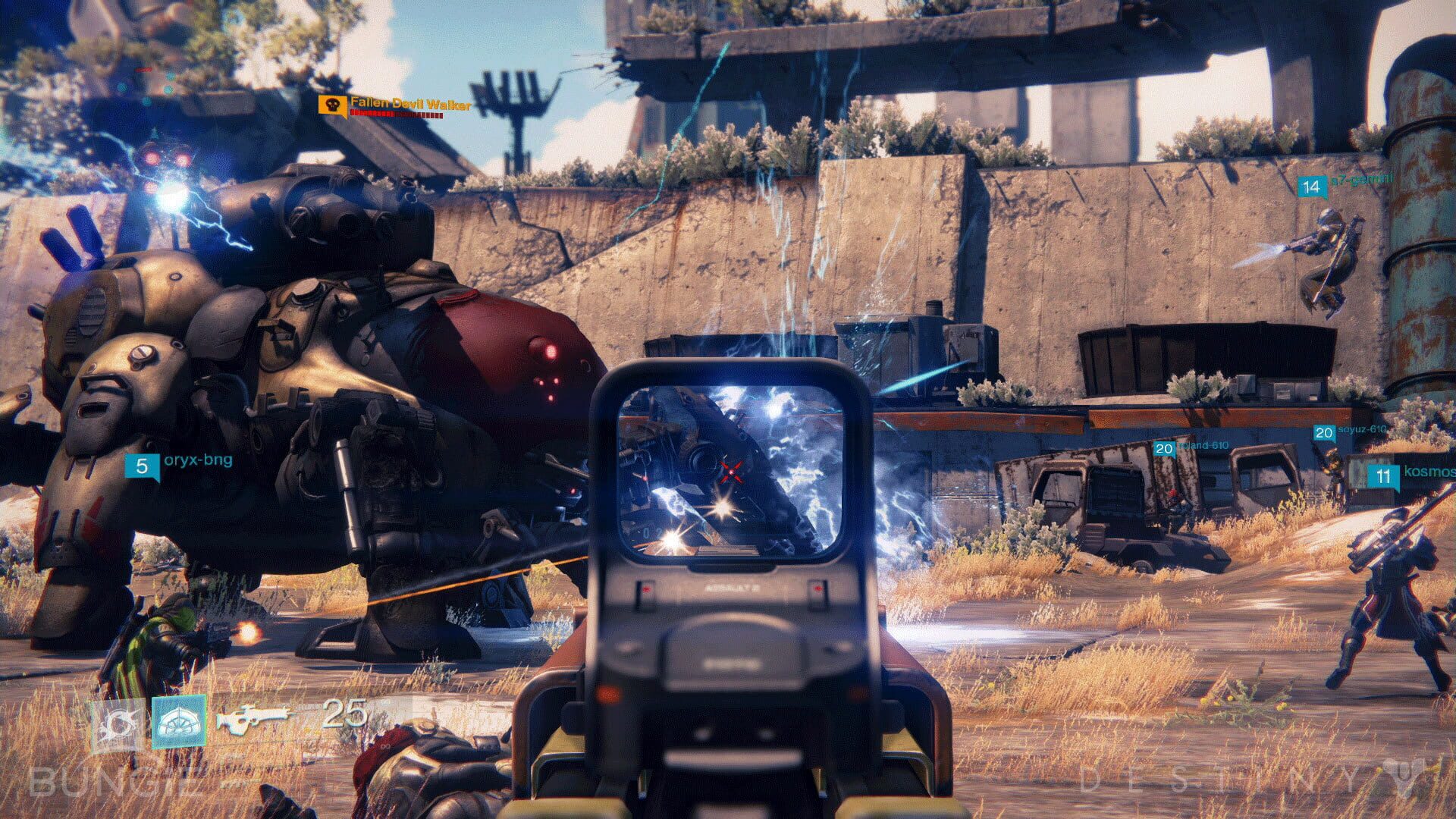
Destiny’s world is pretty expansive. It lets players go off and explore regions that aren’t dependent on the main story: hidden caves with random treasure, a ship full of powerful enemies, or land completely off the beaten path. There’s no dynamic map, but the game includes a “Nav Mode” when you talk to your ghost that overlays “Nav Points” onto your HUD to show the general direction of the next point, and also puts a white arrow on the motion tracker’s outer ring in the upper left. The motion tracker is useful for locating nearby enemy movement, notable items like nav points and mission objectives, and interactive objects such as vehicles and other players; it isn’t a direct copy of the one from the Alien series, but it shares some similarities. Destiny’s world also includes a few mechanics that make it unique across MMO platforms. One is how the game replaces defeated enemies. In the typical MMO, enemies respawn out of thin air; in Destiny, they’re inserted by dropship. If you intercede with an insertion, the decision is met with hostility in the form of cannon fire from the dropship and gunfire from the inserting troops. To make this more interesting, dropships won’t always insert enemies at their patrol location; sometimes they insert them farther away, causing the patrol to run to their spot. As unique as it is, the feature quickly loses its impressiveness. First, once you establish a dropship pattern, you can simply wait in ambush for the next drop, which is especially devastating for troops that have to migrate. Before long your abilities outmatch the dropship, which isn’t necessarily bad; it just makes the dropship seem a LOT less intimidating, even on later worlds. Finally, you have no way of taking out the dropships themselves. If you could destroy them, it might give Bungie a reason to make the ships deadlier or part of planetary events. On that note, Destiny has random events throughout that are reminiscent of Guild Wars 2 in that they’re team-oriented (some can be solo’d) and have different difficulty levels. Unlike GW2’s, all of Destiny’s events run on a consistent timer, and they have different rarity levels too, so when a timer hits zero, an event may or may not appear.
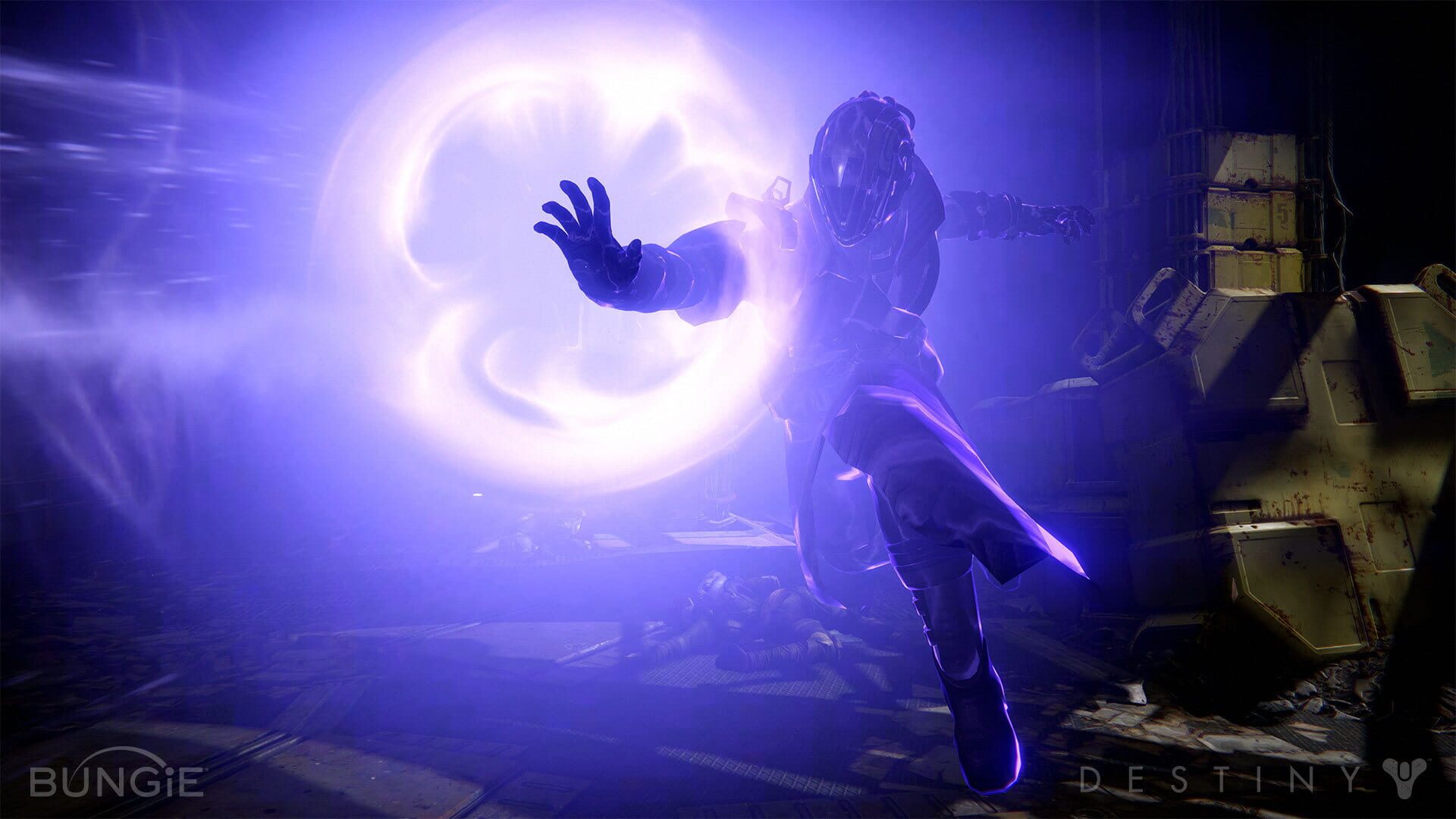
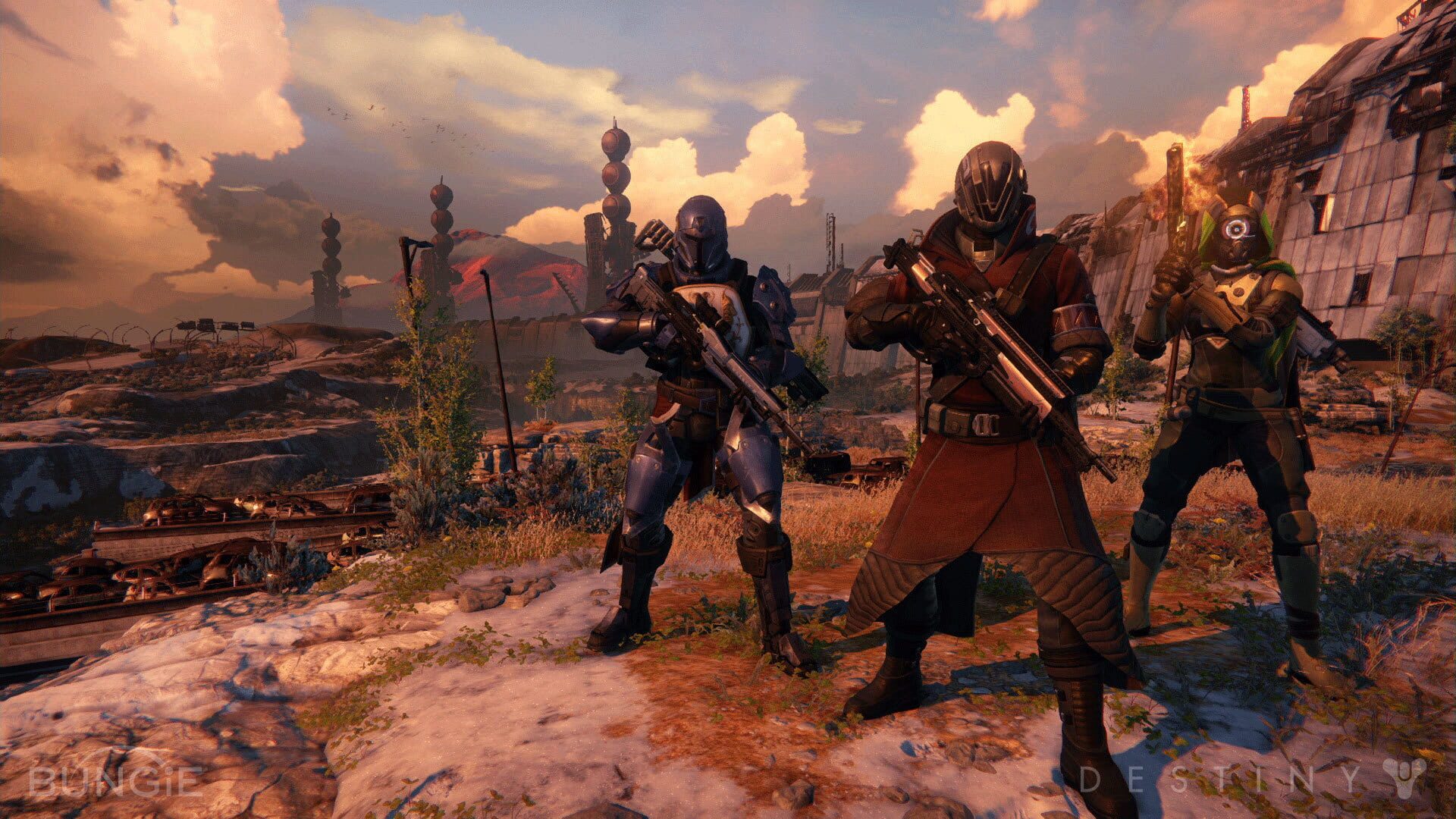
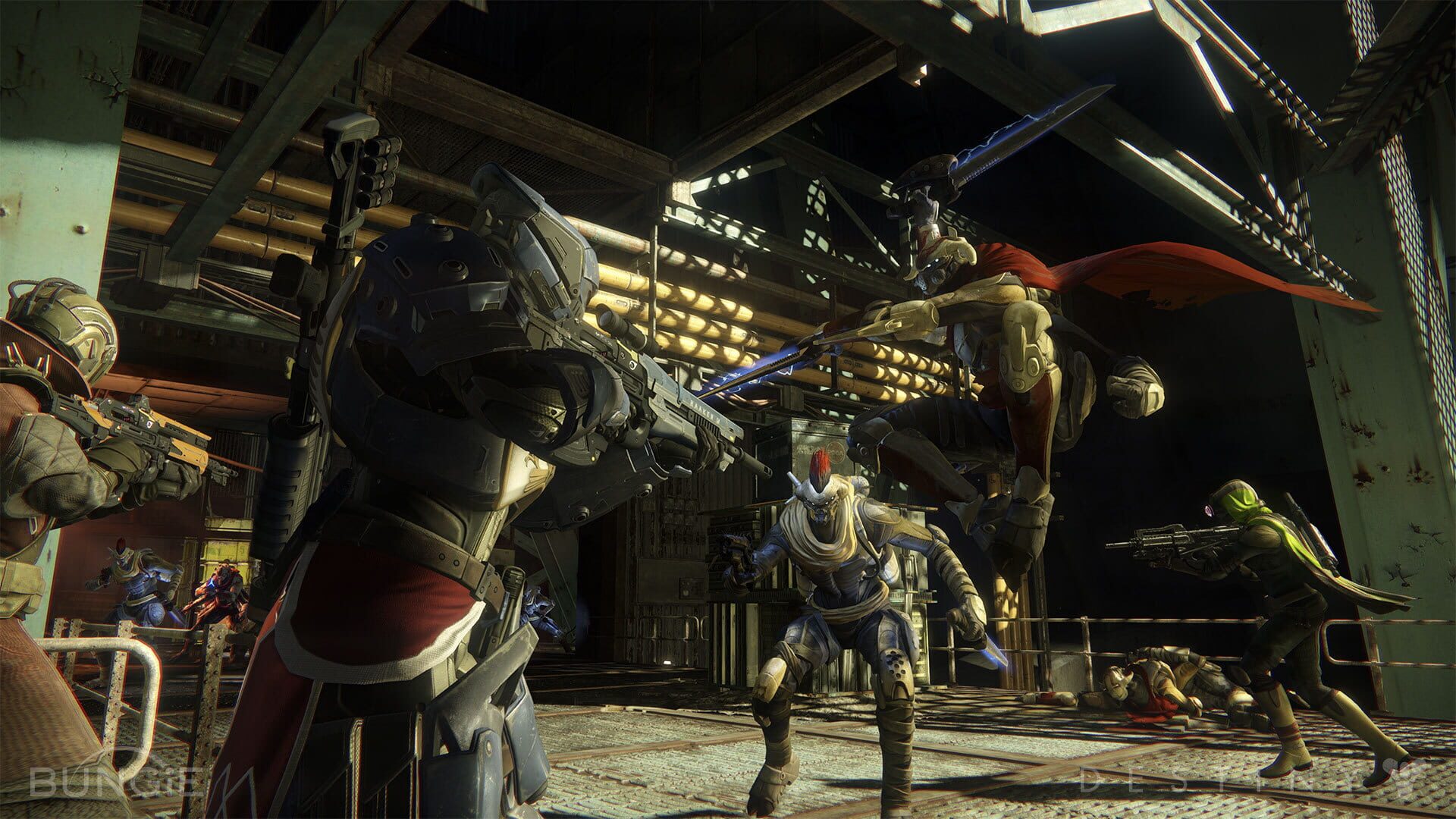
Players can create up to three characters per profile, choosing from three classes for each: the Titan, the Hunter and the Warlock, your quintessential tank, rogue and mage. Each class has two specializations that change how it plays. The second unlocks at level 15, and once unlocked it’s available for any future character of that class right from the start. Titans choose striker or defender, hunters gunslinger or bladedancer, and warlocks voidwalker or sunsinger. The specialization changes not just play style but the damage type you deal and the abilities available to you. Take grenades: the striker titan gets a flashbang that damages and blinds, while the defender titan gets a magnetic grenade that sticks to enemies and explodes twice. Within each class and specialization, abilities can be swapped back and forth to customize your character, which prevents the one-size-fits-all mentality of other MMOs. The defender titan’s super is a shield bubble that can do a variety of things depending on your choices: from the outside, weapons can’t penetrate it, but all players can walk through it, and once inside, your chosen effects, more weapon damage, more defense and a few others, take hold. This allows a massive amount of diversity and creates a very balanced class system. I did find that offensive supers trump defensive ones; in a scenario where a defensive and an offensive super are used against one another, the offensive wins every time, which leads to frustration with wasted supers in the PvP arena.
Although the classes represent tank, rogue and mage, there are no defined roles in PvE. Everyone is expected to tank their own damage (avoid is the better term), deal their own damage, and revive others when they die. Tanks and healers no longer have to shoulder party failures alone, because, simply put, you do it all or you die. The classes have no abilities that augment specific weapon types either, so all classes are good with all weapons: you’ll see warlocks with missile launchers, titans with hand cannons and hunters with shotguns. The only thing holding back weapon proficiency is the weapon’s attributes and your own skill. The game has a variety of weapons that deal different damage types, Kinetic, Arc, Void and Solar. All primary weapons are Kinetic, and primaries include the Pulse Rifle, Auto Rifle, Hand Cannon and Scout Rifle. Secondaries include the Shotgun, Sniper Rifle and Fusion Rifle, and Heavy Weapons include the Rocket Launcher and Heavy Machine Gun. All weapons vary in damage, impact, recoil, range and magazine size. Ammo is accrued through kills, with enemies dropping white ammo for primary, green for secondary and purple for heavy. Weapons earn experience that lets you upgrade them for a variety of effects: different scope types, increased damage, faster reloads, a missile launcher that explodes in proximity if it misses, and more. The rarer a weapon, the more abilities it can have, and upgrades can cost glimmer or materials, which are found by disassembling weapons, scavenging planets, or rarer methods.
Call of Duty fans will be right at home, as the FPS controls are essentially identical to the CoD series. There are some new controls to learn, for super powers, your equipment menu, and the ghost menu that summons your ground transportation or returns you to orbit. Where the game falls short is communication: there’s no chat whatsoever. You can use voice over a headset if you’re in a fireteam or an Xbox party, but during my time with Destiny I never heard a single peep from another player, not even by accident. The game offers some simple D-pad emotes (Point, Dance, Sit, Wave). Given the state of trade chat on WoW, you might ask whether the lack of chatting is really so bad; probably not. Still, a few more emotes would help communication, things like “bye,” “going for A,” “defend A,” instead of leaving us with the harassing tactic of blind invites. Bungie also set Destiny apart by boldly removing trading: there’s no way to trade with another player, with the exception that you can trade among your own characters. Unless you create another character of the same class, though, that’s a moot point, because almost all your armor drops are for your current class, with few exceptions worth saving. Weapons can still be effectively traded, and glimmer (the currency) is pooled per account, not per character. With trade absent, real-money trading is removed, which means Bungie could have built an extremely efficient NPC economy of its own design, but for whatever reason it didn’t, opting instead for a simpler system of disassembling items for materials. There’s also a 25,000 glimmer cap, and once you hit it, it becomes an annoyance to wander the tower wondering what to spend your money on.
The PvE campaign is a semi-linear story across mission areas on Earth, the Moon and other parts of the solar system. Even though the story follows one direction, you can choose the order missions are played, though each advises an ideal level. Mission areas can have their difficulty increased for more challenge, especially after the main story (increased replay value), and they’re soloable but allow 1 to 3 players. On each planet there are one or more missions called strikes, which are matchmade and require three people to participate and, in most cases, finish, though a couple of skilled, well-equipped characters can sometimes manage with two. Matchmaking is simple: choose a strike on a map and you’re matched with the players missing from your fireteam (one or two), a fairly painless process. Where it falls down is after you’re in a strike and a member disconnects or leaves: there’s no clear indication, and you might not notice that the green mark for that player has gone if you’re busy during a boss fight. It gets worse because there’s no indication that a guardian is being searched for. A fellow POCG gamer and I spent an entire strike with just the two of us after the third disconnected; the final boss had 20% health left when a third finally showed. An ETA on a replacement would have let us decide whether to head back to orbit and find one or push on. Why does this matter? A couple of reasons. First, although players respawn when they die, there are “darkness zones”: areas where, if the party dies, everyone starts over from the beginning of that zone with all enemies respawned, effectively restarting. With a member missing, the likelihood of a wipe rises. Second, strikes are an earning point for vanguard marks, currency used to buy some of the game’s legendary equipment, so knowing whether to proceed or retry from orbit would help. As workable as those shortcomings are, the one that can’t be worked around, and the one that really hurts Destiny’s PvE, is the story. The foundation is all there, background, lore, supporting characters, unique world elements, everything that makes for a strong story. But the developers decided an RPG would be better served by the FPS practice of telling a story: shallow character development, fragmented and often incomplete storytelling. If Destiny wants to call itself an RPG with MMO elements, the story needs more depth and character development. As it is, the characters have about as much depth as a puddle in the Sahara, and the only real substance, and there isn’t much, comes toward the end of the game.
PvP offers several modes in a race to reach or hold the top score: Control (capture the zones), Skirmish (3v3 kill and revive), Clash (6v6 team deathmatch, respawn only), Rumble (if it moves, kill it), Salvage (you and your ghost salvage things) and Combined Arms (players and vehicles). The maps offer a lot for different playstyles, with open ranges for snipers, close spaces for CQB, and hybrids where you have to watch for both. Even outside Combined Arms, there are maps in every mode that include vehicles, so you’ll face threats of all types, and you’ll almost always have access to your Sparrow (your summonable motorcycle) where it’s feasible. Matchmaking isn’t without drawbacks here either: level advantages are removed, but ability advantages aren’t, so a level-20 player’s full kit will definitely trump a level-4 player who’s only unlocked two or three abilities, though in fairness it may be hard to find players at the lower level. As a final PvP note, the developers recently ran an activity challenging the community to find them in 3v3, with a special name badge for anyone who won, an awesome show of developer involvement that I’d love to see more of.
A couple of closing thoughts. The first concerns acquiring legendary gear, which has two objectives: earning rep and obtaining marks. Rep comes from bounties and completing missions, with bounties being PvE or PvP, while PvE marks come from strikes and PvP marks from the Crucible. Side by side, PvP is clearly superior to PvE in the earlier endgame: a level-20 strike (assuming a player in level-18 gear) can produce 4 marks an hour, but if a player drops out, that can fall to 2 (note the earlier matchmaking issues), whereas PvP Crucible marks earn 4 an hour at worst and exceed 12 in good matches. That discrepancy is fairly significant and almost serves as a distraction from the lack of quality on the PvE and story side; it balances out once you reach around level 23 to 24, and it may also be easier to earn PvE marks early if you’re in a clan. The second thought is the grind. It’s the norm for MMOs, and understandable for subscription or money-based games trying to maintain revenue, but Destiny doesn’t have that limitation and has significant headroom for creativity in this department.
So, when it comes down to it, can Destiny hold its own? Is it a clone of Halo? Short answer: no. Your ghost may resemble a male Cortana, and the Titan class may be a bit Master Chief-ish, but that’s where the resemblance stops. What about Mass Effect? That’s a double-edged answer. Mass Effect had a quality story with in-depth lore and character development, but it lacked the class and equipment customization that Destiny has. All in all, Destiny has its FPS and PvP elements in sync, and they’ll be hard to top. But in the PvE, RPG, story and character-development arena, Destiny is taking a serious beating. The game is enjoyable to play; as an avid RPG player, though, I was disappointed by the lack of a quality story, character development and foundation on the PvE side.
A shooter MMO with near-perfect gunplay, strong PvP and deep, balanced class customization, dragged down by a fragmented, puddle-deep PvE story and character development, plus no chat or trading. Great fun, disappointing where it matters most to an RPG fan.
A PS4, Xbox One, PS3 or Xbox 360 and an internet connection (always online).
The original Destiny's servers remain online; the free-to-play Destiny 2 is the main entry today.
| Platform | PlayStation 3 · PlayStation 4 · Xbox 360 · Xbox One |
| Released | 2014 |
| Developer | Bungie |
| Publisher | Activision |
| Genre | Shooter |
| Reviewed | April 7, 2015 |