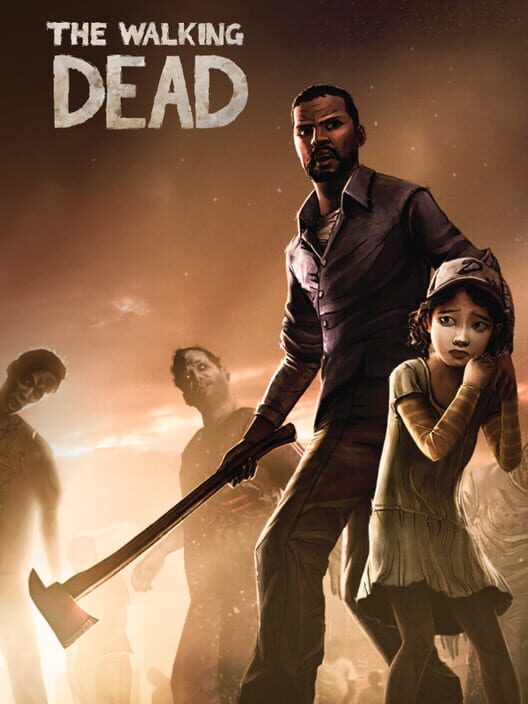
The Walking Dead: Season One
Back in December of 1998, I reviewed a game called Grim Fandango. It was one of the best adventure games I had ever played. It received the highest rating I had ever given a game up to that point, and it received widespread praise from the gaming community. It was also a commercial flop, and it ultimately led to LucasArts getting out of the adventure gaming market entirely. At that point most people saw the writing on the wall: the adventure game was dead. LucasArts was the king of the market, and they had given up the crown. With them gone, most other companies followed. But a group of former LucasArts employees decided the genre wasn’t going to die on their watch, and so they founded Telltale Games.
That backstory matters here because The Walking Dead is the game that proved them right.
Episode 1: A New Day
The game starts with Lee Everett riding in the back of a police cruiser, heading out of Atlanta on his way to prison. The officer driving is more interested in interrogating Lee about what he did to end up in cuffs than watching the road. You can hear something on the police radio, a steady hum of reports about an unknown situation, but the officer shuts it off. The road gets busier. Police cars, SWAT units, helicopters, all heading the other direction, back toward Atlanta. The officer still doesn’t pay attention. And then the car hits something in the road, and everything changes.
That opening sequence tells you everything you need to know about how Telltale is going to tell this story. It is patient. It builds. It trusts you to notice things before anyone explains them. The officer’s obliviousness isn’t played for laughs, it is there so you understand that the world ended while ordinary people were busy worrying about ordinary things. Lee didn’t miss the apocalypse because he was special. He missed it because he was in a police car arguing with a cop about his personal life.
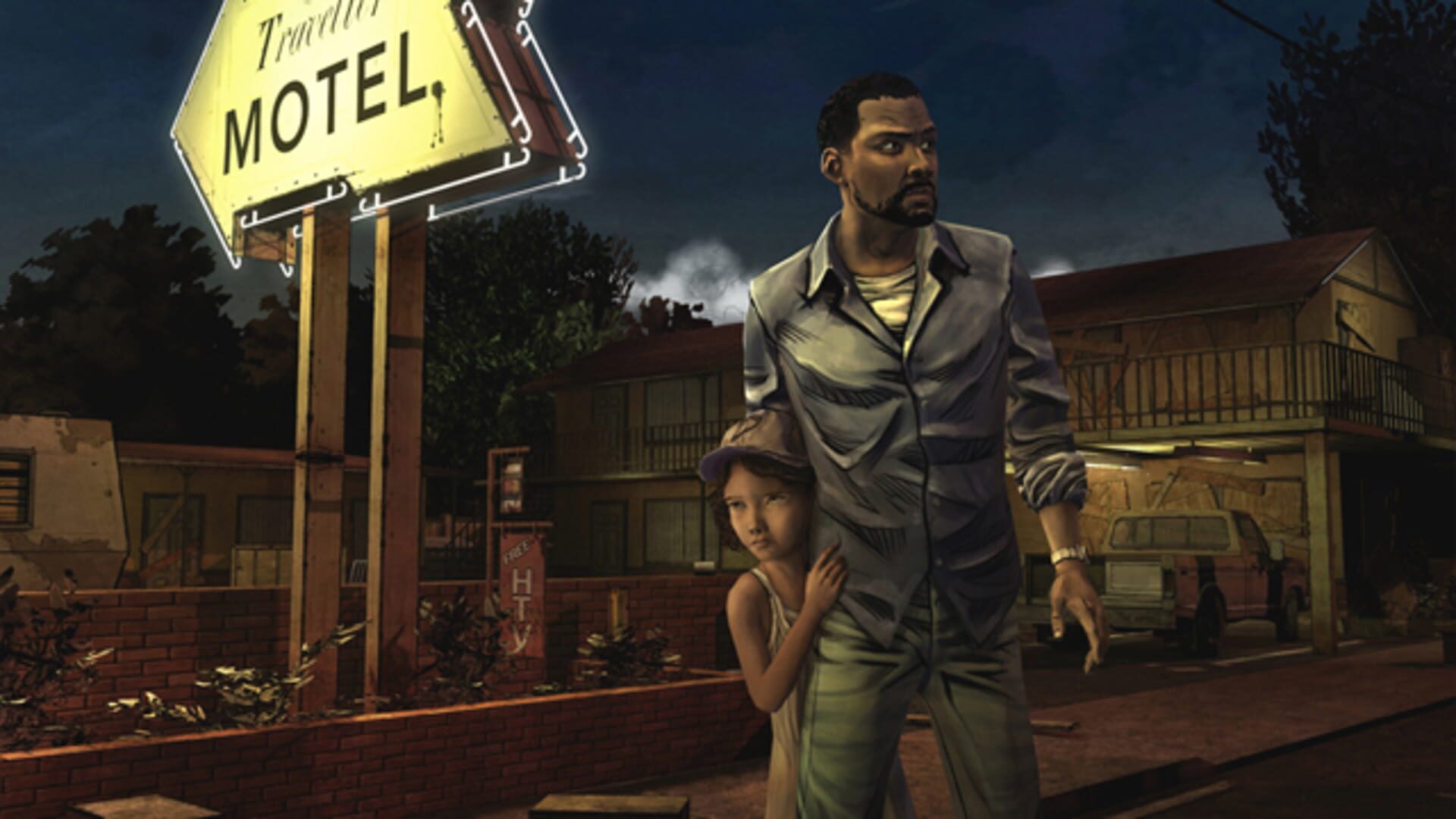
A New Day establishes the core relationship of the entire series: Lee and Clementine. Lee finds her hiding in her treehouse, waiting for her parents to come home. They don’t. What follows is a dynamic that the game earns rather than assumes. You’re not told to care about Clementine. The game just keeps putting the two of them in situations where Lee has to choose how to act, what to say, how much to protect her from the reality of what is happening. By the end of the first episode, if the game is working on you at all, you will be making every decision through that lens.
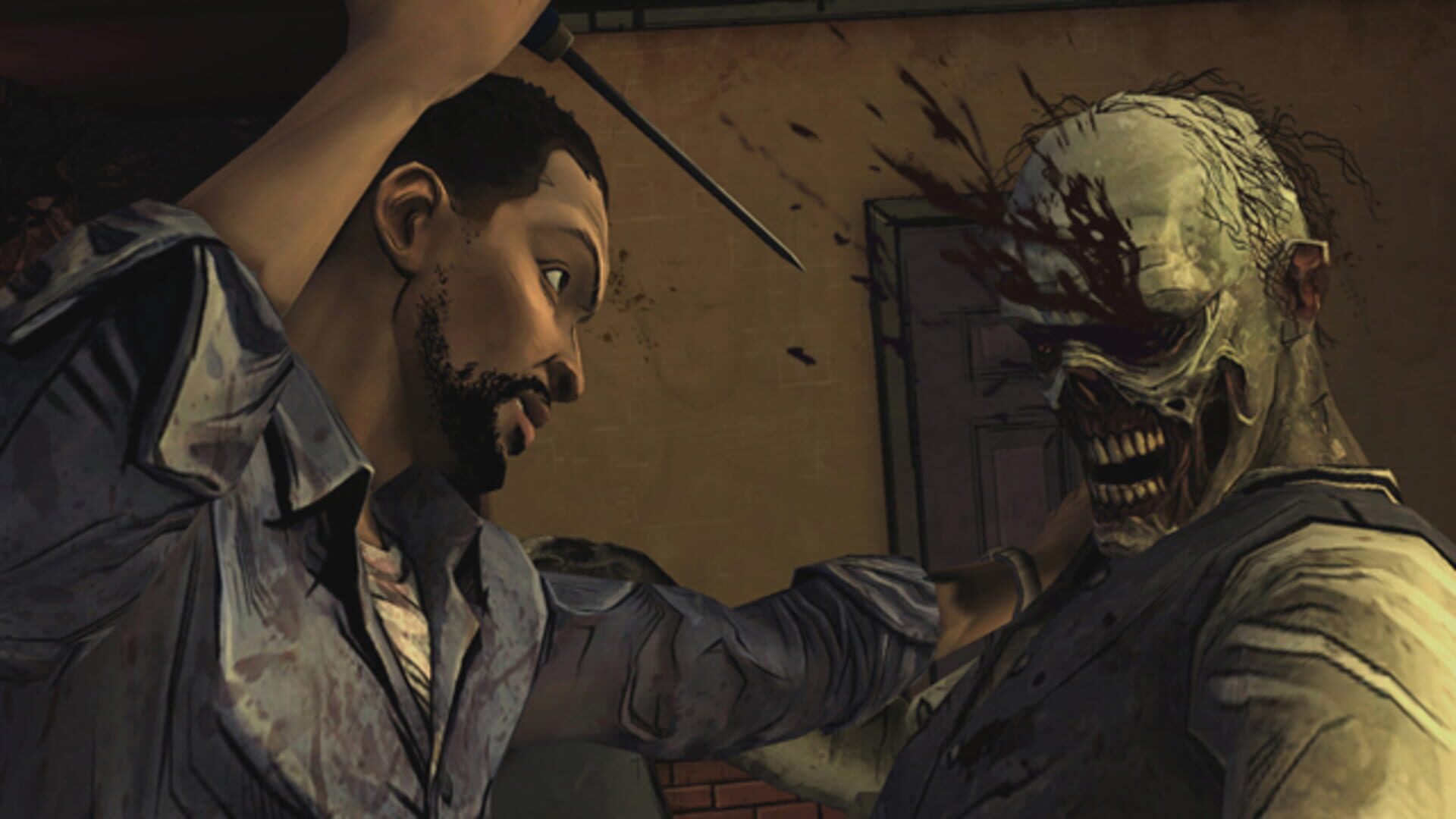
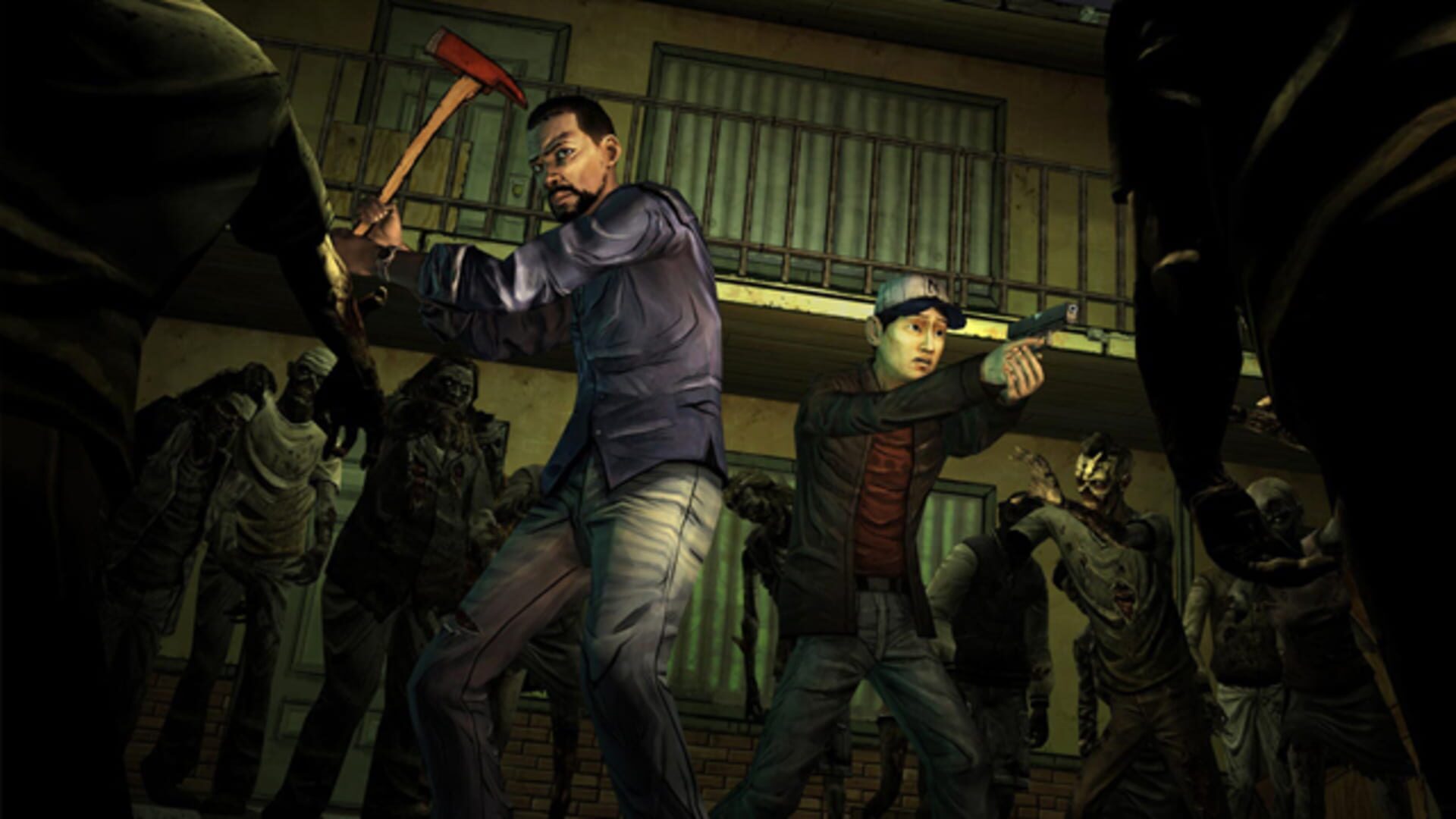
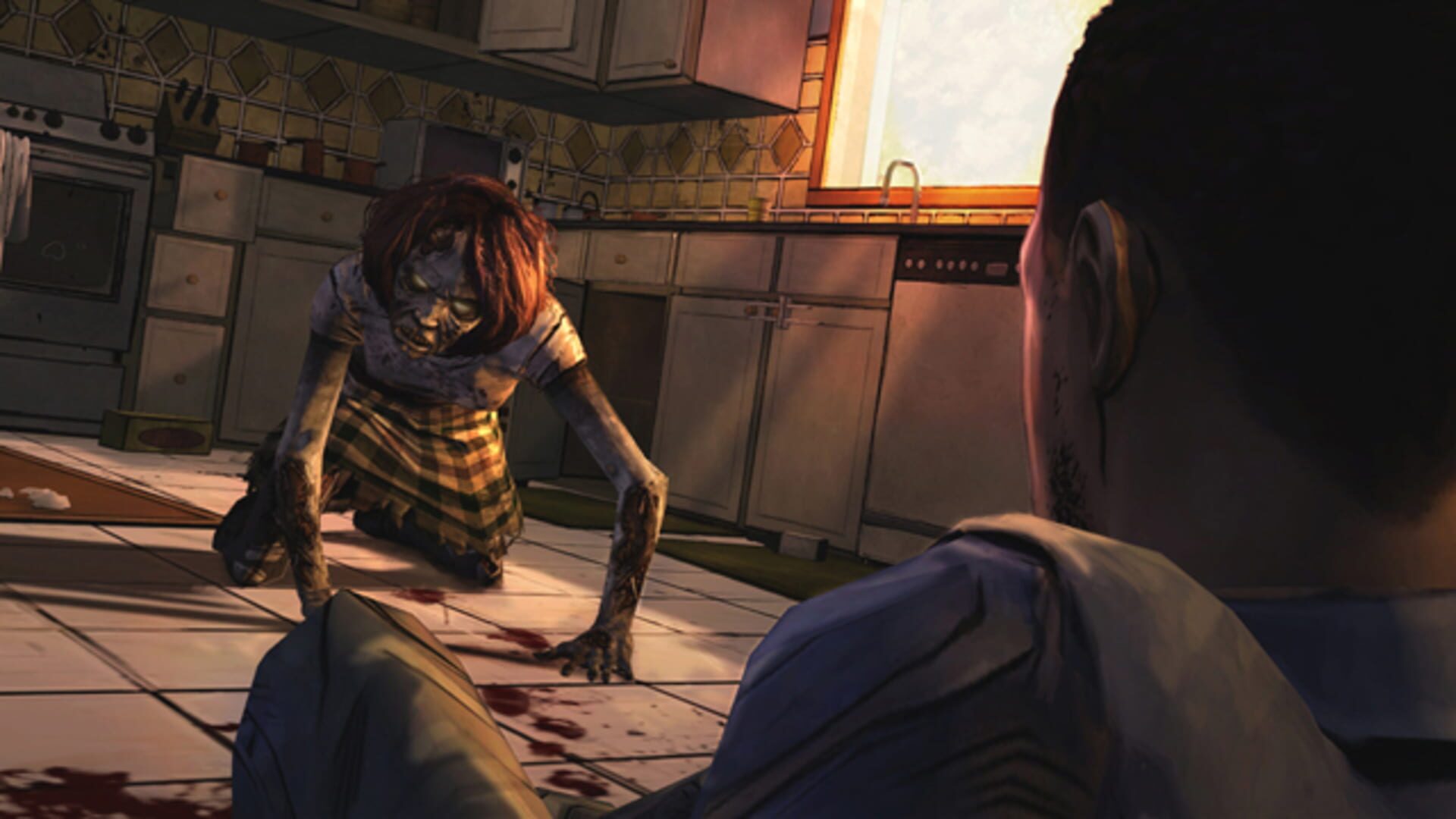
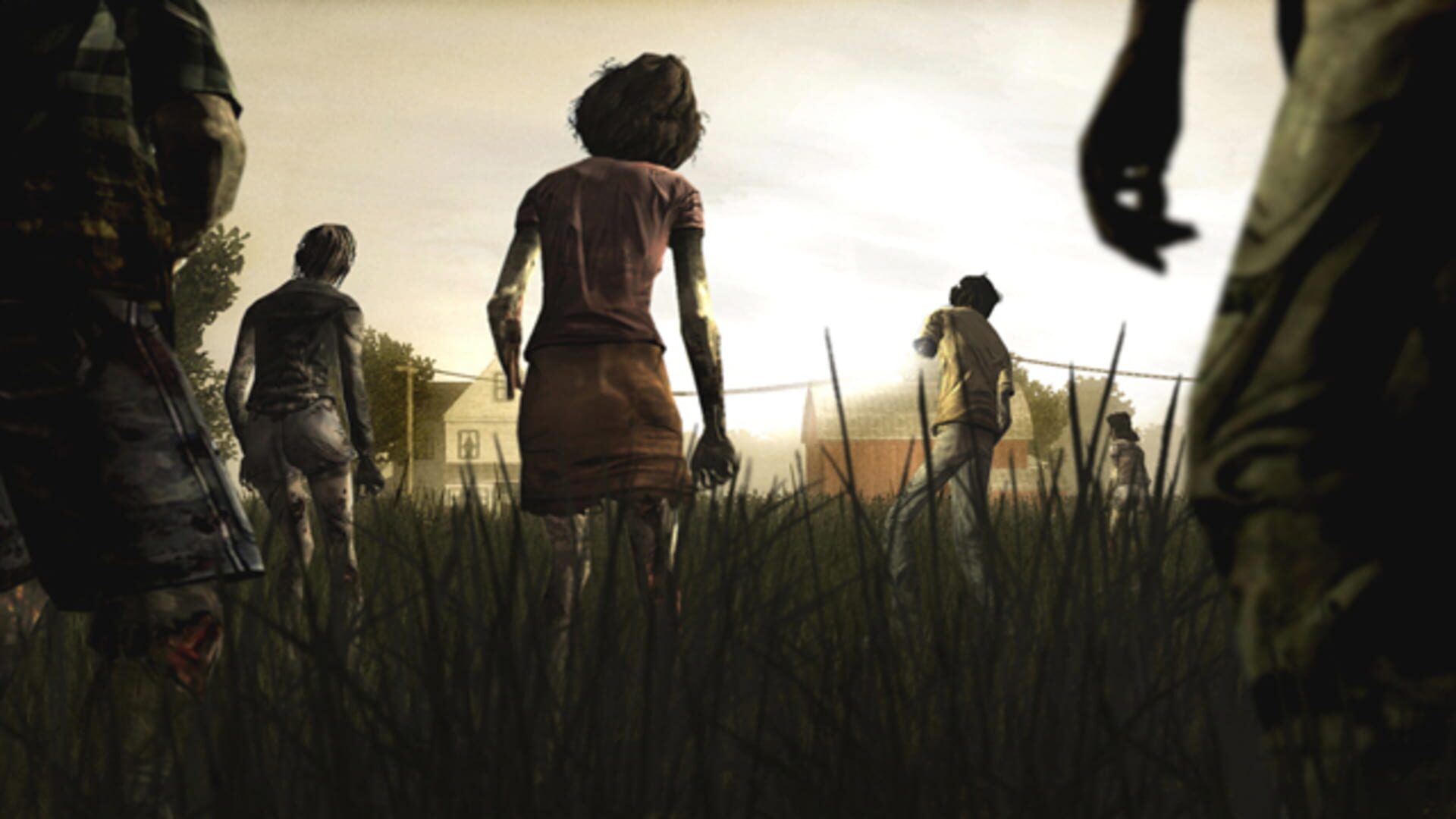
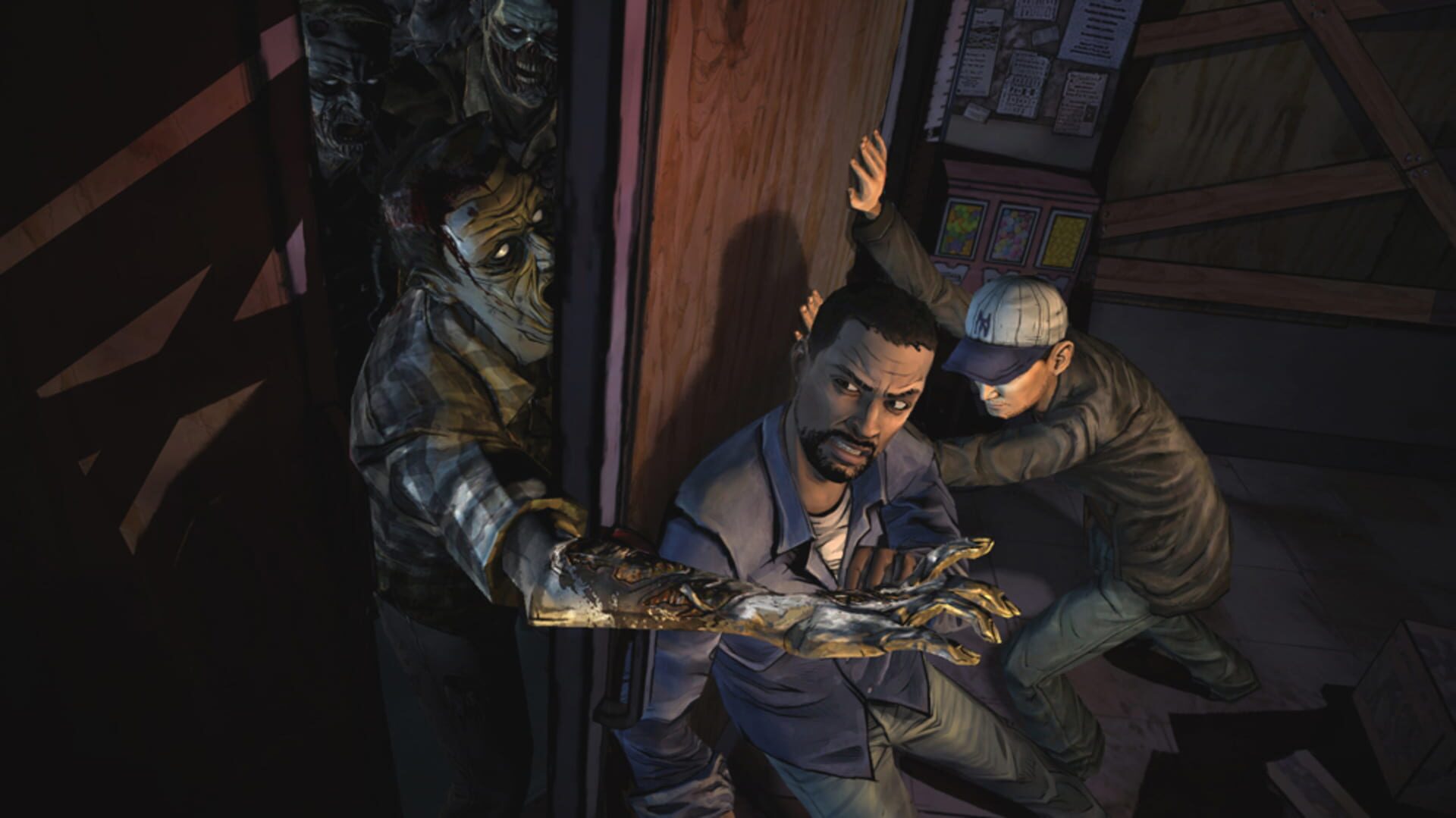
The comic-book art style deserves attention because it does exactly what it needs to do. It is not photorealistic, and it is not trying to be. The cel-shaded look, the heavy outlines, the desaturated palette, it all feels like Robert Kirkman’s book in motion. Another studio might have gone for gritty realism and lost what makes The Walking Dead look like itself. Telltale made the right call.
The voice acting is excellent across the board. The accents are grounded, the performances are genuine, and when characters are scared or furious or grief-stricken, you hear it without it tipping into melodrama. Lee in particular is handled with care. He is not a hero archetype. He is a man with a serious crime in his past who ends up in a situation where he has to decide what kind of person he wants to be going forward.
The one area where Episode 1 shows its limitations is the controls and camera. There are moments where you know there should be something to interact with and you just can’t find it, because the camera angle is obscuring it or the interaction prompt isn’t appearing where you expect. It is a minor annoyance in Episode 1. It remains a minor annoyance through all five episodes. Telltale never fully solved it.
Episode 2: Starved for Help
Two months have passed. The group is hungry, and the fragile alliance built in Episode 1 is already showing stress fractures. When a dairy farm appears to offer food and shelter, it seems like exactly the break the group needs.
It is not.
Episode 2 is where Telltale established that this game was not going to pull its punches. The St. John family runs the dairy, and what is happening on that farm is one of the most effectively horrifying reveals in the game. The decision it forces you to make in response, under pressure, with a clock running, is the first moment in the series where I genuinely sat back after making my choice and felt uncomfortable about it. Not guilty in a performative way. Actually unsettled, because I wasn’t sure I had made the right call and I couldn’t take it back.
That is the thing Starved for Help gets exactly right: it removes the safety net. In Episode 1 the decisions feel weighty because the game tells you they are. In Episode 2 the decisions feel weighty because you have seen what happens when things go wrong, and you understand there is no correct answer, only the one you chose.
The episode also does good work on the group dynamics. The cracks that opened in Episode 1 widen here. People who seemed reliable start to show their actual character under stress. The survivors are not a team. They are a collection of people who happen to be in the same place, with different priorities and different breaking points.
Episode 3: Long Road Ahead
The motel that served as the group’s base since Episode 1 falls. It has to. Telltale had to break up the status quo, and they did it in a way that cost you people you had been with since the beginning. The losses in Episode 3 are not cheap deaths designed to shock you. They are earned, and some of them land differently depending on what choices you made in the first two episodes.
The episode puts the survivors on a train, which is both a practical story device and a metaphor the game does not bother to underline: everyone is moving in one direction, there is no going back, and the destination is unknown. A new character joins in this episode, and the dynamic she brings into the group is one of the more interesting the series attempts.
Episode 3 is also where the weight of the ongoing decisions starts to compound. Things you said or did in Episode 1 are still in play. Characters remember. Some of what they remember matters to how they treat you. Some of it matters less than the game implies it will. This is the honest criticism of The Walking Dead as a piece of interactive fiction: Telltale’s branching is more surface than substance. The story arrives at the same major beats regardless of your choices. The flavor of how you get there changes. The destination mostly doesn’t.
That is a real limitation. It matters less than it should, because the writing is strong enough to keep you invested anyway, but it is worth naming. If you go back and play a second time specifically to see how different your choices make things, you will find the answer is less than you hoped. The illusion of consequence is extremely well constructed. The actual consequence is thinner.
Episode 4: Around Every Corner
Savannah. The group arrives looking for a boat, a way out, a plan that involves something other than running. What they find is a city that has been overrun longer and harder than anywhere they have been before. The herd sequences in this episode are some of the tensest in the game, not because of any single set piece but because of the cumulative pressure. There is nowhere safe. Every decision to move is also a decision to expose yourself.
The episode introduces a new group of survivors that forces the question the whole series is circling: who do you trust, and what does trust even mean in this world? Lee’s judgment has been the player’s compass since Episode 1. Episode 4 puts that compass under pressure.
The Clementine thread, which has been building since the first minutes of Episode 1, takes a turn here that sets up the finale. The game has been carefully, patiently establishing what she means to Lee and what he would do for her. Episode 4 tests it.
Episode 5: No Time Left
Lee is bitten. The game does not hide this. It does not play it as a twist. It puts it in front of you early in the episode and then asks you to keep going anyway, knowing the clock is running, knowing how this ends. What you do with the time you have left is the whole point.
The final episode is the best hour and a half of interactive storytelling I had experienced in years when I played it. It is not the best because of the action sequences or the puzzles or the adventure game mechanics, which are functional throughout but never the reason you are here. It is the best because of what Lee and Clementine’s story actually means by the time you reach the end of it. The game has spent four episodes making you care about that relationship, making you make decisions through the lens of protecting her, and then it takes that relationship to its conclusion in a way that is genuinely moving.
The ending asks you to make one final choice. Whatever you choose, the result is the same in the ways that matter. But the game gives you the choice anyway, because by that point the choice itself is the point. It is not about the outcome. It is about who Lee is, and who you decided he was over the course of twenty or so hours.
The Full Picture
The Walking Dead, taken as a complete five-episode experience, is the best argument Telltale ever made for their model of episodic narrative gaming. It is not a great adventure game in the mechanical sense. The puzzles are simple, the interaction model is limited, the camera and control issues never go away. If you come to it expecting Grim Fandango, you are going to be confused about what you are playing.
What it is instead is a great piece of interactive fiction. The story is the game. The choices are the gameplay. The emotional investment you build over five episodes is the thing you are being asked to bring to the finale. And it delivers on that investment in a way very few games manage.
The decision weight is slightly overstated by the game’s presentation. The branching is more cosmetic than structural. Those are real criticisms. They matter less than they probably should, because the writing, the performances, and the central relationship are strong enough to carry the experience even when the illusion of consequence cracks. The Walking Dead earned its reputation. Go play it.
The Walking Dead: Season One is the game that put Telltale on the map and redefined what an episodic adventure game could do. The mechanics are simple. The story is not. If you have any patience for narrative-driven games, this is required playing.
Original retail disc versions exist for PS3 and Xbox 360. The PC version ran fine on hardware from 2012 onward. If you have the original discs and a working console, they still play. Online features are no longer supported but the game is entirely single-player, so nothing is missing.
The Walking Dead: The Telltale Definitive Series is available on Steam, PS4, Xbox One, and Nintendo Switch. It includes all four seasons, the 400 Days DLC, and the Michonne spin-off mini-series in one package. The remaster applies some visual improvements to Season 1 without altering the content. This is the recommended version for new players. Season 1 is also available individually on Steam if you only want this one.
The standalone Season 1 on Steam runs natively on Windows 10 and 11 with no configuration needed. Download, install, play. The Definitive Series version on Steam is equally clean. No DOSBox, no compatibility layers, no setup. If you have a modern PC, you have no excuse not to play this.
The game was also released on iOS, PS Vita, and Android, though mobile storefronts have seen availability fluctuate over the years depending on licensing. Check the current app store listings if mobile is your preferred platform. The console and PC versions are the most reliably available options today.
| Platform | PlayStation 3 · Xbox 360 |
| Released | 2012 |
| Developer | Telltale Games |
| Publisher | Telltale Games |
| Genre | Adventure, Interactive Fiction |
| Reviewed | November 21, 2012 |